
Anthropic and Pentagon Clash Over AI Ethics: A Battle Between Innovation and National Defense
Ongoing Negotiations Amid Rising Tensions
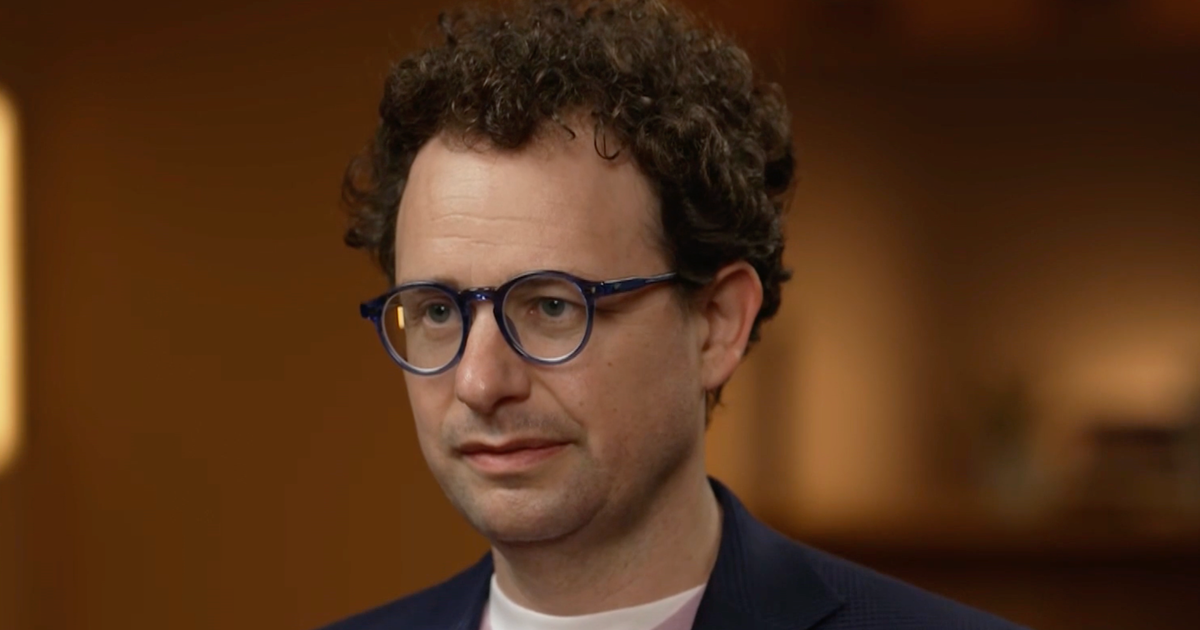
Anthropic, one of the leading artificial intelligence companies, finds itself at the center of a heated debate with the U.S. Department of Defense over the ethical boundaries of AI technology in military operations. During a Tuesday appearance at the Morgan Stanley Technology, Media and Telecom Conference in San Francisco, CEO Dario Amodei revealed that his company remains in active discussions with Pentagon officials, working to resolve what he characterized as a misunderstanding that has threatened the company’s relationship with the U.S. government. The audio of these remarks, exclusively obtained by CBS News, provides insight into a company trying to balance its commitment to ethical AI development with its desire to support national defense efforts. Amodei emphasized that despite the public disagreement, Anthropic and the Defense Department share far more common ground than differences, suggesting that the current conflict stems more from communication challenges than fundamental incompatibility. The CEO made clear his personal support for defending America while maintaining that his company never intended to question specific military operations or assume an operational role in defense matters. This delicate balancing act reflects the broader challenge facing tech companies as they navigate the intersection of cutting-edge AI development, corporate ethics, and national security concerns.
The Presidential Intervention and Supply Chain Designation
The conflict escalated dramatically when President Trump personally intervened, ordering the military to cease using Anthropic’s AI technology. Defense Secretary Pete Hegseth followed up by designating the company as a “supply chain risk,” a label that carries significant consequences for any business hoping to work with the U.S. military. This designation effectively creates a barrier preventing military contractors from partnering with Anthropic, potentially isolating the company from the lucrative and strategically important defense sector. Amodei didn’t take this lying down, immediately announcing his intention to challenge the designation in court, calling it “retaliatory and punitive” in an exclusive statement to CBS News. Sources familiar with the situation indicate that in the five days following Trump’s contract cancellation, Anthropic executives have been working overtime to mend fences with Pentagon officials, expressing regret over what they characterize as a misunderstanding about the company’s role and intentions regarding military AI applications. The Department of Defense, for its part, has remained tight-lipped, declining to comment on the ongoing situation. This silence from the military side leaves observers wondering whether negotiations are progressing or if the government is maintaining a hard line against what it perceives as a tech company overstepping its boundaries.
The Red Lines: Mass Surveillance and Autonomous Weapons
At the heart of this conflict are two specific “red lines” that Anthropic attempted to establish regarding the military’s use of its Claude AI system. The company insisted that its technology should not be used for mass surveillance of American citizens or for fully autonomous weapons systems that can make kill decisions without human oversight. Amodei defended these restrictions as being in line with core American values, arguing that crossing these boundaries would represent a fundamental violation of the principles that define the United States. In his view, these guardrails weren’t about limiting military effectiveness but about ensuring that emerging AI technologies are deployed in ways that respect civil liberties and maintain meaningful human control over life-and-death decisions. The CEO framed his company’s stance as deeply patriotic, stating that “disagreeing with the government is the most American thing in the world,” and insisting that “we are patriots” who have consistently stood up for the nation’s values throughout this controversy. This perspective positions Anthropic not as obstructionist or unpatriotic, but rather as guardians of American ideals in the face of technological advancement that could potentially undermine them if left unchecked.
The Pentagon’s Response and the Trust Question
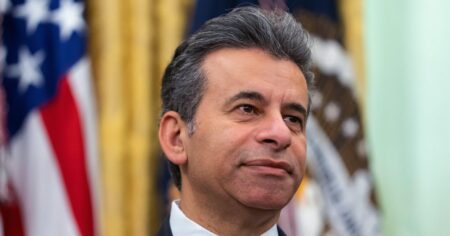
The Pentagon’s response to Anthropic’s proposed restrictions reveals a fundamental disagreement about who should set the boundaries for military AI use. Emil Michael, the Pentagon’s chief technology officer, told CBS News that the military had offered written acknowledgements of existing federal laws and military policies that already restrict mass surveillance and autonomous weapons systems. From the Pentagon’s perspective, these existing legal frameworks should be sufficient assurance that the technology won’t be misused. However, Anthropic contended that these written assurances came “paired with legalese” that could potentially allow the stated guardrails to be circumvented or ignored when deemed necessary. This disconnect highlights a trust gap between the tech company and military officials. Michael’s statement that “at some level, you have to trust your military to do the right thing” encapsulates the Pentagon’s position that excessive restrictions from private companies represent an inappropriate limitation on military decision-making and operational flexibility. The military’s view appears to be that tech companies should provide the tools and let the armed forces, bound by existing laws and regulations, determine how best to use them in defending the country. This philosophical divide over who bears ultimate responsibility for ethical AI deployment in military contexts represents one of the defining challenges as artificial intelligence becomes increasingly central to national defense.
Claude’s Role in Military Operations
Adding complexity to this situation is the confirmation from sources familiar with military AI applications that the U.S. actually used Anthropic’s Claude system in the attack on Iran. This revelation underscores that this isn’t merely a theoretical debate about potential future uses of AI in warfare—the technology has already been deployed in active military operations with real-world consequences. The fact that Claude was used in such a significant military action while these ethical debates were ongoing raises questions about the timeline of the conflict and whether Anthropic was fully aware of how its technology was being utilized. It also demonstrates the military’s clear interest in and reliance on advanced AI systems like Claude for operational purposes, which explains why the Pentagon might view Anthropic’s restrictions as unacceptable limitations on capabilities that have already proven valuable. For Anthropic, this confirmed use in military strikes might validate their concerns about needing explicit guardrails, as it shows the technology is being deployed in exactly the kind of high-stakes scenarios where the company wants to ensure human oversight and ethical boundaries are maintained. The Iran operation also raises the stakes for both parties—for the military, it represents a capability they’re now being told they can’t fully access, while for Anthropic, it’s evidence that their technology is powerful enough to require the very safeguards they’ve been advocating for.
The Path Forward and Broader Implications
As negotiations continue between Anthropic and the Pentagon, the outcome of this dispute will likely set important precedents for how other AI companies engage with the military and what role private tech firms should play in establishing ethical boundaries for their technologies in defense applications. Amodei’s willingness to fight the supply chain designation in court suggests that Anthropic views this as a matter of principle worth defending vigorously, even at the risk of losing access to government contracts. The company’s position reflects a growing awareness in the tech industry that the developers of powerful AI systems have a responsibility to consider how their creations are used, rather than simply handing over the technology and walking away. At the same time, the Pentagon’s firm response indicates that the military establishment has little patience for what it views as tech companies attempting to dictate operational parameters to those charged with national defense. The resolution of this conflict will help define whether AI companies can successfully impose use restrictions on the military, or whether providing technology to the government means accepting that its use will be governed solely by existing laws and military judgment. Beyond the immediate parties involved, this situation highlights the urgent need for broader societal conversations about AI in warfare, the balance between innovation and ethics, and how democratic societies can ensure that powerful new technologies serve rather than undermine fundamental values. As AI systems become more capable and more central to military operations, the questions raised by this Anthropic-Pentagon clash will only become more pressing and consequential for national security and civil liberties alike.