
Louisiana Ten Commandments Law Gets Green Light: What You Need to Know
Court Clears Path for Religious Displays in Classrooms
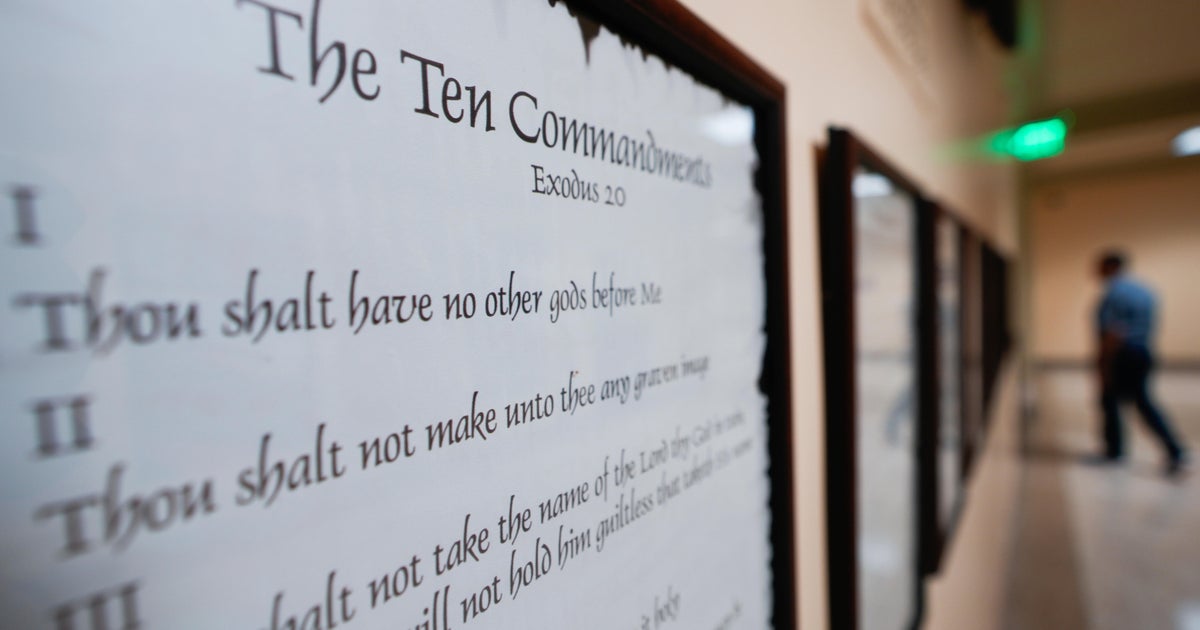
In a decision that has sparked intense debate across the nation, a federal appeals court has given the go-ahead for Louisiana to implement a controversial law requiring the Ten Commandments to be displayed in public school classrooms. The 5th Circuit Court of Appeals, in a close 12-6 vote, lifted the temporary block that had prevented the law from taking effect since 2024. This ruling represents a significant development in the ongoing national conversation about the role of religion in public education and the constitutional boundaries between church and state. The court’s decision doesn’t necessarily endorse the law as constitutional—instead, the majority argued that it’s simply too early to make that determination. According to their reasoning, there are too many unanswered questions about how schools will actually implement the requirement to make a fair judgment about whether it violates the Constitution’s First Amendment protections.
The Court’s Reasoning: Not Enough Information to Decide
The appeals court’s majority opinion centered on a fundamental legal principle: judges need concrete facts, not hypothetical situations, to make constitutional rulings. The court pointed out several unknowns that made it difficult to assess whether the law crosses constitutional lines. They noted uncertainty about how prominently the Ten Commandments would be displayed—would they be small posters in the corner or massive displays dominating classroom walls? Would teachers actively reference these religious texts during lessons, potentially endorsing religious beliefs? And would schools balance the Ten Commandments with other historical documents like the Mayflower Compact or the Declaration of Independence? Without clear answers to these questions, the majority concluded they couldn’t properly evaluate potential First Amendment violations. In their written opinion, they emphasized that there simply weren’t enough facts available to “permit judicial judgment rather than speculation.” This wait-and-see approach essentially allows the law to move forward while leaving the door open for future legal challenges once schools actually begin implementing the requirement and the real-world impacts become clearer.
Strong Dissent: Constitutional Concerns Can’t Wait
Not everyone on the appeals court agreed with this approach. Six judges voted against allowing the law to proceed, and they made their objections known through a series of passionate dissenting opinions. These dissenting judges argued that the case was absolutely ready for judicial review and that waiting to see how schools implement the law would cause unnecessary harm. Their central concern focused on a fundamental principle: children are legally required to attend school, and forcing them to be exposed to government-endorsed religious displays in that mandatory setting creates an obvious constitutional problem. Circuit Judge James L. Dennis delivered particularly strong criticism, writing that the Louisiana law “is precisely the kind of establishment the Framers anticipated and sought to prevent”—referring to the nation’s founders and their intention to keep government and religion separate. These dissenting judges believed that the majority’s decision to let the law proceed ignored clear constitutional violations that were already evident in the law’s very design and purpose, regardless of the specific implementation details.
State Officials Defend the Law as Common Sense
Louisiana Attorney General Liz Murrill quickly defended the ruling and the underlying law in a statement released Friday. She characterized the Ten Commandments not as purely religious doctrine but as basic moral principles, saying “Don’t kill or steal shouldn’t be controversial.” Murrill emphasized that her office has provided clear guidance to public schools about how to comply with the law in a constitutional manner and has created multiple example posters showing appropriate implementation. She urged Louisiana schools to simply follow the law as written. This framing reflects the broader argument made by supporters of such legislation: that the Ten Commandments represent foundational moral and legal principles that influenced American law and therefore have a legitimate place in educational settings as historical documents rather than purely religious texts. Meanwhile, Texas has already moved forward with its own similar law, which took effect on September 1st, representing the largest-scale attempt in the country to place the Ten Commandments in public school classrooms. Although federal judges have issued injunctions preventing some Texas school districts from posting the commandments, many classrooms across the state already display them, with districts either paying for the posters themselves or accepting donations to cover the costs.
Part of a Broader Movement to Bring Religion into Public Schools
The Louisiana and Texas laws aren’t isolated incidents but rather part of a coordinated push by Republican lawmakers and conservative leaders, including President Trump, to incorporate religious elements into public education. Supporters argue that America’s Judeo-Christian heritage has been inappropriately excluded from schools and that acknowledging this religious foundation doesn’t violate constitutional principles. They maintain that the Ten Commandments are historical documents that influenced the development of American law and Western civilization, making them appropriate for educational display alongside other founding documents. However, critics strongly disagree, arguing that these laws clearly violate the constitutional principle of separation between church and state. What makes this issue particularly complex is that the legal challenges haven’t come solely from secular or atheist families. Instead, a diverse coalition has formed to oppose these laws, including families representing Christianity, Judaism, Hinduism, and other faiths, along with clergy members and nonreligious families. This broad opposition suggests that the concern isn’t about hostility to religion generally, but rather about government favoritism toward one particular religious tradition in a diverse society where public schools serve students from many different backgrounds and beliefs.
Historical Precedent and What Comes Next
The legal landscape surrounding religious displays in public spaces has been evolving for decades, with the Supreme Court issuing seemingly contradictory rulings that make the current situation difficult to predict. In 1980, the Supreme Court struck down a Kentucky law that was remarkably similar to Louisiana’s current legislation, ruling that it violated the Establishment Clause of the U.S. Constitution—the provision that prohibits Congress from making any law “respecting an establishment of religion.” In that case, the Court determined that the law served a plainly religious purpose rather than any legitimate secular educational goal. Then in 2005, the Supreme Court ruled that Ten Commandments displays in a pair of Kentucky courthouses violated the Constitution. However, in that same decision, the Court also upheld a Ten Commandments monument on the grounds of the Texas state Capitol in Austin, suggesting that context matters tremendously in these cases. The difference seemed to hinge on whether the display had a primarily religious purpose or whether it was part of a broader historical presentation. This legal history creates uncertainty about how today’s Supreme Court—which has a different composition than in those earlier cases—might rule if the Louisiana or Texas laws eventually reach the nation’s highest court. As these laws now begin to take effect in Louisiana and continue in Texas, with Arkansas facing similar legal battles, families, educators, and legal experts will be watching closely to see how schools implement the requirements and whether new legal challenges emerge. The debate ultimately touches on fundamental questions about American identity, constitutional rights, and how we balance respect for religious heritage with the need to maintain inclusive public institutions that serve an increasingly diverse population. Whatever happens next in the courts will likely have implications far beyond these three states, potentially setting precedents that shape the relationship between religion and public education for generations to come.