
Federal Appeals Court Halts Contempt Proceedings in Venezuelan Deportation Case
Court Overturns Judge’s Investigation into Trump Administration Officials
In a significant legal development, a federal appeals court in Washington has put an end to criminal contempt proceedings that were initiated after the Trump administration allegedly defied a judge’s order to stop deportation flights carrying Venezuelan migrants to El Salvador. The U.S. Court of Appeals for the District of Columbia Circuit, in a divided 2-1 decision, granted the Trump administration’s request to halt an investigation that was examining whether government officials deliberately ignored a direct court order. This ruling represents a major victory for the executive branch and raises important questions about the balance of power between the judicial and executive branches of government, particularly when matters of national security and immigration enforcement intersect with constitutional rights and due process.
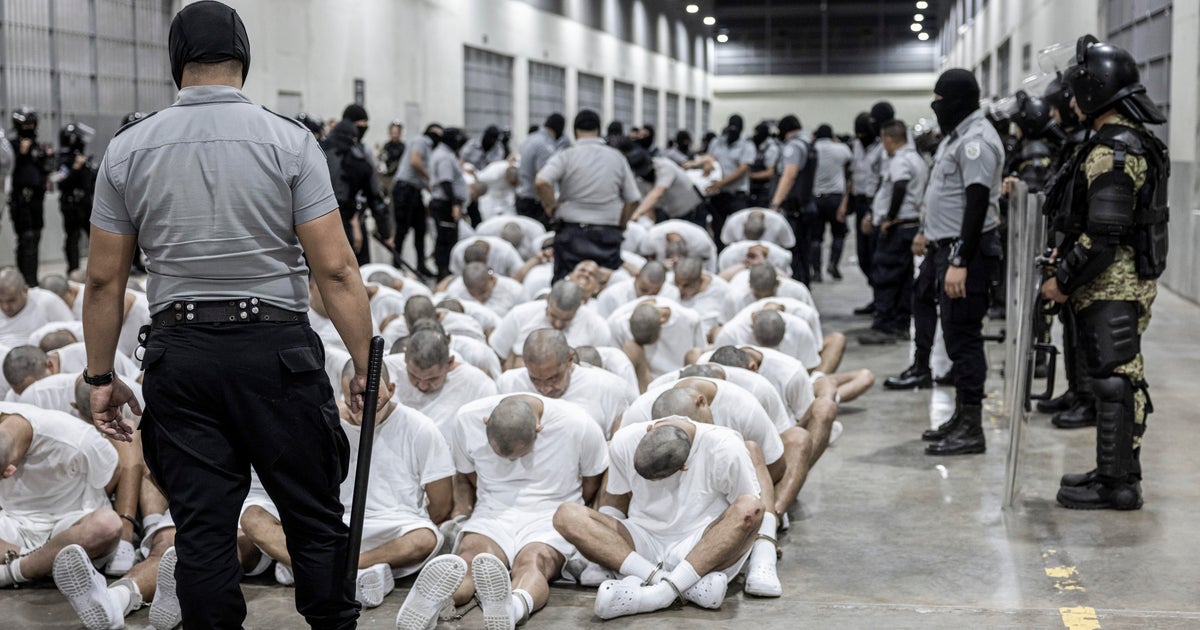
The case originated from controversial actions taken in March of last year when President Trump invoked the rarely-used Alien Enemies Act, a 228-year-old law, to authorize the summary deportation of more than 200 Venezuelan men to El Salvador’s notorious CECOT prison facility. The administration claimed these individuals were members of Tren de Aragua, a dangerous Venezuelan gang. However, investigative reporting by CBS News cast doubt on these allegations, revealing that the majority of the deported men had no apparent criminal records. This discrepancy between the government’s claims and the actual backgrounds of the deportees became a central point of contention in the legal battle that followed, raising serious concerns about due process and the potential for wrongful deportation of individuals who posed no threat to national security.
The Original Court Order and Alleged Defiance
The legal confrontation intensified when U.S. District Judge James Boasberg issued an oral order during rapidly unfolding legal proceedings, demanding that federal immigration officials immediately turn around two planes carrying Venezuelan migrants that were already en route to El Salvador. This order came amid emergency legal filings and represented the judge’s attempt to pause the deportations until the legality of the administration’s actions could be properly examined. However, according to Judge Boasberg’s subsequent findings, the Trump administration chose to disregard this direct judicial order, and the planes continued their journey to El Salvador, where the Venezuelan men were handed over to Salvadoran authorities and placed in the country’s maximum-security prison facility. This alleged defiance of a federal court order prompted Judge Boasberg to take the extraordinary step of finding probable cause that government officials had committed criminal contempt of court, which is a serious charge that could potentially result in fines or even imprisonment for those found responsible.
Judge Boasberg then launched an investigation to determine which specific officials were responsible for the decision to ignore his order and allow the deportation flights to proceed. This inquiry sought to compel testimony from high-ranking government officials, including former Homeland Security Secretary Kristi Noem, former Justice Department official Emil Bove (who has since become a federal judge), and Todd Blanche, who now serves as Acting Attorney General. The investigation also focused on Drew Ensign, a top Justice Department attorney who was the government lawyer directly instructed by Judge Boasberg to relay the order to turn the planes around, and Erez Reuveni, a Justice Department whistleblower who became central to understanding what happened during those critical hours. All of the officials called to testify declined to provide detailed information about the internal deliberations and conversations regarding the judge’s order, citing various privileges and concerns about revealing sensitive executive branch communications.
The Appeals Court Decision and Reasoning
In the appeals court ruling that halted these contempt proceedings, Judge Neomi Rao, writing for the majority, characterized the lower court’s investigation as “a clear abuse of discretion” and argued that it represented an inappropriate intrusion into the executive branch’s constitutional authority. Judge Rao’s opinion emphasized that the investigation threatened to become “an open-ended, freewheeling inquiry into Executive Branch decisionmaking on matters of national security that implicate ongoing military and diplomatic initiatives.” The majority opinion stressed that questions of national security and foreign policy are areas traditionally committed to the political branches of government—the executive and legislative branches—rather than the judiciary. According to this reasoning, allowing a district court judge to investigate and potentially punish executive branch officials for decisions made in the context of immigration enforcement and international diplomacy would violate the principle of separation of powers that is fundamental to the American constitutional system.
Judge Rao was joined in this decision by Judge Justin Walker, and notably, both judges were appointed to the D.C. Circuit Court of Appeals by President Trump during his first term in office, a detail that critics might point to when questioning whether the decision was influenced by political considerations. The majority opinion framed the issue as one of judicial overreach, arguing that the contempt investigation represented “a judicial intrusion into the autonomy of a co-equal department.” This language reflects a particular philosophy of constitutional interpretation that emphasizes strong executive power and limited judicial interference in executive branch operations, especially in areas touching on national security. The court found that even if the investigation eventually concluded that no contempt occurred, the very process of conducting such an inquiry into executive decision-making on sensitive matters was itself problematic and threatened to chill legitimate executive branch deliberations on important policy matters.
The Dissenting Opinion and Ongoing Controversy
Judge J. Michelle Childs, who was appointed by President Biden, issued a strongly worded dissent that challenged the majority’s reasoning and approach. In her dissenting opinion, Judge Childs argued that the appeals court was acting prematurely and heavy-handedly in shutting down the district court’s investigation before it had fully developed. She wrote that “contempt of court is not addressed for the district court’s vanity; it is done to preserve and enforce our law,” emphasizing that the ability to enforce its orders through contempt proceedings is essential to a court’s function and authority. According to Judge Childs, the majority’s decision undermined the fundamental principle that no person or institution, including the executive branch, is above the law or immune from consequences for defying lawful court orders. She expressed concern that “we have overstepped in adjudicating this balance of interests,” suggesting that the appeals court should have allowed the district court more latitude to conduct its investigation and develop a factual record before intervening.
This dissenting opinion reflects a competing vision of separation of powers—one that emphasizes the judiciary’s role as a check on potential executive branch overreach and the importance of ensuring that government officials respect court orders even when those orders interfere with policy priorities. The disagreement between the majority and dissent in this case highlights the ongoing tension in American law between national security concerns and civil liberties, between executive efficiency and judicial oversight, and between different philosophical approaches to constitutional interpretation. The case has become part of a broader legal and political debate about the scope of presidential power in immigration matters and the degree to which courts can effectively review and constrain executive actions that the government claims are necessary for national security.
Broader Legal Context and Implications
This appeals court ruling is just the latest chapter in an extended legal battle over President Trump’s use of the Alien Enemies Act, a law that dates back to 1798 and has rarely been invoked in modern times. The law was originally designed to authorize the detention and deportation of nationals from countries with which the United States is at war, and its application to Venezuelan migrants has been controversial from the start. The case has already reached the Supreme Court in its earlier stages, and several lower courts have issued rulings blocking the Trump administration from deporting Venezuelan migrants under the president’s proclamation. This patchwork of conflicting legal decisions has created significant uncertainty about the government’s authority to use this historical statute in contemporary immigration enforcement. In February, Judge Boasberg ordered the U.S. government to facilitate the return of certain Venezuelan migrants who were removed to El Salvador and are challenging their deportations, though the Justice Department has appealed that order as well.
The Trump administration had previously asked the D.C. Circuit to intervene and stop Judge Boasberg’s contempt proceedings, and in August of last year, a different panel of three appeals court judges granted that request in a 2-1 decision, setting aside the finding of probable cause for criminal contempt. The full complement of judges on the D.C. Circuit declined to reconsider that panel’s decision but did find that Judge Boasberg could continue investigating whether the Trump administration had violated his order—a nuanced ruling that allowed some aspects of the inquiry to proceed while blocking others. In November, Judge Boasberg announced he was resuming his investigation and made clear his determination to discover what happened during those critical hours when his order was allegedly ignored, stating in a hearing, “I will be going forward with it. I certainly intend to find out what happened that day.” This latest appeals court decision, however, has now definitively ended that investigation, at least for the time being, leaving many questions unanswered about the government’s decision-making process and whether officials deliberately chose to defy a federal court order. The broader implications of this case will likely reverberate through future disputes involving executive power, judicial authority, and the rights of immigrants caught in the middle of these constitutional conflicts.