
Trump’s Controversial Triumphal Arch Gets Preliminary Approval Despite Universal Public Opposition
A Monumental Addition to Washington’s Skyline Raises Eyebrows
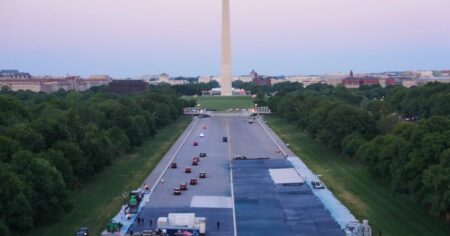
In a decision that has sparked considerable debate, a Trump-appointed commission reviewing public buildings in Washington, D.C., has given preliminary design approval to one of President Trump’s most ambitious architectural visions: a massive 250-foot stone arch adorned with golden statues. This imposing structure would rise on Columbia Island, a man-made strip of land in the Potomac River, positioning it prominently between two of America’s most sacred sites—the Lincoln Memorial and Arlington National Cemetery. The Commission on Fine Arts meeting, held on April 16, 2026, saw commissioners grappling with numerous concerns about the project while ultimately moving it forward in the approval process. The proposed location is currently a grassy traffic circle at the foot of Memorial Bridge, a modest space that would be transformed into a platform for what proponents describe as a historic monument and critics characterize as an oversized vanity project.
Design Details and Commissioners’ Concerns
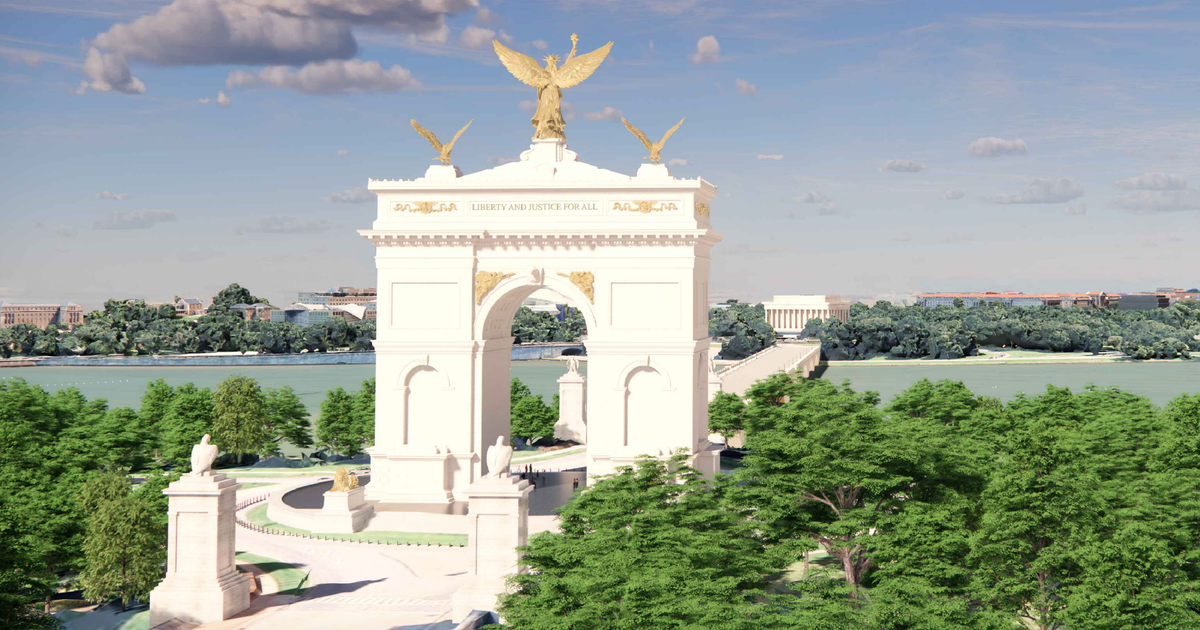
The architectural plans presented by project architect Nicolas Charbonneau feature an elaborate design that includes a gold-plated bronze Lady Liberty statue and two bald eagles, all depicted with their wings dramatically extended, positioned atop the arch. Additionally, two golden lion statues would stand guard on either side of the structure. During the review process, commissioners raised numerous practical and aesthetic questions about the design, focusing on critical elements like the arch’s structural footings, how pedestrians and wheelchair users would access the monument, and the appropriateness of the gilded statuary. Commissioner James McCrery, who was notably Trump’s handpicked architect for the White House ballroom project before being replaced due to disagreements over that project’s scale, voiced particular skepticism about certain design elements. He described the winged figures as “odd” and suggested that the lions needed refinement, saying simply, “I’d say work on the lions.” McCrery also recommended several significant modifications, including building a larger doorway, eliminating a proposed underground access tunnel, and most controversially, reducing the arch’s overall size from 250 feet to approximately 166 feet, arguing this would help it “better participate” in Washington’s memorial skyline rather than dominate it.
Historical Justification and Political Context
Interior Secretary Doug Burgum, introducing the project at Thursday’s commission meeting, attempted to ground the proposal in historical precedent. He explained that when Congress originally drew up plans for the National Mall, the design included an “adornment” consisting of two columns on Columbia Island that were intended to rise 160 feet and symbolize the reconciliation between North and South following the Civil War. These columns were never actually constructed, remaining only as an unfulfilled element of the capital’s original vision. Burgum argued that the two columns supporting the proposed arch represent allusions to this more than century-old plan, noting that these support columns would also rise about 160 feet, thereby honoring the historical concept while creating something new. The arch design includes modern accessibility features, with an elevator-accessible observation deck that would allow visitors to view the surrounding memorials and cityscape. The entire structure would be surrounded by protective bollards for security purposes. Despite these attempts to connect the project to Washington’s architectural history, critics remain unconvinced that a monument so closely associated with a contemporary political figure belongs among the capital’s timeless memorials.
Overwhelming Public Opposition and Criticism
The commission’s decision to grant preliminary approval becomes even more remarkable when considering the public response to the proposal. Commission secretary Thomas Luebke reported that the agency had received approximately 1,000 public comments about the project, and he made a striking announcement: “100% of the comments were against the project.” Reading from one representative comment during the meeting, Luebke shared criticism that focused on the arch’s overwhelming scale, with the commenter arguing that the structure would “assert itself as a dominant vertical element in a skyline that has resisted such intrusions.” This comment captured a fundamental concern about the project—that Washington’s memorial landscape has traditionally avoided towering vertical structures that might compete with or overshadow the dignified, more horizontal character of existing monuments. The same commenter also criticized the project for being so intimately associated with a modern political figure, touching on the sensitive question of whether contemporary presidents should be able to insert such prominent personal monuments into the nation’s capital. For context, the proposed 250-foot arch would dwarf the 99-foot Lincoln Memorial situated directly across Memorial Bridge, though it would remain considerably shorter than the 555-foot Washington Monument. This scale comparison highlights concerns that the arch would fundamentally alter the visual relationships between existing monuments.
Legal Challenges and Veterans’ Opposition
Beyond public comments and design critiques, the project faces serious legal obstacles that could ultimately prevent its construction. A group of Vietnam War veterans has already filed a lawsuit seeking to block the arch, arguing that the structure would obstruct and obscure the visual connection between Arlington National Cemetery and the Lincoln Memorial—a sightline they consider sacred and symbolically important. This visual corridor allows visitors at the Lincoln Memorial to gaze across the Potomac River toward the cemetery where hundreds of thousands of American service members are buried, creating a powerful unspoken connection between the memorial to the president who preserved the Union and the resting place of those who died defending the nation in subsequent conflicts. The veterans argue that inserting a massive triumphal arch into this visual conversation would fundamentally alter and damage this relationship. As of now, the judge presiding over the case has not issued an injunction to halt the project’s progress through the approval process, meaning the design review continues even as legal challenges work their way through the courts. This legal limbo creates uncertainty about the project’s ultimate fate, even if it receives final design approval from the Commission on Fine Arts.
Next Steps and Uncertain Future
Following the preliminary approval, architect Nicolas Charbonneau now has the opportunity to absorb the feedback provided by commissioners and the overwhelming public opposition, then revise the design before the commission votes on whether to grant final approval. This revision process could address some of the practical concerns raised about structural elements, accessibility features, and the underground tunnel, but it remains unclear whether Charbonneau will accommodate the more fundamental criticisms about the project’s scale and appropriateness. Commissioner McCrery’s suggestion to reduce the height by roughly one-third represents a significant potential compromise, though it’s uncertain whether such a change would satisfy critics who question whether any version of this monument belongs in this location. The project sits at the intersection of architectural ambition, presidential legacy-building, historical interpretation, and public space stewardship—all complicated by the fact that it’s so closely identified with a polarizing political figure. As the design moves through the remaining approval stages while simultaneously facing legal challenges, the fate of Trump’s triumphal arch remains very much in question. What seems certain is that this controversy reflects deeper questions about how America commemorates its history, who gets to shape the nation’s capital, and whether contemporary political figures should have the authority to insert permanent monuments into landscapes traditionally reserved for reflecting on shared national values and historical figures whose legacies have been tested by time.