


Iran’s Massive Crackdown: The Human Cost of Silencing Dissent
Midnight Raids and Vanishing Voices
In the dark early morning hours of January 16, the quiet neighborhood where the Nakhii family lived was shattered by the arrival of half a dozen cars filled with Iranian security agents. It was 2 a.m. when they came for Nyusha, 37, and her younger sister Mona, 25. The sisters were jolted from sleep, forced to unlock their phones, and then taken away into a night that has stretched into weeks of uncertainty for their family. Their alleged crime? Participating in protests that had swept across Iran just days earlier, part of a massive uprising calling for the end of the country’s theocratic rule. Stories like theirs have become heartbreakingly common across Iran, where what began as demonstrations against rising prices transformed into one of the most significant challenges to the Islamic Republic since its founding. According to a friend of the Nakhii sisters who spoke anonymously out of fear for her own safety, this pattern of nighttime raids has become terrifyingly routine. These aren’t isolated incidents in a single city—they’re happening everywhere, from Tehran’s bustling streets to quiet rural towns, affecting people from all walks of life: university students barely into adulthood, respected doctors and lawyers, dedicated teachers, celebrated actors, successful business owners, athletes, and filmmakers. The dragnet has even caught reformist figures close to President Masoud Pezeshkian, showing that no one is truly safe from the government’s reach.
A Nation Under Surveillance
The scope of arrests following the government’s brutal crackdown has been staggering. The U.S.-based Human Rights Activists News Agency estimates that more than 50,000 people have been detained, though this number has been impossible to independently verify due to the internet blackout imposed by Iranian authorities. Information trickles out slowly and dangerously, often risking the safety of those who share it. Multiple activist groups outside Iran have been working tirelessly to document these mass arrests and track the fate of the disappeared. Shiva Nazarahari, who works with the Committee for Monitoring the Status of Detained Protesters, confirmed that “authorities continue to identify people and detain them.” Her organization has painstakingly verified the names of more than 2,200 arrested individuals through direct contact with families and a network of brave sources still operating inside Iran. Among those verified arrests are 107 university students whose futures have been put on hold, 82 children as young as 13 years old, 19 lawyers who should have been protected by their professional status, and 106 doctors whose medical training couldn’t shield them from the government’s wrath. The methods authorities are using reveal a chilling level of surveillance. They’ve been systematically reviewing municipal street cameras, store security footage, and even drone recordings to track protesters from the demonstrations back to their homes or workplaces, where they’re then arrested, sometimes weeks after the actual protests took place.
The Protests That Shook a Nation
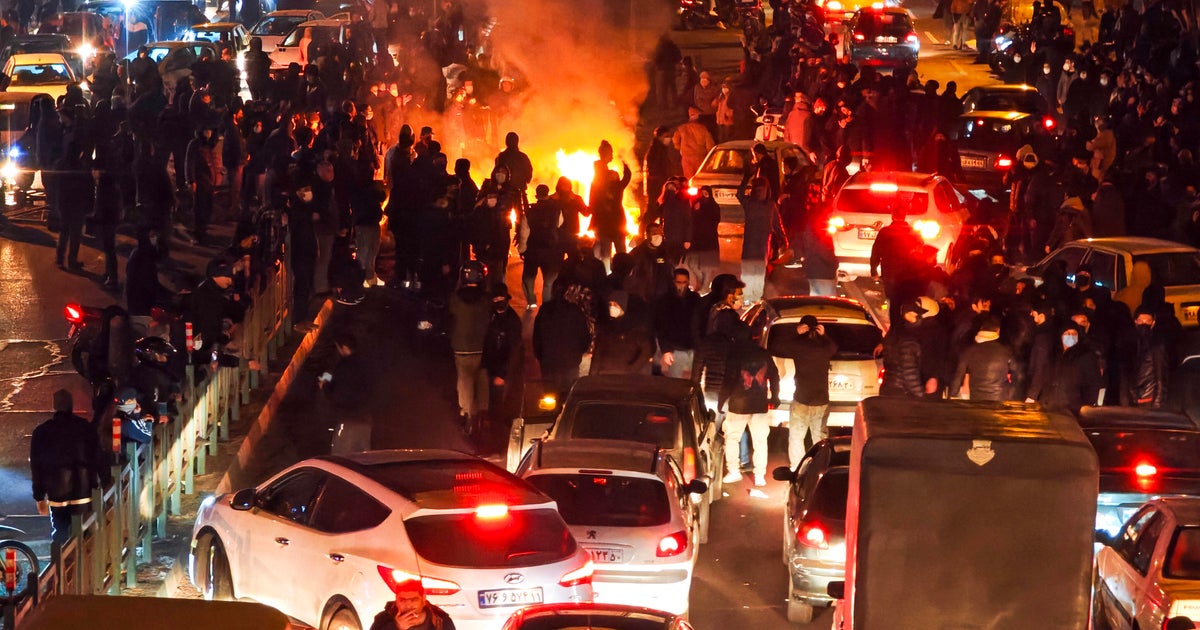
The protests that triggered this massive crackdown began in late December, sparked initially by anger over spiraling prices that had made daily life increasingly unbearable for ordinary Iranians. But like a match to dry kindling, these economic grievances ignited deeper frustrations that had been building for years, and the demonstrations quickly spread across the entire country. The movement reached its peak on January 8 and 9, when hundreds of thousands of Iranians in more than 190 cities and towns took to the streets in an unprecedented show of defiance against the government. What happened next was a display of state violence on a scale that shocked even seasoned observers of Iran. Security forces responded with what can only be described as unprecedented brutality. The Human Rights Activists News Agency has documented more than 7,000 deaths, though they acknowledge the true number is certainly far higher. Even Iran’s government, which has historically undercounted or simply not reported fatalities from past unrest, admitted on January 21 that 3,117 people had been killed—an acknowledgment that speaks to the massive scale of the violence. Gholamhossein Mohseni Ejehi, a hard-line cleric who heads Iran’s judiciary, became the face of this crackdown, publicly labeling protesters as “terrorists” and calling for fast-tracked punishments that bypass normal legal procedures. One protester from Gohardasht, a middle-class area outside Tehran, spoke to reporters on condition of anonymity, describing how “detentions have been very widespread because it’s like a whole suffocation of society.” His personal losses paint a devastating picture: two relatives and three of his brother’s friends were killed in the first days of the crackdown, along with several neighbors.
Disappeared Into the Prison System
For those who have been arrested, the experience has been terrifying and isolating. The Nakhii sisters were first taken to Evin prison in Tehran, a facility notorious for housing political prisoners and for the harsh treatment documented there over decades. At Evin, they were at least allowed to contact their parents briefly, providing some small comfort to their desperate family. But then they were transferred to Qarchak, a women’s prison on the outskirts of Tehran where human rights groups had reported appalling conditions even before this latest wave of arrests—overcrowding, lack of basic hygiene, and systematic mistreatment. Many others have simply vanished into the prison system with no word to their families at all. Abolfazl Jazbi hasn’t been heard from since his arrest on January 15 at a factory in Isfahan, a major city in southern Iran. His family is particularly worried because he suffers from a severe blood disorder requiring regular medication—medication he likely isn’t receiving. Atila Sultanpour, 45, was taken from his home in Tehran on January 29 by security agents who, according to the legal advocacy group Dadban, beat him severely during the arrest. His family has heard nothing since. The crackdown extends beyond just the protesters themselves. Authorities have begun suspending bank accounts, blocking SIM cards, and confiscating property belonging to relatives of protesters or anyone who publicly expresses support for them, according to Musa Barzin, an attorney with Dadban. In previous crackdowns, Iranian authorities at least maintained what Barzin called “a veneer of due process and rule of law,” but not this time. Detainees are routinely denied access to legal counsel and held for days or weeks before being allowed even a single phone call to family. Lawyers who have tried to represent arrested protesters have themselves faced court summons and detention. “The following of the law is in the worst situation it has ever been,” Barzin said grimly.
Defiance Despite the Danger
Despite the overwhelming show of force and the genuine terror that has gripped Iran, acts of defiance continue. Many civic groups have continued to issue statements challenging the government, knowing full well the risks they’re taking. The Writers’ Association of Iran, an independent organization with a long and proud tradition of dissent against government overreach, released a powerful statement describing the protests as an uprising against “47 years of systemic corruption and discrimination”—a reference to the entire period since the 1979 Islamic Revolution. The association also announced that two of its own members had been detained, including someone serving on its secretariat, demonstrating that even well-known cultural figures aren’t safe. A national council representing schoolteachers made an urgent appeal to families of detained children and students, urging them to speak out publicly despite the very real dangers. “Do not fear the threats of security forces. Refer to independent counsel. Make your children’s names public,” the council’s statement read, understanding that publicity might be the only protection these young detainees have. A spokesman for this council reported on Sunday that they have documented the deaths of at least 200 minors killed in the crackdown—a number that had increased by several dozen from just days earlier. “Every day we tell ourselves this is the last list,” Mohammad Habibi wrote on social media. “But the next morning, new names arrive again.” Even some state-sanctioned professional organizations have found the courage to speak out. Bar associations and medical groups, including Iran’s official doctors’ council, have called on authorities to stop harassing medical staff who treated wounded protesters or who have spoken out about the scale of the casualties.
International Pressure and an Uncertain Future
The international community has begun responding to the crisis, though many inside Iran fear it’s too little, too late. Iran’s exiled Crown Prince Reza Pahlavi, son of the shah who was deposed in 1979, has been trying to position himself as a voice for change, calling for a “global day of action” with demonstrations in cities like Munich, Los Angeles, and Toronto. Speaking at a press conference in Munich during an international security conference, Pahlavi posed a stark question: “Will the world stand with the people of Iran?” He warned that more deaths are likely “if democracies stand by and watch,” and argued that if the Iranian government survives this crisis, it “sends a clear signal to every bully: kill enough people and you stay in power.” The protests were fueled not just by immediate economic pain but by decades of accumulated grievances. The Iranian economy has been hollowed out by a combination of international sanctions, endemic corruption, and systematic mismanagement. The currency has lost most of its value, and inflation has climbed to levels that make basic necessities increasingly unaffordable for ordinary families. The government has announced some gestures like a new coupon program for essential goods, but labor and trade groups, including a national retirees syndicate, have issued statements condemning both the economic crisis and the political violence. President Donald Trump has moved military assets, including an aircraft carrier, to the Persian Gulf and suggested the U.S. could attack Iran over the killing of peaceful demonstrators or if mass executions begin. A second carrier is reportedly on its way to the region. Iran’s theocracy has survived protests and U.S. threats before, and the success of this brutal crackdown demonstrates the iron grip it still holds over the country. This week, authorities even managed to organize pro-government rallies with hundreds of thousands of participants to mark the anniversary of the 1979 Islamic Revolution, showing their ability to mobilize supporters. Yet attorney Musa Barzin sees something different in the intensity of the government’s response. He believes that the very ferocity of the crackdown reveals that Iran’s leadership “for the first time is afraid of being overthrown.” Whether that fear will lead to reform or further repression remains to be seen, but for families like the Nakhiis, still searching for their daughters, the wait for answers continues.