



Artemis II Astronauts Ready for Historic Moon Mission
Final Preparations Underway at Kennedy Space Center
As the world watches with anticipation, four astronauts are preparing to embark on humanity’s first crewed journey to the moon in over half a century. On Sunday, just days before their scheduled Wednesday launch, the Artemis II crew held a virtual press conference from medical quarantine at NASA’s Kennedy Space Center in Florida. Commander Reid Wiseman, Victor Glover, Christina Koch, and Canadian astronaut Jeremy Hansen expressed their readiness and excitement for the historic mission that will take them around the moon and back. The team arrived from Houston on Friday and has been staying in isolation as a precautionary measure to ensure they remain healthy for the challenging journey ahead.
Christina Koch, who holds the record for one of the longest single spaceflights by a woman after spending 328 days aboard the International Space Station in 2019-2020, shared her feelings about the momentous occasion. “Things are certainly starting to feel real here at the Cape,” she said, referring to Cape Canaveral. The reality of the mission hit home even more when their families joined them on Saturday, and they participated in pre-test briefings for the actual launch countdown. For these experienced astronauts, the combination of technical preparations and personal moments with loved ones has created a palpable sense of excitement as they stand on the threshold of making history.
Overcoming Delays and Technical Challenges
The road to Wednesday’s launch hasn’t been without its obstacles. The Artemis II mission was originally scheduled for early February, but NASA engineers encountered several technical issues that required careful attention and resolution. The team had to address hydrogen fuel leaks in the massive Space Launch System (SLS) rocket, a complex problem that demanded meticulous work to ensure the safety and success of the mission. More recently, technicians faced challenges with pressurizing the rocket’s upper stage propulsion system, an essential component for the spacecraft’s journey. These combined issues pushed the launch date back by nearly two months to April 1, demonstrating NASA’s unwavering commitment to safety over schedule.
Despite these setbacks, Commander Wiseman emphasized that both the crew and the ground teams remain fully prepared and enthusiastic about the mission. However, he was careful to temper expectations with a dose of reality, acknowledging that this is fundamentally a test flight—the first time humans will ride aboard both the SLS rocket and the Orion crew capsule. “The four of us, we are ready to go. The team is ready to go, and the vehicle is ready to go,” Wiseman stated confidently. Yet he added an important caveat: “But not for one second do we have an expectation that we are going. We will go when this vehicle tells us that it’s ready, when the team is ready to go.” This measured approach reflects NASA’s learned wisdom from decades of spaceflight—that patience and caution are virtues when human lives are at stake. The crew is mentally prepared for the possibility that they might travel to the launch pad only to have the countdown scrubbed, potentially requiring multiple attempts before successfully lifting off.
The Countdown Begins
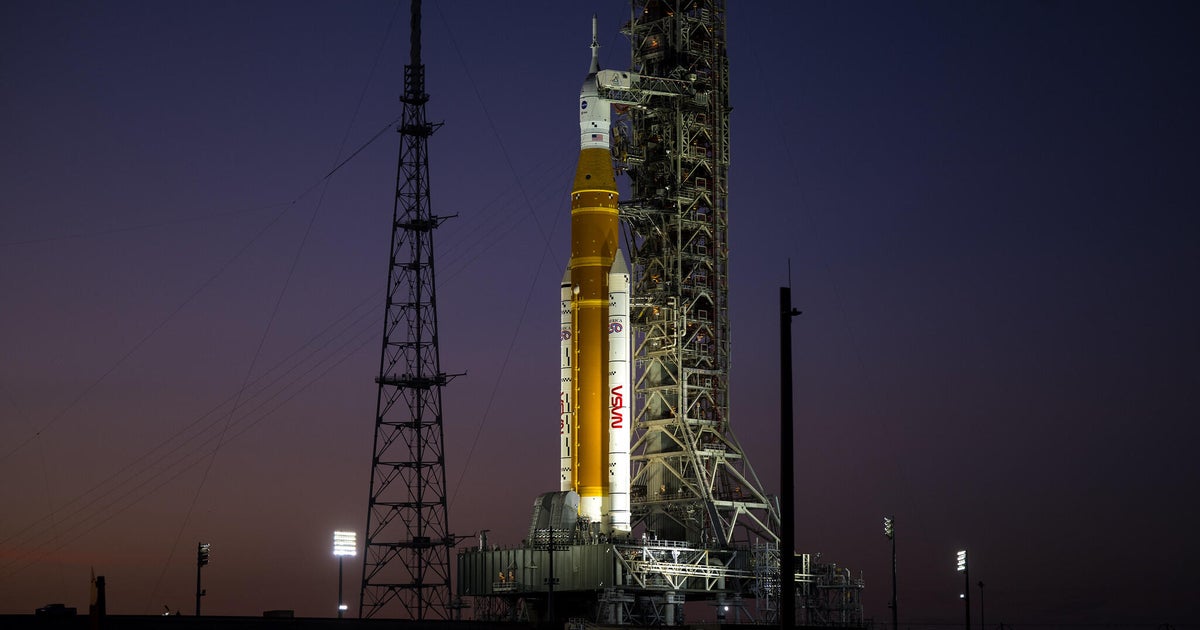
The official countdown for Artemis II is scheduled to commence at 4:44 p.m. Eastern Time on Monday, marking the beginning of a carefully choreographed 49-hour and 40-minute sequence of checks, fueling operations, and final preparations. If everything proceeds according to plan, the countdown clock will reach zero at 6:24 p.m. on Wednesday evening, when the four astronauts hope to blast off aboard their Orion spacecraft, sitting atop the towering 322-foot-tall Space Launch System rocket. The sheer scale of this launch vehicle is breathtaking—it’s the most powerful rocket NASA has ever built, and both the rocket and the Orion capsule will be making their maiden voyage with human passengers.
Commander Wiseman painted a vivid picture of what spectators can expect when the engines ignite. “When you see this vehicle on the pad, you look at the size of this vehicle, and you know it’s going one place… It is going to space, and it is going to go there in a hurry,” he explained. “When those engines light, this thing is moving out.” Despite the enormity of the moment and the years of training that have led to this point, Wiseman described feeling surprisingly calm. “It’s surreal. I almost want to say, though, I just feel relaxed. It’s good to be here. We’ve trained for this, and we’re ready to go,” he said. This combination of awe and confidence reflects the professionalism and preparation of the entire team.
Weather forecasters are currently predicting favorable conditions, with an 80% chance of acceptable weather for launch. The primary concerns are potential high winds and thick cloud cover, which could create a 20% chance of delays. Ground systems manager Shawn Quinn provided additional reassurance during Sunday’s briefing, noting that the team held their launch countdown pre-test briefing on Saturday—a critical final step before entering the actual countdown. “I will tell you that it was one of the cleanest launch countdown pre-test briefings we’ve ever had,” Quinn reported. “We had no significant open work,” meaning there are no major outstanding issues that could prevent the launch from proceeding on schedule.
The Mission Profile: A Journey Around the Moon
The Artemis II mission represents a carefully planned test flight that will push the boundaries of human space exploration while maintaining appropriate safety margins. Twenty-five hours after liftoff, assuming all systems are functioning properly, the crew will set course for the moon. However, unlike the Apollo missions of the 1960s and 70s, this crew will not land on the lunar surface or even enter orbit around the moon. Instead, they will perform what’s known as a “free-return trajectory”—swinging around the far side of the moon and using its gravity to sling their spacecraft back toward Earth. This maneuver will allow NASA to thoroughly test all of Orion’s critical systems, including propulsion, navigation, communications, and life support, in the deep space environment beyond Earth’s protective magnetic field.
During their approximately 10-day mission, the astronauts will venture farther from Earth than any human beings in history. If they launch at the opening of Wednesday’s two-hour launch window, they will reach a maximum distance of 252,799 miles from our planet—about 4,144 miles farther than the record currently held by the Apollo 13 crew, who reached their farthest point during their harrowing 1970 mission. After completing their circumlunar journey, the crew is scheduled to splash down in the Pacific Ocean off the coast of Southern California near San Diego at approximately 8 p.m. Eastern Time on April 10. This will be the first time NASA has recovered astronauts from the Pacific since the Apollo era, marking another historic milestone for the space agency.
Paving the Way for Future Lunar Exploration
The Artemis II mission is far more than just a nostalgic return to the moon—it’s a carefully designed stepping stone toward establishing a sustained human presence on and around our nearest celestial neighbor. NASA views this flight as essential for validating all the systems and procedures that will be needed for more ambitious missions to follow. Next year, another crew is scheduled to launch on a mission that will remain in Earth orbit while testing critical rendezvous and docking procedures with lunar landers currently being developed by commercial partners SpaceX and Blue Origin. These landers represent a new approach to space exploration, with NASA partnering with private companies to develop the vehicles that will actually transport astronauts from lunar orbit down to the surface and back.
Following these test missions, NASA has ambitious plans for actual lunar landings beginning in 2028. Current schedules call for one and possibly two missions where astronauts will once again walk on the moon’s surface for the first time since Apollo 17 in 1972. But these won’t be brief visits for flag-planting and sample collection like the Apollo missions. The Artemis program aims to establish a sustainable presence on the moon, including the construction of the Lunar Gateway—a small space station that will orbit the moon and serve as a staging point for surface missions. Additionally, NASA plans to build habitats on the lunar surface where astronauts can live and work for extended periods, conducting scientific research and testing technologies that will eventually be used for even more ambitious journeys to Mars.
The international and commercial partnerships that characterize the Artemis program represent a significant evolution in how humanity approaches space exploration. With Canadian astronaut Jeremy Hansen as part of the Artemis II crew, the mission demonstrates the collaborative nature of modern space exploration. As these four brave explorers prepare to venture beyond the bounds of Earth, they carry with them not just the hopes and dreams of their respective nations, but of all humanity as we take our next giant leap into the cosmos.