
Governor Newsom Defends Against Racism Accusations Following Book Tour Comments
The Controversy Unfolds
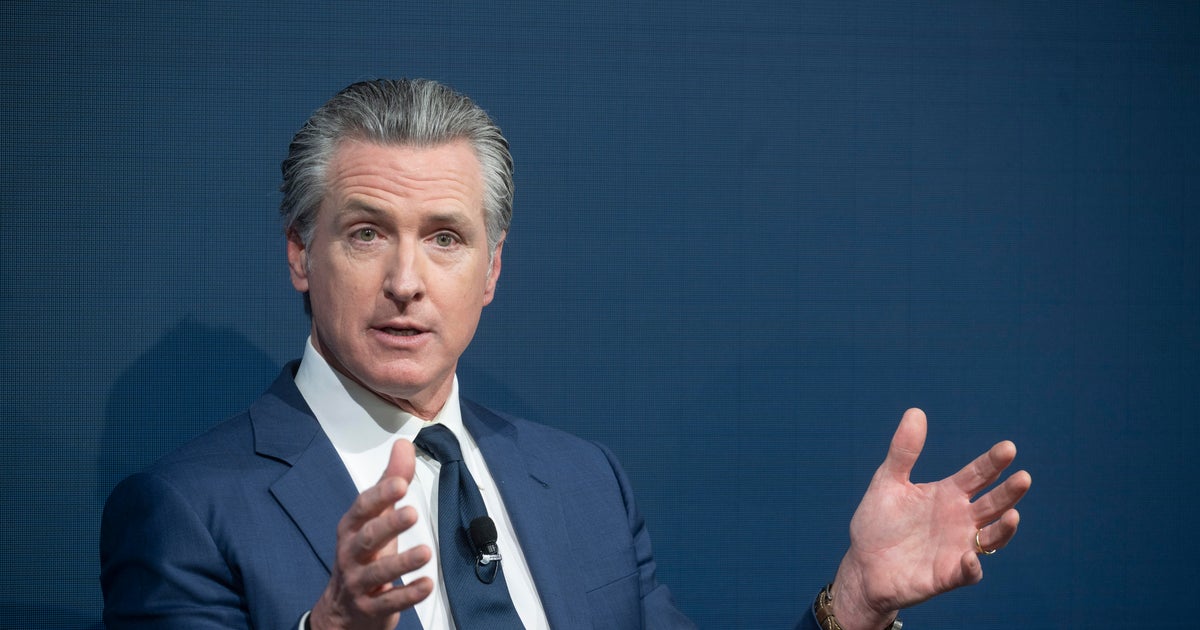
California Governor Gavin Newsom found himself at the center of a heated political firestorm this week after comments he made during a book promotion event sparked accusations of racism from conservative critics. During a Sunday appearance in Atlanta alongside Mayor Andre Dickens, Newsom opened up about his personal academic struggles, revealing that he scored 960 on his SAT and has dealt with dyslexia throughout his life. Speaking candidly to a packed auditorium, the governor attempted to connect with his audience by sharing his vulnerabilities: “I’m not trying to impress you, I’m just trying to impress upon you I’m like you, I’m not better than you,” he explained. He even joked about his reading difficulties, noting that people never see him read speeches because he simply cannot do so effectively—an admission he acknowledged might seem ironic for someone in politics. What was intended as a moment of genuine personal revelation quickly turned into political ammunition when conservative media figures and Republican officials seized upon the remarks, claiming they were racially insensitive because they were directed at a Black elected official.
Conservative Backlash and Media Amplification
The controversy gained significant traction when Fox News host Sean Hannity shared a clip of Newsom’s comments with the provocative caption suggesting that Newsom “Thinks a 960 SAT Makes Him ‘Like’ Black Americans.” This interpretation rapidly spread across conservative media outlets and social platforms, transforming what appeared to be a straightforward discussion about learning disabilities into a racially charged political incident. Republican Senator Tim Scott joined the criticism, accusing Newsom of suffering from the “bigotry of low expectations” and placing him in the company of other Democratic officials who, in Scott’s view, have stereotyped Black communities. Scott specifically admonished the California governor for “using your mediocre academics as a way to patronize communities,” suggesting that Newsom’s self-deprecating comments were actually condescending toward minority audiences. The senator, who had previously been one of the first conservatives to speak out against a controversial social media post from President Trump’s account, clearly viewed Newsom’s remarks as part of a broader pattern of Democratic politicians making assumptions about Black Americans based on stereotypes.
Newsom Fires Back With Strong Defense
Governor Newsom didn’t hold back in his response to the accusations, particularly directing his ire at Sean Hannity with a profanity-laced rebuttal that highlighted what he viewed as blatant hypocrisy. “You didn’t give a s about the President of the United States of America posting an ape video of President Obama or calling African nations sholes — but you’re going to call me racist for talking about my lifelong struggle with dyslexia? Spare me your fake f** outrage, Sean,” Newsom fired back. His response referenced specific incidents involving President Trump, including a video shared on Trump’s Truth Social account that depicted former President Barack Obama and former First Lady Michelle Obama as apes—a post that was eventually deleted after bipartisan criticism, with the White House claiming it had been “erroneously made” by a staffer. Newsom also recalled Trump’s infamous reference to certain African nations using vulgar language. Newsom’s communications director reinforced this defense, issuing a statement that characterized the controversy as manufactured political theater: “First MAGA mocked his dyslexia and now they’re calling Gavin Newsom a racist for talking about his low SAT scores. This is fake MAGA-manufactured outrage.” The response strategy clearly aimed to shift the narrative from defending the original comments to attacking the credibility and motives of those making the accusations.
Mayor Dickens Provides Important Context
Perhaps the most significant voice in the controversy belonged to the person who was actually present during the conversation—Atlanta Mayor Andre Dickens. On Monday, Dickens took to social media to provide his perspective on what had transpired, emphasizing that the actual context of their discussion differed significantly from how it was being portrayed in headlines and sound bites. “Take it from someone who was actually in the chair asking the questions: context matters more than a headline,” Dickens wrote, explaining that the conversation centered specifically on Newsom’s academic struggles and his performance on standardized tests. “That wasn’t an attack on anyone,” Dickens clarified. “It was a moment of vulnerability about his own journey.” The mayor went further, expressing frustration with the current state of political discourse where genuine moments of openness get weaponized and distorted. “We’ve gotten so used to loud, chest-pounding politics that when someone speaks about shortcomings, people try to twist it into something else,” he observed. Dickens also made a point of asserting Atlanta’s independence in determining what constitutes offensive behavior: “Let me be clear though. This is Atlanta. We don’t need anyone to tell us when to be offended. And history has shown … when we are, you’ll know.” His statement served as both a defense of Newsom and a gentle rebuke to outsiders attempting to manufacture outrage on behalf of the Black community.
A Pattern of Personal Transparency
In defense of the California governor, his office pointed out that these comments about his SAT scores and dyslexia were far from new or uniquely directed at this particular audience. According to Newsom’s team, he has made virtually identical remarks “for years, including with Charlie Kirk and dozens of other audiences.” This pattern suggests that rather than tailoring his message to condescend to a Black audience, Newsom has consistently used his academic struggles as a way to connect with various groups across different contexts. In a 2022 interview with “CBS Sunday Morning,” when asked about potentially running for president, Newsom responded: “The idea that a guy who got 960 on his SAT, that still struggles to read scripts, that was always in the back of the classroom — the idea that you even throw that out is in and of itself extraordinary. Who the hell knows? I’m looking forward to who presents themselves in 2028 and who meets that moment, and that’s the question for the American people.” This earlier comment, made in a completely different setting and without any racial dimension to the conversation, demonstrates that discussing his learning challenges has been a consistent part of how Newsom presents himself publicly—as someone who has overcome obstacles that might have prevented others from achieving similar success.
Political Implications and the Road to 2028
The timing of this controversy is particularly noteworthy given that Newsom kicked off his book tour over the weekend with stops strategically planned in states that would be crucial for any potential 2028 presidential campaign. His itinerary included Tennessee, Georgia, and South Carolina on Monday, with a planned visit to New Hampshire—an early primary state—scheduled for March. This geographical strategy signals that Newsom is seriously positioning himself for a presidential run, making every public appearance and statement subject to intensified scrutiny and political interpretation. The incident illustrates the challenging environment that any potential presidential candidate must navigate, where authentic moments of personal vulnerability can be rapidly transformed into political liabilities through selective editing and ideologically motivated framing. It also highlights the ongoing tensions in American political discourse around race, with both sides accusing the other of either exploiting racial issues for political gain or demonstrating insensitivity to racial dynamics. Whether this controversy will have any lasting impact on Newsom’s political prospects remains to be seen, but it certainly demonstrates that the road to 2028 will require careful navigation of an increasingly polarized and hypervigilant media landscape where context can easily be lost and intentions readily questioned. The governor’s willingness to fight back aggressively against his critics may appeal to Democratic base voters who want their leaders to show strength when confronted with what they perceive as bad-faith attacks.