


The Fall of Jimmy Lai: A 20-Year Sentence That Marks the End of Hong Kong’s Press Freedom
A Media Mogul’s Devastating Punishment
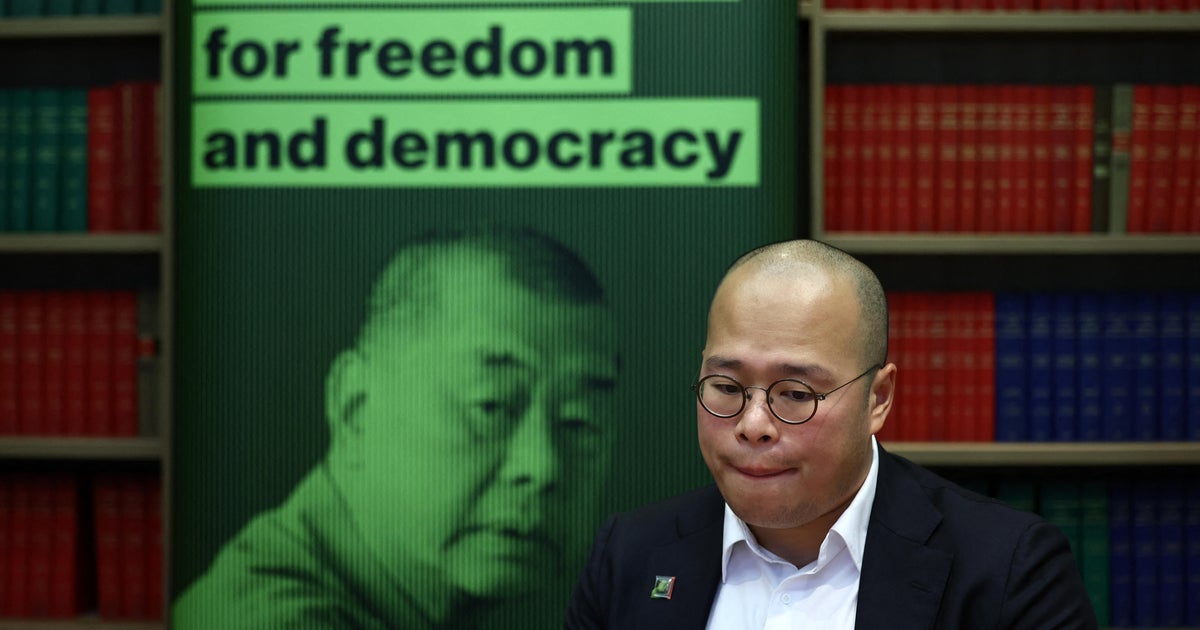
In a courtroom moment that symbolized the dramatic transformation of Hong Kong’s once-vibrant democracy, 78-year-old Jimmy Lai stood before judges and received a 20-year prison sentence—the harshest punishment yet under China’s sweeping national security law. The former media tycoon, who built his career championing press freedom and criticizing Beijing’s authoritarian grip, was convicted in December of conspiring to collude with foreign forces and publishing seditious materials. While he could have faced life imprisonment, the two-decade sentence effectively amounts to the same for a man of his age and declining health. When Lai arrived at court on Monday, he managed a smile and wave to his supporters who had gathered to show solidarity. But as the proceedings concluded and the reality of his fate sank in, his expression turned grave. In the public gallery, some observers couldn’t hold back their tears, understanding that this sentence represented far more than one man’s punishment—it marked the death of Hong Kong’s independent press and the silencing of dissenting voices in what was once Asia’s beacon of media freedom.
Family’s Heartbreak and International Condemnation
The human cost of this political prosecution became painfully clear through the words of Lai’s children, who spoke out immediately after the sentencing. His son Sebastien didn’t mince words, calling the “draconian” prison term devastating for their family and life-threatening for his elderly father, who has already spent more than five years in custody. “It signifies the total destruction of the Hong Kong legal system and the end of justice,” Sebastien declared, capturing the despair felt by democracy advocates worldwide. His sister Claire was equally forthright in her grief, describing the sentence as “heartbreakingly cruel” and predicting that if carried out in full, “he will die a martyr behind bars.” The family’s anguish is compounded by serious concerns about Lai’s health—his lawyer has revealed he suffers from heart palpitations, high blood pressure, and diabetes, conditions that make lengthy imprisonment particularly dangerous for someone of his advanced age. The government’s claim that Lai requested solitary confinement rings hollow to his supporters, who see it as another layer of cruelty in a politically motivated prosecution designed to break not just one man, but the spirit of an entire movement for democracy and accountability in Hong Kong.
A Global Diplomatic Crisis in the Making
Lai’s sentencing has sent shockwaves through international diplomatic channels, potentially creating significant friction between China and Western democracies. President Trump, who is scheduled to visit China in April, expressed sympathy after the verdict in December, revealing that he had directly appealed to Chinese President Xi Jinping to “consider his release.” This personal intervention from the American president underscores how Lai’s case has transcended local politics to become a flashpoint in global human rights discourse. The United Kingdom, where Lai holds citizenship, has been particularly vocal in its condemnation. Prime Minister Keir Starmer’s government has called for Lai’s immediate release, with Foreign Secretary Yvette Cooper bluntly characterizing the prosecution as “politically motivated” and noting that for a man of Lai’s age, the 20-year sentence is tantamount to a life sentence. Human Rights Watch’s Asia Director Elaine Pearson went even further, calling it “effectively a death sentence” and condemning it as both cruel and unjust. These international condemnations reveal a growing chasm between China’s authoritarian approach to dissent and the democratic world’s commitment to press freedom and human rights, setting the stage for continued diplomatic tensions.
Beijing’s Defiant Justification
While the international community recoiled in horror at Lai’s sentencing, Chinese officials celebrated it as a triumph of law and order. Hong Kong’s leader John Lee delivered a remarkably callous statement, describing Lai’s crimes as “heinous and evil in the extreme” and declaring that the “heavy sentence of 20 years’ imprisonment demonstrates the rule of law, upholds justice and is deeply gratifying.” This language—”deeply gratifying”—reveals the vindictive nature of this prosecution, suggesting that justice has less to do with fairness than with satisfying political objectives. In Beijing, Foreign Ministry spokesperson Lin Jian doubled down on this narrative, praising Lai as “a key planner and participant in a series of anti-China and disruptive activities in Hong Kong” and defending the sentencing as “reasonable, legitimate, and legal,” while adding provocatively that “there is no room for argument.” Lin’s warning to “relevant countries” to respect Hong Kong’s rule of law demonstrates Beijing’s dismissive attitude toward international criticism. This defiant stance illustrates how far Hong Kong has drifted from its promised autonomy under the “one country, two systems” framework that was supposed to preserve its freedoms for 50 years after the 1997 handover from British rule.
The Destruction of Apple Daily and Press Freedom
Jimmy Lai’s story is inseparable from that of Apple Daily, the newspaper he founded in 1995 that became Hong Kong’s most prominent voice for democracy and government accountability. Known for its fearless criticism of both Hong Kong and Beijing authorities, Apple Daily represented everything that made Hong Kong’s media landscape unique in the Chinese-speaking world—bold, independent, and unafraid to challenge power. That all came crashing down when Lai was arrested in August 2020 under the newly imposed national security law. Within a year, senior journalists from the paper were also arrested, and in June 2021, Apple Daily published its final edition, ending 26 years of groundbreaking journalism. The judges in Lai’s case found him to be the “mastermind” of the conspiracies charged, increasing his sentence accordingly while reducing it slightly due to his age, health, and the burden of solitary confinement. They also ruled that 18 years of his sentence should be served consecutively to a separate five-year-and-nine-month fraud conviction, ensuring he will likely never taste freedom again. The fate of Lai’s co-defendants—six former Apple Daily employees and two activists who received sentences ranging from six years and three months to ten years—serves as a chilling reminder of the risks now associated with independent journalism in Hong Kong.
A Chilling Effect on All Who Dare to Speak
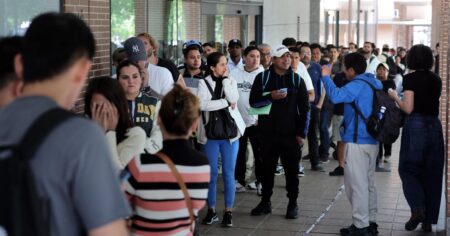
The broader implications of Lai’s conviction extend far beyond one newspaper or one man, creating what legal experts describe as a deeply troubling precedent for anyone engaged in critical thinking, research, or journalism in Hong Kong. Urania Chiu, a law lecturer at Oxford Brookes University, highlighted how the case represents an alarmingly broad interpretation of “seditious intent” and “collusion with foreign forces”—terms now stretched to encompass normal journalistic and academic activities. “Offering and publishing legitimate critiques of the state, which often involves engagement with international platforms and audiences, may now easily be construed as ‘collusion,'” Chiu warned. This has profound implications for journalists, academics, researchers, and anyone whose work requires international collaboration or involves critical analysis of government policies. The dramatic fall in Hong Kong’s press freedom ranking tells the story in stark numbers: from 18th place globally in 2002 to 140th out of 180 territories in 2025, according to Reporters Without Borders. On the morning of Lai’s sentencing, dozens of people queued before sunrise outside the courthouse, desperate to witness this historic moment. Among them was Tammy Cheung, a former Apple Daily employee, who captured the somber mood: “Whatever happens, it’s an end—at least we’ll know the outcome.” But for Hong Kong’s democracy movement and its once-free press, this isn’t really an ending at all—it’s the continuation of a tragedy that has transformed one of Asia’s most open cities into just another place where speaking truth to power can cost you everything.