
Why Suspending Gas Taxes Won’t Fix Your Pain at the Pump
The Political Response to Rising Fuel Costs
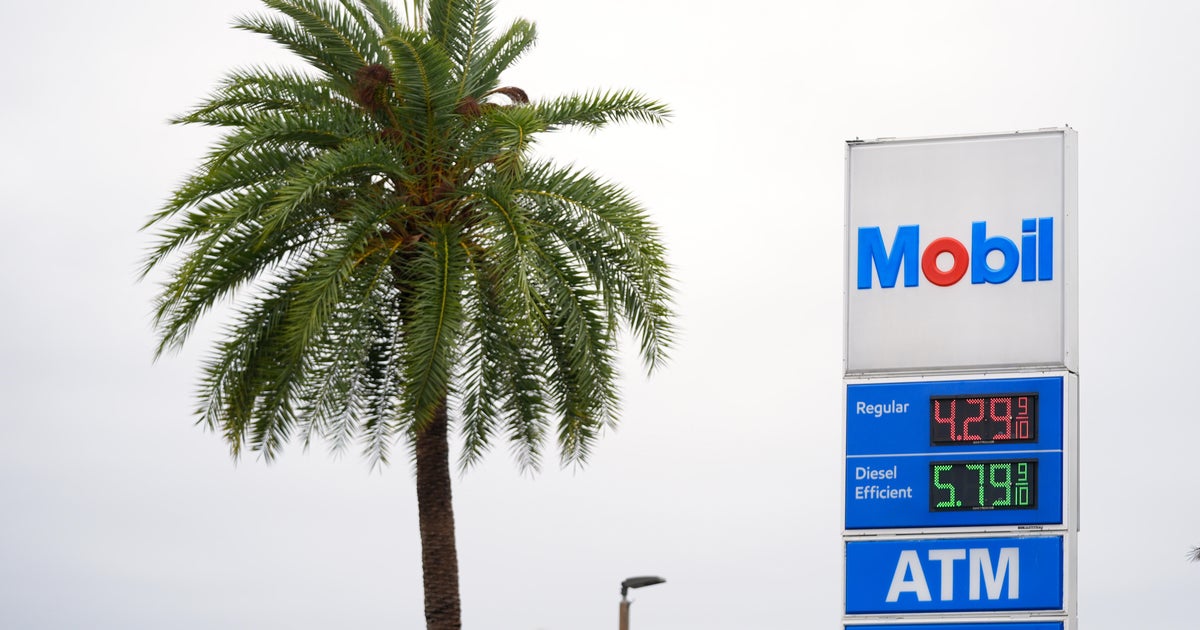
As Americans grapple with fuel prices hovering around $4.11 per gallon—driven largely by ongoing conflict with Iran—there’s been surprisingly little action from state governments to provide relief through gas tax suspensions. While more than half of Americans surveyed by CBS News report that gas prices are causing them genuine financial hardship, only a handful of states have moved to temporarily eliminate or reduce their motor fuel taxes. Georgia led the charge last month when Governor Brian Kemp signed a 60-day suspension of the state’s 33-cent gas tax and 37-cent diesel tax. Indiana followed with a 30-day suspension of its 7% gasoline sales tax, and Utah made a modest 6-cent reduction. These moves were framed as meaningful relief for struggling drivers, with Georgia House Speaker Jon Burns touting nearly $400 million in savings over two months. However, the overwhelming majority of states—and the federal government—have declined to follow suit, despite the political appeal of appearing to help consumers. The federal government’s 18.4-cent gas tax and 24.3-cent diesel tax remain firmly in place, as any change would require congressional action that simply isn’t materializing.
Why Experts Call It an “Expensive Gimmick”
Tax policy experts are bluntly critical of gas tax suspensions, with Carl Davis from the Institute on Taxation and Economic Policy dismissing them as expensive gimmicks that largely miss their intended target. The fundamental problem is that gas taxes don’t work like regular sales taxes—suspending them doesn’t guarantee that consumers will see the full benefit. Unlike a straightforward sales tax that gets removed at the register, gas taxes are paid by fuel wholesalers and distributors to the government, and these middlemen have considerable discretion over how much of any tax cut gets passed along to drivers at the pump. A revealing 2022 study from Penn Wharton examined temporary fuel tax holidays in Maryland, Georgia, and Connecticut and found that consumers captured only a portion of the intended savings. Maryland drivers saw 72% of the tax cut reflected in lower prices, while Georgia and Connecticut drivers received just 62% and 71% respectively. The remaining savings simply disappeared into the pockets of fuel companies and distributors who chose to pocket the difference rather than lower prices proportionally. Maryland’s Democratic Governor Wes Moore captured the skepticism of many officials when he declined multiple opportunities on national television to endorse suspending his state’s 47-cent gas tax, arguing that the real problem is geopolitical uncertainty that won’t be solved by temporary tax measures.
The Infrastructure Consequences Nobody Wants to Discuss
What often gets lost in the political rhetoric about tax relief is that gas and diesel taxes serve as essential “user fees” for maintaining the roads and bridges that drivers depend on every single day. These aren’t arbitrary revenue streams that governments can easily replace—they’re the single most important funding mechanism for transportation infrastructure in most states. When states suspend these taxes, even temporarily, they create immediate and substantial holes in their transportation budgets. Georgia’s 60-day suspension, for example, creates a nearly $400 million revenue shortfall that has to be absorbed somewhere. The consequences aren’t abstract: road improvement projects get delayed or canceled entirely, potholes go unfilled, bridge inspections and repairs get postponed, and the overall safety and quality of the transportation network deteriorates. Tax Foundation’s Adam Hoffer put it succinctly: “Band-Aids don’t fix potholes.” For drivers scraping together savings from a tax holiday, the irony is brutal—they might save a few dollars on gas only to face expensive tire repairs from deteriorating road conditions, or longer commutes due to construction delays on projects that lost funding.
Who Really Benefits (and Who Doesn’t)
The distribution of benefits from gas tax suspensions reveals uncomfortable truths about their effectiveness as relief measures. The Institute on Taxation and Economic Policy calculated that during Georgia’s suspension, the bottom 60% of earners would save just $13 per month—hardly transformative relief for families genuinely struggling with inflation. Meanwhile, the benefits flow disproportionately to those who drive the most and consume the most fuel, including commercial trucking operations and out-of-state travelers passing through. This means states are essentially subsidizing fuel consumption by people who may not even be their own residents or taxpayers, while depleting funds that would directly benefit state residents through better roads and infrastructure. The math becomes even more problematic when you consider that many states already struggle to adequately fund their transportation systems with existing gas tax revenue. Most states supplement fuel taxes with general fund money from other sources, meaning they’re already pulling resources from areas like education to keep roads maintained. A gas tax holiday only deepens this structural problem, forcing even more difficult budget trade-offs. As Davis noted, the gas tax “is benefitting drivers very directly in the form of road maintenance, bridge repair, expansions of the transportation network”—precisely the things that make driving safe and efficient in the first place.
The Federal Calculus and Political History
The federal government faces similar calculations but on a much larger scale, which explains why there’s been no serious movement toward suspending the federal gas tax despite the political appeal. The 18.4-cent federal gas tax flows directly into the Highway Trust Fund, which finances interstate highways and major transportation projects nationwide. This fund is already gradually becoming underfunded relative to infrastructure needs, and suspending revenue collection would dramatically worsen the shortfall. The political history of gas tax holiday proposals reveals consistent skepticism from both parties when they’re not campaigning. Former President Joe Biden proposed a federal gas tax holiday in 2022 during another price spike, but congressional Democrats quickly dismissed the idea as ineffective policy. Even more tellingly, during the 2008 financial crisis when gas prices were high, then-candidate Barack Obama sharply criticized his rivals’ calls for a gas tax suspension with a memorable line: “This isn’t an idea designed to get you through the summer, it’s designed to get them through an election.” That political calculation—the tension between short-term electoral appeal and sound long-term policy—continues to shape the current debate, with most federal lawmakers quietly recognizing that a gas tax holiday would provide minimal real relief while creating substantial fiscal problems.
The Long-Term Outlook and Why This Won’t Go Away
The uncomfortable reality for American drivers is that elevated fuel prices appear to be a persistent feature of the economic landscape rather than a temporary spike that will quickly resolve. The U.S. Energy Information Administration’s projections illustrate this clearly: before the conflict with Iran began, they anticipated gas prices averaging $2.95 per gallon in 2027, but current projections show prices remaining at $3.46 per gallon even three years from now. This means the political pressure for gas tax relief will likely continue, even as the policy remains fundamentally flawed. Hoffer characterizes it as “kind of a no-win policy”—suspending gas taxes doesn’t effectively lower prices but creates real infrastructure funding problems, while maintaining them during high-price periods generates public frustration and political vulnerability. There’s also the timing problem of reinstatement: if a state suspends its gas tax now, bringing it back during the heavy summer travel season could hit drivers particularly hard and generate significant backlash. Nobody likes seeing taxes go up, even when they’re simply being restored to previous levels. The fundamental challenge is that gas taxes represent a user-fee model that directly connects road usage with infrastructure funding, and there’s no easy alternative mechanism that works as efficiently. As much as the policy frustrates drivers facing financial hardship and politicians seeking popular relief measures, the experts are clear: suspending gas taxes is expensive theater that won’t meaningfully help struggling families while potentially damaging the roads and bridges we all depend on.