
Pentagon and Anthropic AI Partnership Faces Critical Deadline
A High-Stakes Standoff Over Military AI Use
The Pentagon finds itself in an unprecedented confrontation with Anthropic, one of the leading artificial intelligence companies, as a Friday deadline looms that could fundamentally reshape the military’s AI capabilities. The Defense Department has issued an ultimatum requiring Anthropic to permit unrestricted use of its Claude AI model for “all lawful purposes” by 5:01 p.m. Friday, or face the termination of a valuable $200 million contract and potential designation as a supply chain security risk. This standoff represents more than just a contractual dispute—it embodies a fundamental clash between Silicon Valley’s ethical concerns about AI development and the military’s national security imperatives in an increasingly competitive technological landscape with adversaries like China.
At the heart of this conflict lies Anthropic’s insistence on establishing explicit safeguards that would prevent its powerful Claude AI model from being deployed for mass surveillance of American citizens or for conducting autonomous military operations without human oversight. The company’s position reflects deep-seated concerns about AI reliability and the potential for catastrophic errors, particularly given that even advanced AI systems remain susceptible to “hallucinations”—instances where the technology generates false or misleading information. For Anthropic, the stakes involve not just this single contract but the company’s entire identity as a responsible AI developer committed to safety and transparency. The military’s reluctance to codify these specific restrictions in writing, however, has created an impasse that threatens to end what had been a groundbreaking partnership between the defense establishment and a cutting-edge AI firm.
The Pentagon’s Proposed Compromises and Red Lines
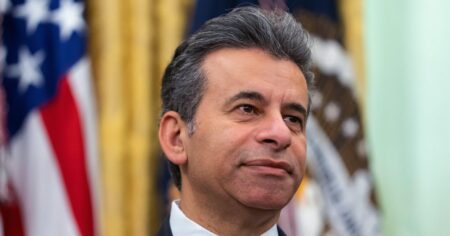
Pentagon Chief Technology Officer Emil Michael has characterized the Defense Department’s position as reasonable and accommodating, telling CBS News that the military has “made some very good concessions” in attempting to bridge the gap with Anthropic. These proposed compromises include a written commitment acknowledging that existing federal laws already prohibit mass surveillance of American citizens by the military, and that established Pentagon policies place restrictions on the deployment of autonomous weapons systems. Additionally, the military has extended an invitation to Anthropic to participate in its AI ethics board, potentially giving the company a voice in how artificial intelligence technologies are governed within the defense context. These overtures represent significant attempts by the military establishment to address corporate concerns about ethical AI deployment while maintaining operational flexibility.
However, Michael’s comments also reveal the fundamental limitations the Pentagon faces in meeting Anthropic’s demands. When asked directly why the military refuses to provide written guarantees specifically prohibiting the use of Claude for mass surveillance or autonomous targeting decisions, Michael emphasized that such activities are already forbidden under current law and policy. His response that “at some level, you have to trust your military to do the right thing” underscores a philosophical divide between those who believe existing legal frameworks provide sufficient guardrails and those who insist on explicit contractual prohibitions. More tellingly, Michael acknowledged that the military cannot and will not limit its future defensive capabilities in writing to satisfy a private company’s concerns, citing the imperative to remain prepared for potential conflicts with strategic competitors like China. This position effectively draws a red line: while the Pentagon is willing to acknowledge existing restrictions, it refuses to accept new limitations that might constrain how it deploys AI technologies in response to evolving threats.
Consequences and the Defense Production Act Option
The potential consequences of this breakdown extend far beyond a single cancelled contract. If negotiations fail by Friday’s deadline, Pentagon spokesman Sean Parnell confirmed that the military intends not only to sever its partnership with Anthropic but also to designate the company as a supply chain risk—a classification that could significantly complicate Anthropic’s ability to work with other government agencies and defense contractors. Perhaps even more dramatically, sources have indicated that Pentagon officials are considering invoking the Defense Production Act, a Korean War-era law that grants the president extraordinary powers to compel private companies to prioritize national defense needs. While Michael declined to confirm whether this emergency authority would actually be deployed, he made clear that “no company is going to take out any software that’s being used in this department until we have an alternative,” suggesting the military may take aggressive action to maintain access to AI capabilities it considers essential.
The potential loss for Anthropic is substantial and multifaceted. The company currently holds a unique position as the only AI developer with its model deployed on the Pentagon’s classified networks, a partnership facilitated through collaboration with Palantir, the data analytics giant founded by Peter Thiel. This exclusive status has provided Anthropic with not just $200 million in contracted revenue but also invaluable experience developing AI for the most demanding security environments and a competitive advantage in the rapidly growing government AI market. Meanwhile, Michael has indicated that the Pentagon is already working on establishing partnerships with alternative AI providers, suggesting that Anthropic’s window of opportunity may be rapidly closing. For a company that has built its brand around responsible AI development, the irony is stark: its ethical stance may cost it the ability to influence how the military actually deploys artificial intelligence, potentially ceding that role to competitors with fewer qualms about military applications.
Competing Visions of AI Safety and Innovation
This confrontation illuminates a broader ideological battleground regarding how society should approach the governance and regulation of artificial intelligence technologies. Anthropic CEO Dario Amodei has established himself as a prominent voice warning about the potential dangers of unconstrained AI development, making safety, transparency, and what he terms “sensible AI regulation” central pillars of his company’s public identity and business strategy. The company’s specific concerns about Claude’s use in military targeting reflect technical realities—the model, like all current AI systems, remains vulnerable to errors and hallucinations that could prove catastrophic in life-or-death military contexts, potentially leading to unintended escalation, civilian casualties, or mission failures that might have been avoided with human judgment in the decision-making loop.
In sharp contrast, the Trump administration has positioned itself as championing AI innovation freed from what it characterizes as excessive or ideologically motivated restrictions. Administration officials have argued that stringent regulations threaten to handicap American AI companies in their competition with international rivals, particularly Chinese firms that face fewer ethical constraints. Defense Secretary Pete Hegseth’s declaration that “we will not employ AI models that won’t allow you to fight wars” encapsulates this perspective, framing safety concerns as potentially dangerous inhibitions that could undermine military effectiveness. Michael’s characterization of the dispute as “partially ideological” and his assertion that Anthropic is “afraid of the power of AI” suggests the Pentagon views the company’s position as reflecting excessive caution rather than prudent risk management. This fundamental disagreement about whether AI should be treated as a uniquely dangerous technology requiring special safeguards, or simply as another tool to be governed by existing legal frameworks, appears increasingly difficult to reconcile.
The Broader Implications for Military AI and Private Sector Partnerships
The outcome of this standoff will likely reverberate far beyond the immediate participants, potentially reshaping the relationship between the military establishment and Silicon Valley’s AI industry for years to come. Michael’s assertion that “you can’t put the rules and policies of the United States military and the government in the hands of one private company” articulates a principle that many defense officials likely share—that civilian technology firms should not exercise veto power over how the military protects national security. From this perspective, allowing Anthropic to impose restrictions beyond those required by law would set a dangerous precedent, effectively permitting private corporations to constrain military capabilities based on their own ethical frameworks rather than democratic processes and established legal authorities. If the Pentagon prevails in this dispute, it may embolden the military to take a harder line with other AI companies that seek to impose use restrictions, potentially accelerating the development of military AI applications with fewer corporate-imposed ethical guardrails.
Conversely, if Anthropic successfully maintains its restrictions or if the public backlash against the Pentagon’s hardline approach proves significant, it could empower other technology companies to demand greater say in how their innovations are deployed for military purposes. This dispute also raises profound questions about the adequacy of current legal frameworks to govern AI in military contexts. Are existing laws and Pentagon policies, developed before the current AI revolution, truly sufficient to prevent the risks that companies like Anthropic fear? Or do the unique characteristics of modern AI systems—their opacity, their potential for unexpected behaviors, their capacity to operate at speeds beyond human comprehension—demand new and more specific safeguards? As the Friday deadline approaches with no clear resolution in sight, what began as a contract dispute has evolved into a defining test case for how democratic societies will balance innovation, security, and ethical constraints in the age of artificial intelligence. The resolution of this conflict will signal whether the future of military AI will be shaped primarily by defense imperatives or whether private sector ethics and safety concerns will play a meaningful constraining role.