
Growing Republican Resistance: Trump Faces Increasing Pushback as Midterms Loom
The Honeymoon Is Over
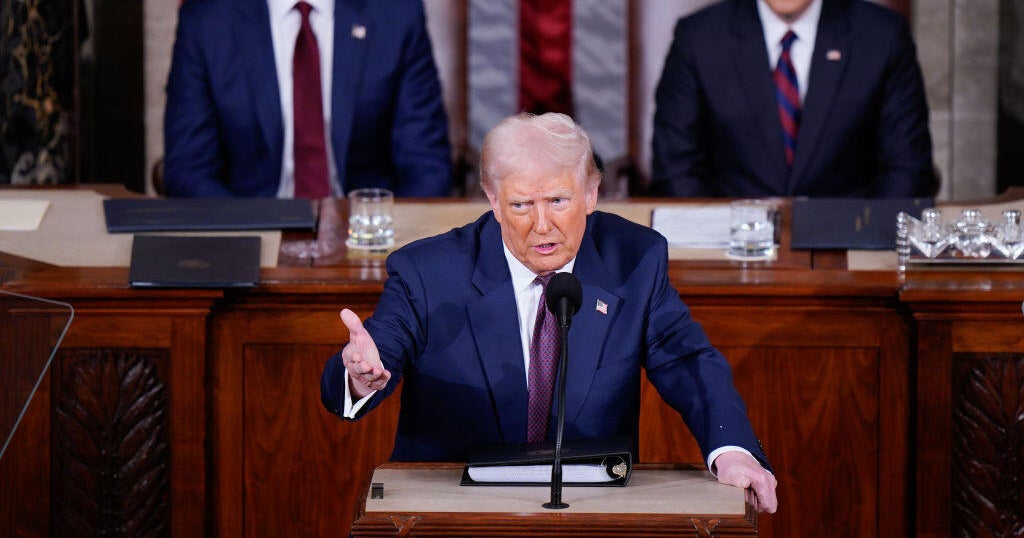
When President Trump takes the podium for his State of the Union address this Tuesday night, he’ll be met with the familiar roar of Republican applause echoing through the Capitol chambers. But beneath that enthusiastic surface lies a more complicated reality—one that reveals growing cracks in what once seemed like an unshakeable foundation of party loyalty. Over recent months, something has shifted in the relationship between the president and members of his own party. House Republicans, who once marched in lockstep with Trump’s agenda, have begun to push back on several key issues, from tariffs and war powers to the controversial handling of the Epstein files. As their own political futures become intertwined with policies that aren’t always popular back home, more GOP lawmakers are finding the courage to break ranks with the White House. Political analyst Elaine Kamarck from the Brookings Institution puts it bluntly: Trump has become a lame duck earlier than anyone expected. Traditionally, presidents don’t hit this phase until after midterm elections, but Trump seems to be experiencing it ahead of schedule, creating an unusual political dynamic that’s forcing everyone to recalibrate their strategies.
From Unity to Uncertainty: A Year Makes All the Difference
The contrast between now and a year ago couldn’t be more stark. When Trump first returned to the White House and addressed Congress, Republicans were riding high on what they believed was a clear mandate from voters. There was a palpable sense of unity across all factions of the party—everyone seemed to be pulling in the same direction, energized by their electoral victory and the flurry of executive orders the president signed in his early days back in office. Todd Belt, who directs George Washington University’s political management program, describes that initial period as a “sugar high”—an intoxicating rush of power and possibility that made everything seem achievable. Republicans were unified, confident, and ready to transform their vision into reality. But as Belt points out, we’re now a year into Trump’s term, and that initial euphoria has given way to something more complicated. The break has been particularly pronounced among the “America First” wing of the MAGA movement, whose members have grown frustrated with what they see as the president’s attention being diverted away from domestic concerns. Some of Trump’s most loyal supporters have begun to question aspects of his economic and immigration policies, viewing certain moves as violations of core constitutional principles they hold dear. This disillusionment has emboldened some members to make their voices heard through their votes, even when it means publicly opposing the president they helped elect.
When Loyalty Meets Reality: The Political Calculations Begin
The dynamics of political loyalty become especially interesting when poll numbers start to slide and reelection concerns come into focus. As Belt explains, when a president’s approval ratings weaken, it becomes psychologically and politically easier for members of his own party to distance themselves from unpopular positions. Sometimes these protest votes are cast knowing they won’t change the ultimate outcome, making them relatively safe gestures of independence. But increasingly, these votes reflect genuine concerns about how closely tying themselves to Trump might affect their chances in upcoming elections. The most recent example of GOP rebellion came when six Republicans joined Democrats to vote against the president’s tariffs on Canada. Party leaders tried desperately to prevent the vote from even happening, but they couldn’t hold the line. Trump’s response was swift and characteristically blunt—he warned that Republicans who opposed him would “seriously suffer the consequences come Election time.” When the Supreme Court later invalidated many of his tariffs, Trump made good on that threat by withdrawing his endorsement from Colorado Rep. Jeff Hurd, one of the six defectors, and throwing his support behind Hurd’s opponent. The president didn’t mince words, calling Hurd “one of a small number of Legislators who have let me and our Country down.”
The Epstein Files and Other Embarrassments
While the tariff vote was significant, it wasn’t the only instance of Republicans breaking with Trump. The president nearly faced another defeat in January when two Republicans supported a Democratic resolution to block him from deploying troops to Venezuela after the U.S. captured former Venezuelan President Nicolás Maduro. Another war powers vote focused on Iran is expected in the coming days, and it could prove equally challenging for the White House. Perhaps the most politically damaging episode for Trump, though, was the fight over releasing files related to Jeffrey Epstein, the convicted sex offender. Trump strongly opposed making these documents public—until the very last minute when political pressure became overwhelming. Four Republicans helped force a floor vote on the matter, and ultimately all but one GOP lawmaker voted for the files’ release. This episode also marked the spectacular public falling out between Trump and Rep. Marjorie Taylor Greene of Georgia, who went from being one of his fiercest congressional allies to a vocal critic before eventually announcing her retirement from Congress. Mike Ricci, who served as an aide to former House Speakers John Boehner and Paul Ryan, suggests this kind of restlessness is actually fairly typical in a president’s second year. After sprinting through the first year trying to accomplish as much as possible, members find themselves staring down midterm elections that serve as a referendum on the president and his policies. During times of economic anxiety, as we’re experiencing now, that dynamic becomes even more complicated. Ricci also notes something deeper happening—members are beginning to look beyond Trump’s presidency and think about their political futures in a post-Trump world, creating a tension between loyalty to him now and long-term positioning for themselves.
The Intimidation Factor and Those Who Resist It
Despite growing dissatisfaction with some of Trump’s priorities, only a small number of Republicans have been willing to actively oppose him in public. Philip Wallach, who studies congressional dysfunction at the American Enterprise Institute, attributes this to what he calls the “intimidation factor.” Most members, he says, still feel tremendous pressure to stay in line, especially before they’ve cleared their primary elections. In modern American politics, there’s never been a president whose party was organized so completely around personal obedience to the leader himself. The Republicans who have distanced themselves from Trump on certain issues tend to be those who don’t have much to lose in their relationship with him. For some, that calculation is made easier by their decision not to seek reelection. Two of the Republicans who voted for the tariff resolution—Dan Newhouse of Washington and Don Bacon of Nebraska—are retiring. Rep. Kevin Kiley of California, whose seat was affected by redistricting, hasn’t yet announced his plans. When asked whether Trump is losing his grip on House Republicans, Bacon pushed back against that framing but made clear he’s not afraid to speak his mind when he disagrees with the president. “You got to stand for what’s right despite where your party leadership is at,” Bacon told reporters. “If you threaten me, I tend to dig my heels in.” In private conversations, Bacon says his Republican colleagues have been critical of Trump’s tariffs and his handling of the Ukraine war, yet those same colleagues have been reluctant to make their opposition public or reflect it in their votes.
The Road to November: A Narrow Margin and High Stakes
House Speaker Mike Johnson is navigating all of this with an incredibly slim one-vote majority, which leaves him virtually no room for error in keeping his conference united. Special elections are coming up that should mostly maintain the Republican advantage, though Democrats are expected to pick up at least one seat in April when New Jersey holds a special election to fill the vacancy left by Governor Mikie Sherill. This will keep the GOP margin razor-thin heading into the crucial midterm elections. Political history offers a sobering lesson for Trump and his party: the party controlling the White House typically loses seats in the House during midterm elections. At this point, as Kamarck suggests, it becomes a matter of damage control. Will Democrats sweep to a massive victory, gaining 30 seats or more? Or will they pick up just five or ten? The answer depends largely on what the administration does between now and November. While Republicans made what Kamarck considers a strategic retreat on immigration, she doesn’t see similar course corrections on the economy. If Republicans lose control of the House, Trump’s legislative agenda would essentially come to a standstill. His final two years in office would likely be dominated by Democratic-led investigations and subpoenas, making it nearly impossible to accomplish any significant policy goals. This nightmare scenario means vulnerable GOP members might become more willing to distance themselves from unpopular Trump positions in the coming months, especially after primary season ends and they can focus on general election voters without fear of a Trump-backed challenger. Rep. Thomas Massie of Kentucky has emerged as something of a ringleader among Republican rebels. He led the charge with Democratic Rep. Ro Khanna to force the Epstein files vote, then announced they were teaming up again on a war powers resolution regarding Iran. Massie’s frequent defections have earned him Trump’s repeated anger and a Trump-backed primary challenge, but he continues undeterred. His willingness to oppose party leadership means that Speaker Johnson and, by extension, Trump, can afford very little additional opposition if they want to pass anything. As Tuesday’s State of the Union approaches, political observers note that members are unlikely to stage any major rebellions immediately before such a significant presidential address. But afterward, as Belt suggests, “things will get a little stickier.” The coming months will reveal whether Trump can rebuild party unity or whether the fractures we’re seeing now are the beginning of a more fundamental shift in the Republican Party’s relationship with its most dominant figure in generations.