
Tragic Allegations: The Regina Santos-Aviles Case and Claims Against Rep. Tony Gonzales
A Devastating Loss and Serious Accusations
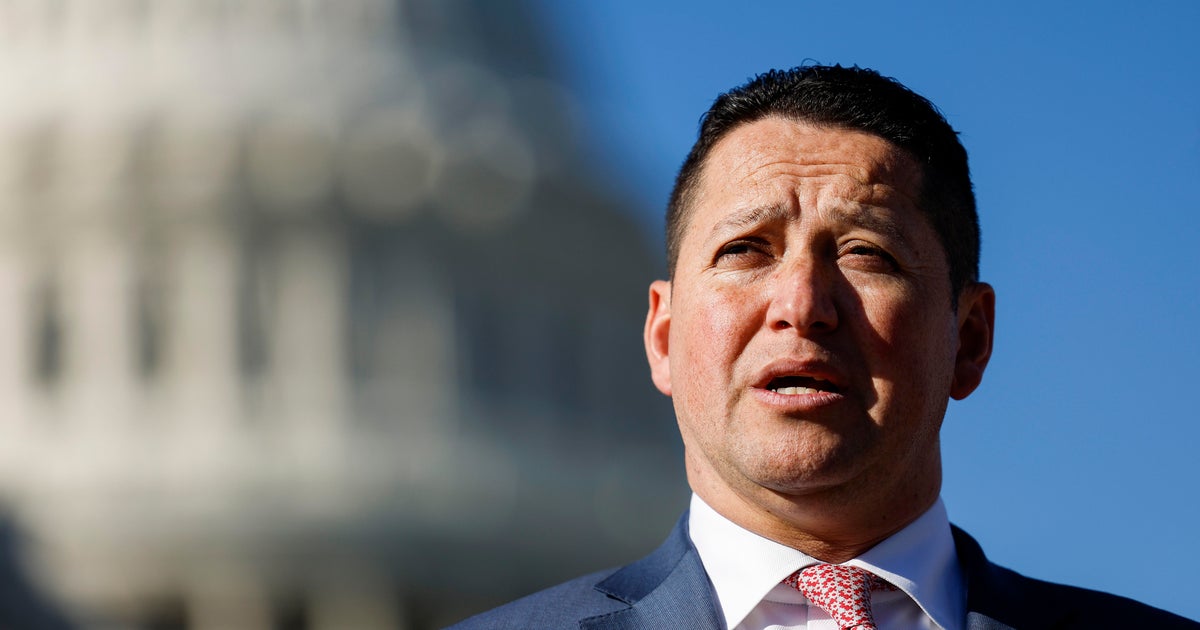
The death of Regina Santos-Aviles has sparked a troubling controversy involving Texas Republican Congressman Tony Gonzales, who represents a vast district stretching along the U.S.-Mexico border. Santos-Aviles, who worked as a congressional aide for Gonzales, died by suicide in September in a particularly tragic manner—she set herself on fire, according to the autopsy report. Her death has left behind not only grieving family members but also serious allegations about what transpired during her employment. Attorney Bobby Barrera, representing Santos-Aviles’ widower Adrien Aviles, has come forward with claims that Congressman Gonzales coerced his employee into a sexual relationship and is now attempting to portray himself as the victim rather than taking responsibility for his alleged actions. Text messages obtained by CBS News show that months before her death, Santos-Aviles confided in a colleague that she “had an affair with our boss.” While Gonzales has categorically denied these allegations and any romantic or sexual relationship with his former staffer, the controversy has continued to grow, raising questions about workplace conduct, power dynamics in congressional offices, and the circumstances that may have contributed to this young woman’s tragic end.
The “Open, Shielded Secret” Within the Office
According to attorney Bobby Barrera, the alleged relationship between Congressman Gonzales and Regina Santos-Aviles was what he describes as “an open, shielded secret” among the congressional staff. In an interview with CBS News, Barrera explained that while people within the office were aware of the situation, the secrecy surrounding it was maintained specifically at Gonzales’ request. The attorney stated that the congressman allegedly asked his staff to continue working together for everyone’s benefit and to get through the situation and past the election cycle. This characterization paints a picture of an office environment where employees were aware of inappropriate conduct but felt compelled to maintain silence about it. Barrera has further claimed that forensic downloads from Santos-Aviles’ phone contain text messages showing that Gonzales pushed her into the sexual relationship, with evidence that she sometimes resisted or pushed back against his advances. These messages allegedly show Santos-Aviles communicating that Gonzales was “going too far” and suggesting she believed she had been hired for her physical appearance rather than her professional qualifications. The attorney emphasized that coercion is an interpretive matter that depends heavily on the power dynamics between the people involved—what might seem like a simple question from one person becomes coercive when it comes from your boss requesting something improper, such as sending pictures or meeting at particular locations. A source close to the Santos-Aviles family corroborated aspects of this account, telling 24sight News that the late staffer had confided in them about the relationship, saying “I need your advice—I’ve really screwed up.” This source characterized the situation as tragic, believing that “Tony took advantage of a young woman without regard for the consequences.”
Denials from Multiple Parties
Despite the allegations and the claims about text message evidence, Congressman Gonzales has firmly denied having any affair with Santos-Aviles. In an interview with Punchbowl News in November, he stated plainly that “the rumors are completely untruthful.” Both he and his office have declined to respond to subsequent requests for comment from CBS News regarding the ongoing story. Interestingly, Santos-Aviles’ own mother, Nora Gonzales, has also denied that her daughter was involved in a relationship with the congressman, telling the New York Post that the accusations were “completely false.” This denial from the victim’s mother adds a complex layer to the situation, though it’s worth noting that family members are not always aware of what’s happening in their loved ones’ professional lives, particularly when those situations involve shame, secrecy, or fear of professional repercussions. The conflicting accounts—with the widower’s attorney presenting evidence of an affair that allegedly led to workplace harassment, while the congressman and the victim’s mother both deny it occurred—create a confusing picture that may only be clarified through a thorough investigation or legal proceedings. What remains undisputed, however, is the tragic outcome: a young woman who worked in public service died by suicide in a horrific manner, and questions about what led to her mental state in her final months deserve answers.
The Blackmail Controversy and Settlement Proposal
The situation took another contentious turn when Congressman Gonzales publicly accused attorney Bobby Barrera of attempting to blackmail him. Gonzales posted an excerpt from a letter from Barrera on social media platform X, with the caption: “I WILL NOT BE BLACKMAILED. Disgusting to see people profit politically and financially off a tragic death.” The letter referenced a proposed settlement of $300,000 in exchange for a non-disclosure agreement. However, Barrera strongly disputes the characterization of this communication as blackmail or extortion. According to the attorney, what Gonzales is framing as an extortion attempt was actually a standard confidential settlement letter sent to the congressman’s attorney (not to Gonzales himself) outlining claims under the Congressional Accountability Act. This law, which was passed in the 1990s, specifically governs workplace rights for congressional employees and provides legal frameworks for addressing workplace misconduct. Barrera explained that the proposed $300,000 settlement amount was not arbitrary—it represents the maximum amount recoverable under the Congressional Accountability Act and also corresponds to standard homeowners insurance policy limits. The attorney further claimed that Gonzales “clearly cropped” the letter before making it public, deliberately omitting portions that described “substantial evidence that we had of sexual harassment and retaliation harassment in the office with Regina.” Barrera emphasized that “any claim of extortion implies that he actually did something wrong and that we want money to keep our mouth shut,” adding that what Gonzales has failed to acknowledge is the alleged affair itself. The attorney stated firmly that “our claim is legitimate, our facts are legitimate, our allegations are truthful,” and accused the congressman of trying to play the victim in a situation of his own making.
The Decline of Regina Santos-Aviles’ Mental Health
One of the most heartbreaking aspects of this case is the documented decline in Regina Santos-Aviles’ mental health in the period leading up to her death. Attorney Barrera described this deterioration as sharp and directly connected to Congressman Gonzales’ alleged conduct in the workplace. According to Barrera, “there are no documented mental health issues prior to this relationship with Tony Gonzales that anyone can speak of or point to.” He attributed the deterioration of her mental state to what he characterized as workplace harassment following the discovery of the alleged affair. Public salary records from Legistorm show an interesting timeline: Santos-Aviles’ annual salary increased from approximately $54,000 to $72,000—a raise of roughly $18,000—shortly after her husband allegedly discovered the affair through text messages on her phone. While salary increases can occur for many legitimate reasons, the timing has raised questions about whether this raise might have been connected to the alleged relationship or its aftermath. Adding to the sense that Santos-Aviles may not have received appropriate support or acknowledgment, sources indicate that Congressman Gonzales did not attend her funeral last fall. Instead, on the day of her funeral, he appeared on a podcast to discuss political violence, with no mention of her death. Furthermore, none of his office’s newsletters in the week following her death made any reference to losing a staff member. This lack of public acknowledgment of her service and her passing has struck many observers as callous, particularly given that congressional offices typically memorialize staff members who pass away, even under ordinary circumstances.
Political Implications and What Comes Next
As this controversy unfolds, Congressman Gonzales finds himself in the midst of a competitive primary campaign for reelection. He has received an endorsement from President Trump, which carries significant weight in Republican primaries, but he faces a serious challenge from Brandon Herrera, whom he only narrowly defeated in 2024 after the race went to a runoff. The timing of these allegations could not be more politically consequential, as Texas holds its primary elections on March 3, with early voting already underway. A House GOP leadership aide told reporters that “leadership is waiting and watching to see what happens with Tony Gonzales,” though they noted there are currently no reductions in endorsements or support. This wait-and-see approach may partly reflect the political reality that Gonzales’ district is considered safely Republican territory in general elections—he won reelection by 25% in 2024. However, with House Republicans holding only a razor-thin majority, and competitive primaries unfolding across the country, party leaders understand that every seat matters. In a midterm cycle where control of the chamber could hinge on just a handful of races, even seats in safe districts carry added weight if the incumbent loses a primary to a potentially weaker general election candidate. Beyond the political calculations, this case raises important questions about workplace protections for congressional staff, the power dynamics that can enable misconduct in political offices, and whether current mechanisms for addressing such allegations are adequate. The Congressional Accountability Act was designed to provide protections for congressional employees, but cases like this one highlight ongoing concerns about whether staff members truly have safe channels to report misconduct without fear of retaliation, and whether they have adequate legal recourse when things go wrong. As the legal proceedings continue and more information potentially comes to light, the memory of Regina Santos-Aviles serves as a sobering reminder of the human cost when workplace protections fail and when power imbalances go unchecked.