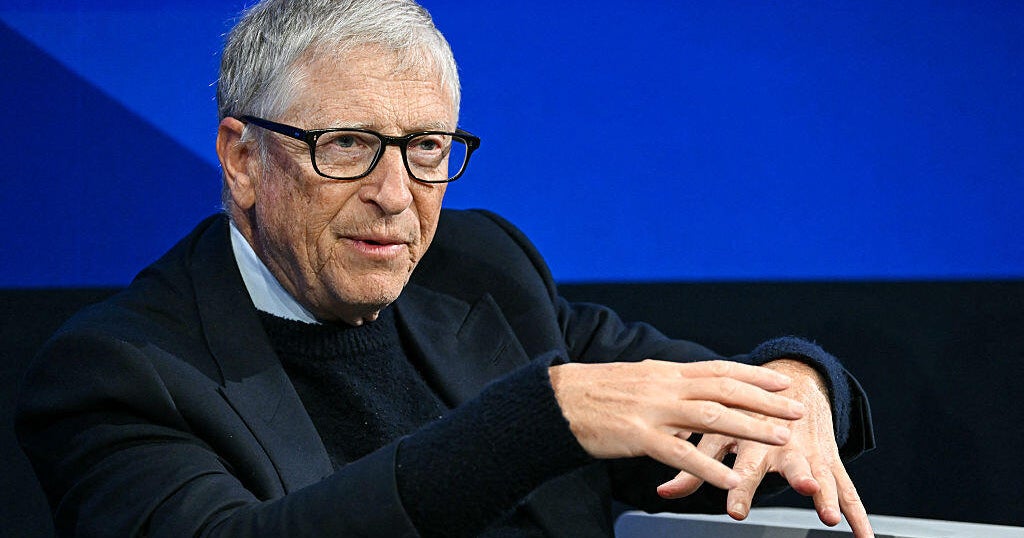

Congressional Committee Calls Bill Gates and Six Others to Testify in Jeffrey Epstein Investigation
A High-Profile Investigation Unfolds
In a significant development that has captured public attention, the House Oversight and Government Reform Committee has issued testimony requests to seven prominent individuals connected to the late Jeffrey Epstein scandal. Among those called to testify is Microsoft co-founder Bill Gates, whose name has become entangled in one of the most disturbing cases involving the wealthy and powerful. The congressional committee is digging deeper into questions about how Epstein managed to maintain his influential connections even after his 2008 conviction for soliciting prostitution. The other six individuals summoned include people from Epstein’s inner circle and those who had various professional or personal associations with him: Lesley Groff and Sarah Kellen, both former employees of Epstein; Kathryn Ruemmler, who served as White House counsel under President Barack Obama; Leon Black, a co-founder of the investment giant Apollo Global Management; Doug Band, a longtime aide to former President Bill Clinton; and tech billionaire Ted Waitt, who previously dated Ghislaine Maxwell, Epstein’s notorious associate and convicted accomplice.
House Oversight Committee Chairman James Comer has made it clear that the committee believes these seven individuals possess information crucial to understanding the full scope of Epstein’s operation and the failures that allowed it to continue for so long. The investigation is examining three main areas: potential mishandling of the federal government’s investigation into Epstein and Maxwell, the methods Epstein and Maxwell used to curry favor and influence to protect their criminal activities, and possible ethics violations by elected officials. The testimony dates assigned to the seven witnesses range from mid-April through early June, giving each person time to prepare for what promises to be intensive questioning. It’s worth noting that none of these seven individuals have been criminally charged with any wrongdoing related to Epstein, though their connections to him have raised serious questions about judgment and accountability among the elite.
The Context Behind the Congressional Inquiry
This latest round of testimony requests comes on the heels of a massive document release that has shed new light on Epstein’s web of connections. Last December, the Justice Department began releasing millions of files related to its investigation into Epstein, a wealthy financier who operated an extensive sex trafficking ring with the help of Ghislaine Maxwell. The release only happened after Congress passed legislation in November requiring the Justice Department to make these documents public, a bill that President Trump signed into law. The files have revealed disturbing details about how Epstein and Maxwell victimized dozens of underage girls and young women over many years, and how Epstein maintained relationships with powerful people even after his 2008 guilty plea to soliciting prostitution in Florida.
That 2008 case remains controversial to this day. Epstein struck a deal that allowed him to plead guilty to state charges in exchange for federal prosecutors dropping a more serious case against him. He served just 13 months in county jail and had to register as a sex offender—a punishment many victims and advocates considered shockingly lenient given the gravity of his crimes. The financier’s crimes finally caught up with him in July 2019 when a New York federal grand jury indicted him on child sex trafficking charges. However, justice was never fully served in court; Epstein was found dead in his Manhattan jail cell in August 2019, with his death ruled a suicide. Maxwell, meanwhile, was convicted in 2021 on federal sex trafficking charges and sentenced to 20 years in prison. The recently released documents have exposed just how deep Epstein’s connections ran among the wealthy and influential, and how these relationships continued long after his 2008 conviction should have made him persona non grata in respectable circles.
Bill Gates’ Connections and Recent Apology
Bill Gates’ relationship with Jeffrey Epstein has become one of the most scrutinized aspects of the scandal, particularly given Gates’ public image as a philanthropist dedicated to improving global health and education. Last week, Gates issued an apology to the staff of the Gates Foundation regarding his ties to Epstein, acknowledging that the relationship began in 2011—three years after Epstein’s conviction—and continued through 2014. According to audio of this apology obtained by the Wall Street Journal, Gates admitted that he and Epstein once shared a private jet and spent time together in several locations including Germany, France, New York, and Washington. This revelation has been particularly troubling to many who wonder why Gates would associate with a convicted sex offender during those years.
The released Justice Department files included some deeply disturbing content related to Gates. Two emails that Epstein sent to himself in July 2013 contained unverified allegations about Gates having extramarital affairs with “Russian girls” that allegedly resulted in a sexually transmitted infection requiring antibiotic treatment. One email even claimed that Gates tried to “surreptitiously” give antibiotics to his then-wife, Melinda Gates. These emails appeared to have been written by Epstein as if on behalf of a disgruntled Gates employee who was resigning. A spokesperson for Gates strongly rejected these claims, calling them “absolutely absurd and completely false,” and characterizing the documents as evidence of “Epstein’s frustration that he did not have an ongoing relationship with Gates and the lengths he would go to entrap and defame.”
However, during the town hall with Gates Foundation staff, Gates did acknowledge having affairs, specifically mentioning “one with a Russian bridge player who met me at bridge events, and one with a Russian nuclear physicist who I met through business activities.” Gates has indicated through a spokesperson that he welcomes the opportunity to testify before the committee, stating that while he “never witnessed or participated in any of Epstein’s illegal conduct, he is looking forward to answering all the committee’s questions to support their important work.” This willingness to cooperate may help clarify the nature of his relationship with Epstein and whether it was purely social, business-related, or something else entirely.
Kathryn Ruemmler’s Epstein Connection
Kathryn Ruemmler’s appearance in the Epstein documents has raised eyebrows given her prominent role in the Obama administration and later in the corporate world. Ruemmler served as White House counsel from 2011 to 2014, a position of enormous responsibility and trust. After leaving the White House, she joined the prestigious law firm Latham and Watkins in 2014, before moving to Goldman Sachs in 2020 as the company’s top lawyer. Her name appeared multiple times in the Justice Department’s released files, most notably in a December 2015 email exchange where she wrote that she “adored” Epstein—a statement that has proven difficult to explain given what was publicly known about Epstein at that time.
The documents also revealed that in May 2015, Epstein asked Ruemmler if she could arrange a White House tour for filmmaker Woody Allen and his wife Soon Yi. White House records confirm that such a tour did take place in December 2015. The connection between Ruemmler and Epstein has been explained by her spokesperson as a professional relationship that developed when she was working as a criminal defense attorney and happened to share a client with Epstein. According to the spokesperson, Ruemmler “welcomes the opportunity to appear before the Committee” and emphasized that “she has done nothing wrong and had no knowledge of any ongoing criminal activity on his part.” Nevertheless, the revelation of her connection to Epstein had professional consequences. Last month, Ruemmler announced she would resign from her position as Goldman Sachs’ top lawyer, a decision that came in the wake of the document release and the scrutiny it brought.
Leon Black’s Financial Ties and Personal Entanglement
Leon Black’s relationship with Epstein represents one of the most financially significant connections revealed in the document release. Black, who co-founded the powerful investment firm Apollo Global Management, appeared in numerous documents showing that he received advice from Epstein on matters both professional and deeply personal. One particularly revealing set of emails from September 2015 showed Epstein counseling Black on how to keep a six-year extramarital affair with a Russian woman from becoming public knowledge. In one email, Epstein suggested that Black hire former law enforcement officers to approach the woman about signing a nondisclosure agreement, writing: “Choose method of message delivery, my choice. – two highly respected former —- fill in the blank, immigration, scotland yard. sfo. . who may knock on her door and present the terms.”
The documents reveal that in October 2015, the woman did sign a nondisclosure agreement with Black under terms that included $100,000 monthly payments for 15 years, forgiveness of a $1 million loan, and two million British pounds to help her obtain legal status in the United Kingdom. Beyond this personal matter, Senate Finance Committee documents showed that Black paid Epstein an astonishing $158 million for tax and estate planning services—a sum that has raised questions about whether such payments were justified by the services rendered or served some other purpose. The scrutiny over his Epstein connections led Black to step down as chairman and CEO of Apollo in 2021. A law firm that Apollo’s board retained to review Black’s dealings with Epstein did clear him of any wrongdoing, though questions persist about the nature and extent of their relationship and why Black continued to work with Epstein long after his conviction.
Looking Ahead: What These Testimonies Could Reveal
As the testimony dates approach, the public and lawmakers alike are eager to understand how Jeffrey Epstein managed to maintain his network of influential connections despite being a registered sex offender. The seven individuals called to testify represent different facets of Epstein’s world—from his employees who managed his daily affairs, to powerful business figures who paid him millions, to government officials who socialized with him, to those connected through his associate Ghislaine Maxwell. The House Oversight Committee’s investigation aims to answer fundamental questions about accountability and whether the federal government’s handling of the Epstein case was compromised by his connections to the powerful.
The testimonies may shed light on whether Epstein used his relationships with influential people as a form of protection, allowing him to continue his criminal activities with reduced scrutiny. They may also reveal whether anyone in positions of authority failed to act on information about Epstein’s conduct, or whether ethics rules were violated by officials who maintained relationships with him. For the victims of Epstein and Maxwell, these hearings represent another step toward understanding the full scope of how these predators operated and who enabled them, whether knowingly or through willful blindness. While the seven individuals called to testify have not been charged with crimes, their cooperation—or lack thereof—will help Congress and the public better understand one of the most troubling scandals involving the intersection of wealth, power, and criminal conduct in recent American history.