
Justice Department Accused of Monitoring Lawmakers’ Searches Through Epstein Files
Congressional Democrat Alleges Surveillance During Document Review
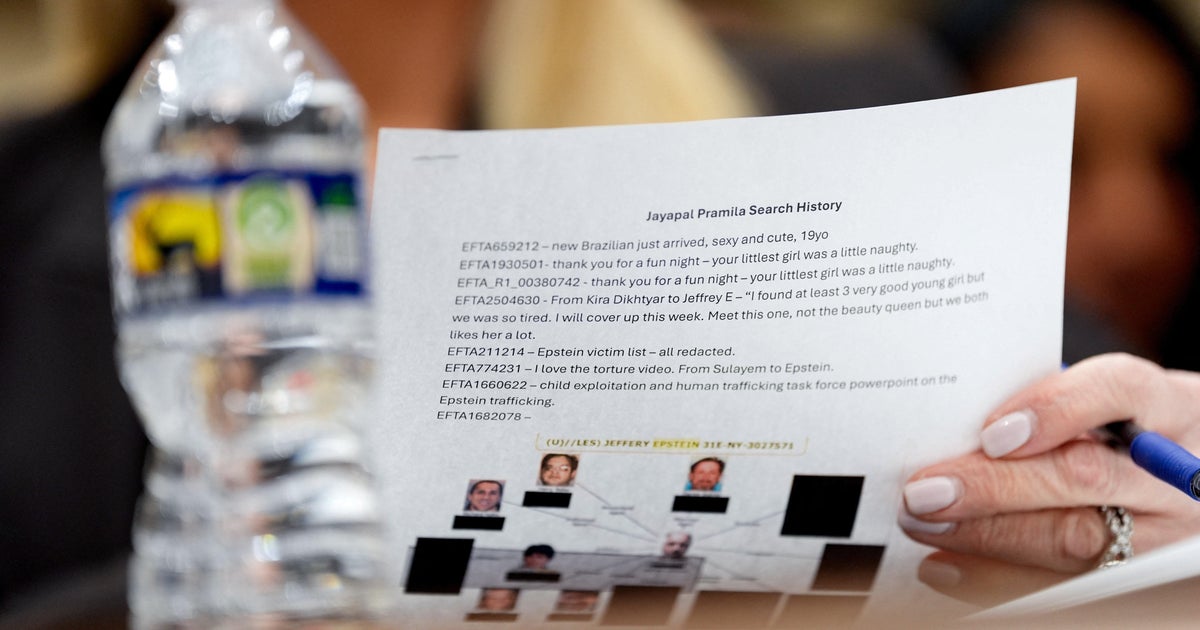
A significant controversy has erupted on Capitol Hill after Democratic Representative Pramila Jayapal of Washington accused Attorney General Pam Bondi of monitoring her search activity while she reviewed documents related to convicted sex offender Jeffrey Epstein. The accusation stems from a tense congressional hearing held on Wednesday, where photojournalists captured images of Bondi holding papers that appeared to contain detailed records of Jayapal’s search history. One document clearly bore the label “Jayapal Pramila Search History” and listed at least eight different files from the Justice Department’s extensive collection of Epstein-related records, complete with file numbers and brief descriptions of their contents. This revelation has sparked outrage among Democrats who view it as a serious breach of the constitutional separation of powers and an inappropriate surveillance of elected officials performing their oversight duties.
The incident occurred during what witnesses described as a combative and marathon hearing before the House Judiciary Committee, where Bondi faced questioning about the Justice Department’s handling of the massive trove of Epstein documents. The hearing itself was already contentious, with lawmakers from both parties pressing the Attorney General on various aspects of the department’s work, but the discovery that Bondi had brought documentation tracking individual lawmakers’ searches added an entirely new dimension to the proceedings. Jayapal, who previously chaired the influential Congressional Progressive Caucus, didn’t mince words in her response, telling CBS News that “it is totally inappropriate and against the separations of powers for the DOJ to surveil us as we search the Epstein files.” She characterized the printed search history as a “burn book,” using language that evoked images of petty score-settling rather than legitimate government oversight.
The Context: Access to Unredacted Epstein Documents
To understand the full significance of this controversy, it’s important to know the background. Since Monday of this week, the Justice Department has been allowing select members of Congress to visit its offices and search through a database containing unredacted versions of files related to Jeffrey Epstein, the financier who died in federal custody in 2019 while awaiting trial on sex trafficking charges. In recent weeks, the department has released millions of pages of records concerning the late sex offender to the public, but these publicly available versions contain extensive redactions designed to protect the identities of survivors and remove other sensitive information. However, many lawmakers have criticized these redactions as excessive, arguing that they obscure important information that the public and Congress have a right to know. This criticism prompted the Justice Department to set up a system allowing members of Congress to view unredacted versions of the documents.
The access system itself has become a point of contention. According to Representative Suhas Subramanyam of Virginia, who spoke about his experience earlier on Wednesday, the Justice Department “set up four computers in a really tiny room” and created “a unique log-in and password for each one of us.” Lawmakers were prohibited from bringing their phones into the room and were restricted to taking written notes only in a standalone notepad provided for that purpose. Subramanyam characterized these conditions as deliberately obstructive, telling streaming host Aaron Parnas that “they were trying to make it as hard as possible for us to connect dots.” This setup, which now appears to have included tracking of individual searches, has raised serious questions about whether the Justice Department was genuinely facilitating congressional oversight or creating obstacles while simultaneously monitoring the lawmakers who were exercising their constitutional duty to investigate executive branch activities.
The Heated Exchange and Calls for Investigation
During the hearing itself, Jayapal directly confronted Bondi about two specific documents that appeared on the attorney general’s list tracking her search history. The congresswoman pointed to these files as clear examples of mistakes and inadequate protection during the Justice Department’s redaction process. One of the documents in question was an email exchange between Epstein and a prominent Emirati sultan, but despite the high-profile nature of the correspondence, the sultan’s email address was blacked out in the public version—a decision that lawmakers found baffling given that other, seemingly more sensitive information had been left visible. The second file proved even more problematic: it was an email bearing the subject line “Epstein victim list” that named dozens of people with minimal redactions. This document was so poorly handled that the Justice Department subsequently removed it from the public database entirely, but not before it had been accessed and potentially caused harm to survivors.
Jayapal pressed Bondi to apologize directly to Epstein survivors for the department’s failure to adequately shield their personal information, and in a dramatic moment, asked survivors who were present in the hearing room to raise their hands if they had not yet been contacted by the Justice Department. Bondi’s response avoided the apology request and instead pivoted to criticizing Merrick Garland, who served as Attorney General during the Biden administration, for his handling of Epstein-related matters. Bondi dismissed Jayapal’s questions by saying, “I’m not going to get in the gutter for her theatrics”—a comment that did little to defuse the tension and seemed to many observers to evade the substantive concerns being raised about survivor privacy and the apparent monitoring of congressional searches.
Broader Implications and Democratic Response
Representative Jamie Raskin, who serves as the ranking Democrat on the House Judiciary Committee, announced that he would formally request that the Justice Department’s Inspector General investigate what he termed an “outrageous abuse of power.” Speaking to reporters, Raskin didn’t hold back his assessment of the situation, declaring, “This is just getting Orwellian with these people,” and warning, “They better cut it out immediately, now that they’ve been caught.” His use of the term “Orwellian” invoked the specter of government surveillance and authoritarianism depicted in George Orwell’s dystopian novel “1984,” suggesting that he views the tracking of lawmakers’ searches as a serious threat to democratic norms and the independence of the legislative branch.
Jayapal’s office has indicated that she is organizing a letter, presumably to be signed by multiple members of Congress, seeking a formal investigation into what she characterizes as improper surveillance of lawmakers who reviewed the Epstein files. This effort represents an attempt to escalate the matter beyond individual complaints to a coordinated congressional response. The constitutional principle at stake is the separation of powers, which is designed to prevent any one branch of government from exercising undue control over the others. When the executive branch—represented here by the Justice Department—monitors the investigative activities of members of the legislative branch, it potentially creates a chilling effect on congressional oversight. Lawmakers might become reluctant to search for sensitive or politically controversial information if they know their every query is being logged and could later be used against them, either in hearings like this one or in other political contexts.
Unanswered Questions and the Path Forward
As of Wednesday evening, the Justice Department had not responded to CBS News’ request for comment on the allegations, leaving many crucial questions unanswered. Most importantly, how exactly was this search history compiled? Was it an automatic feature of the computer system set up for lawmakers, or did someone deliberately choose to track and compile this information? If tracking was built into the system, were members of Congress informed that their searches would be logged and potentially shared? What is the Justice Department’s policy regarding the monitoring of congressional oversight activities? And perhaps most significantly, what was Attorney General Bondi’s purpose in bringing this printed search history to a public hearing? Was it intended to intimidate Jayapal or other members of Congress, to discredit her questions by suggesting they were politically motivated, or was there some legitimate law enforcement or administrative purpose?
The incident highlights the ongoing tension between transparency and privacy in the handling of the Epstein files, which involve highly sensitive information about both powerful individuals and vulnerable survivors. It also raises fundamental questions about the relationship between Congress and the executive branch at a time of heightened partisan division. As investigations move forward—both the Inspector General inquiry that Raskin has requested and whatever congressional action Jayapal’s letter campaign produces—the American public will be watching to see whether proper boundaries between branches of government can be maintained and whether lawmakers can conduct oversight without fear of surveillance or retaliation from the very agencies they’re supposed to be overseeing. The controversy serves as a reminder that in a constitutional democracy, the mechanisms of checks and balances require not just legal structures but also good-faith adherence to democratic norms by all parties involved.