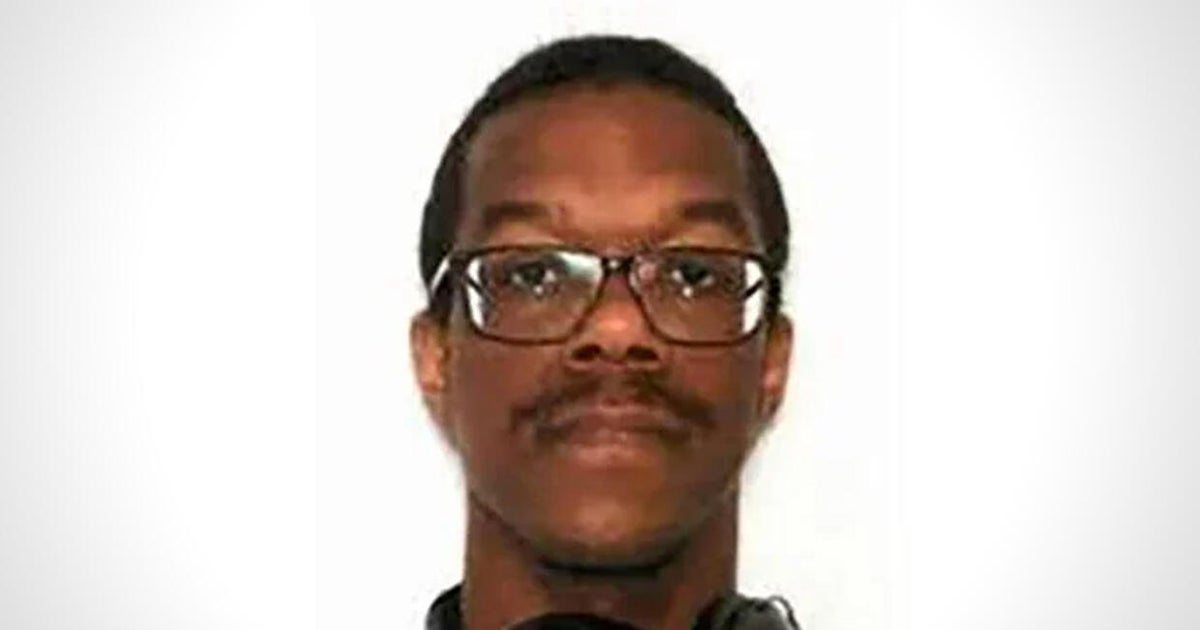

The Pipe Bomber Case: New Charges Against the Man Who Threatened Democracy’s Doorstep
A Cold Case Finally Solved
After years of investigation that led nowhere, federal authorities finally made a breakthrough in one of the most chilling unsolved cases connected to the tumultuous period surrounding the 2020 election. Brian Cole Jr., the man accused of planting explosive devices outside both major political party headquarters the night before the January 6 Capitol riot, now faces even more serious criminal charges. The case, which had gone frustratingly cold for investigators, represented a dangerous shadow over an already dark chapter in American history. When Cole was first arrested in December, he faced charges related to transporting and planting two improvised explosive devices outside the Democratic National Committee and Republican National Committee headquarters. Now, prosecutors have escalated the severity of the accusations with a superseding indictment that includes attempting to use weapons of mass destruction and committing an act of terrorism while armed. These are not minor additions—they reflect the gravity with which the government views Cole’s alleged actions and could significantly increase the potential punishment he faces if convicted.
The FBI has confirmed that while the bombs thankfully never detonated, they were fully functional and capable of causing devastating harm. Had they exploded in those politically charged hours, the loss of life and the further destabilization of an already volatile situation could have been catastrophic. Trump administration officials, recognizing the importance of solving this mystery, had made closing this case a top priority. The fact that someone had successfully placed viable explosive devices at the headquarters of both major political parties—and had evaded capture for so long—represented both a security failure and an ongoing threat that law enforcement couldn’t ignore.
Inside the Mind of the Accused
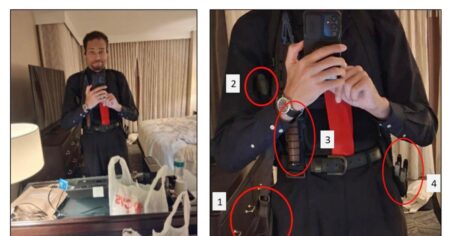
What makes this case particularly troubling is what Cole allegedly told investigators about his motivations and methods. During a lengthy 90-minute interview with federal agents, Cole reportedly didn’t shy away from the details. According to court documents filed by the Justice Department, he walked investigators through the entire process: how he constructed the pipe bombs, how he transported them, and how he planted them outside the political headquarters. This level of detail, provided by the suspect himself, forms the backbone of the prosecution’s case and paints a picture of someone who had carefully planned these actions.
Cole’s worldview, as described in court filings, reflects the confusion and anger that gripped a segment of Americans following the 2020 election. He told investigators that he believed the election had been tampered with and felt that “someone needs to speak up.” Yet paradoxically, Cole claimed he wasn’t targeting the joint session of Congress scheduled for January 6, 2021—the day when supporters of President Trump would storm the Capitol building in an attempt to stop the certification of electoral votes. He described himself as someone who disliked both political parties and didn’t consider himself particularly political. This raises questions about the contradictions in his thinking: How does someone who claims to be apolitical decide to plant bombs at the headquarters of both major political parties? How does someone who supposedly wasn’t targeting a specific event choose the eve of one of the most significant days in recent American political history to carry out such an act?
According to prosecutors, Cole’s radicalization followed a path that has become disturbingly familiar in recent years. After the 2020 election, when he felt “something was wrong” and noticed “stuff started happening,” he turned to YouTube and Reddit to learn more. These platforms, where misinformation and conspiracy theories can spread rapidly and where algorithms often push users toward increasingly extreme content, became his source of information. He described feeling “bewildered” as he consumed this content, a sentiment that apparently motivated him to take action. The materials he used to construct the bombs weren’t acquired in a rushed panic, either. Prosecutors allege that Cole purchased bomb-making materials over an extended period between 2018 and 2020, suggesting a level of premeditation that extended well beyond the immediate aftermath of the election.
The Legal Battle and the Pardon Question
Cole initially entered a plea of not guilty to the original charges against him, and he has not yet been arraigned on the new, more serious charges contained in the superseding indictment. In January, a judge ordered that he be held in jail while awaiting trial, determining that he posed too significant a risk to be released. But the legal proceedings took an unexpected turn when Cole’s defense team attempted to invoke President Trump’s controversial blanket pardons of January 6 rioters. Last month, his lawyers filed a motion arguing that the charges against their client are “inextricably and demonstrably tethered” to the events of that day and that therefore, Cole should be covered under the sweeping pardons the president issued for those involved in the Capitol riot.
It’s a creative legal argument, but one that the Justice Department has firmly rejected. Federal prosecutors filed a response pushing back against this claim, pointing out that the president’s pardon proclamation specifically limited relief to individuals who had already been “convicted of” or had a “pending indictment” for offenses related to the events at or near the Capitol on January 6. When President Trump issued those pardons on Inauguration Day, January 20, 2025, Brian Cole Jr. fit neither description. At that point, prosecutors note, law enforcement hadn’t even publicly identified Cole as a suspect, much less charged or convicted him of any crime. The investigation into the pipe bombs was continuing independently of the January 6 cases, proceeding “unabated” according to the government’s filing.
This legal distinction matters enormously. The Justice Department’s position is clear: Cole’s case is separate from the riot at the Capitol, even if the timing was related. The pardons were meant to cover those who participated in the events at the Capitol building itself, not someone who allegedly planted bombs at different locations the night before. U.S. District Judge Amir Ali, who is overseeing the case, has not yet scheduled a hearing specifically to address Cole’s motion to dismiss based on the pardon claim, though a general status hearing is set for April 21. How the judge rules on this question could have significant implications, not just for Cole’s case, but for how broadly or narrowly the January 6 pardons are interpreted in other legal contexts.
The Broader Context of Political Violence
This case doesn’t exist in a vacuum—it’s part of a broader and deeply concerning pattern of political violence and threats that have escalated in recent years. The period surrounding the 2020 election and its aftermath represented one of the most dangerous moments for American democracy in modern times. The fact that someone allegedly felt motivated to plant explosive devices at the headquarters of both major political parties speaks to the level of rage and desperation some individuals felt. That these bombs were planted the night before January 6 adds another layer of danger to what was already a powder keg situation. Had the devices exploded while the Capitol was being attacked, the chaos and potential for harm would have been exponentially greater.
What makes Cole’s case particularly noteworthy is his claim that he disliked both political parties equally. Unlike many of those who stormed the Capitol—who were explicitly supporting President Trump and trying to prevent the certification of his election loss—Cole allegedly positioned himself as someone disgusted with the entire political establishment. Yet his actions would have primarily served to deepen the crisis and potentially hurt innocent people who happened to be near those buildings. This kind of nihilistic approach to political violence, where the goal seems to be simply creating chaos rather than achieving any specific political outcome, may be even more dangerous than violence motivated by a clear ideological goal.
The role of online radicalization in Cole’s journey also can’t be overlooked. His reported turn to YouTube and Reddit to understand what was happening with the election reflects how these platforms have become spaces where misinformation can flourish and where people can be pushed toward increasingly extreme views. The algorithms that govern what content people see are designed to maximize engagement, and unfortunately, outrageous and extreme content often proves most engaging. For someone already feeling confused or angry about political developments, these platforms can serve as an echo chamber that reinforces and amplifies their concerns rather than providing balanced, factual information. Cole’s path from feeling “bewildered” to allegedly constructing and planting bombs represents a worst-case scenario of online radicalization leading to real-world violence.
What Comes Next and Why It Matters
As this case moves forward through the legal system, it will be watched closely by those concerned about political violence, domestic terrorism, and the ongoing fallout from the 2020 election and January 6. The additional charges Cole now faces—attempting to use weapons of mass destruction and committing an act of terrorism while armed—reflect how seriously the government is taking this case. These are among the most severe charges that can be brought in federal court, and if convicted, Cole could face decades in prison. The upcoming hearings, including the April 21 status conference and the eventual hearing on the motion to dismiss based on the pardon question, will be critical moments in determining how this case proceeds.
For the broader public, this case serves as a reminder that the threats to democratic institutions didn’t end when the rioters left the Capitol on January 6. The pipe bombs that Cole allegedly planted represented a different kind of threat—one that was more calculated, more patient, and potentially more deadly. The fact that the investigation remained unsolved for years also highlights the challenges law enforcement faces in identifying and apprehending those who commit politically motivated crimes, especially when they take care to avoid detection. The eventual arrest and charging of Cole represents significant investigative work by federal authorities, piecing together evidence from surveillance footage, witness accounts, and eventually Cole’s own statements. The case reminds us that political violence, regardless of its source or motivation, threatens the foundations of democratic society. Whether someone is motivated by support for a particular candidate, by generalized anger at the political system, or by conspiracy theories consumed online, the use of violence to express political grievances is fundamentally incompatible with the principles of democratic participation and peaceful transition of power that have sustained American democracy for nearly 250 years.