


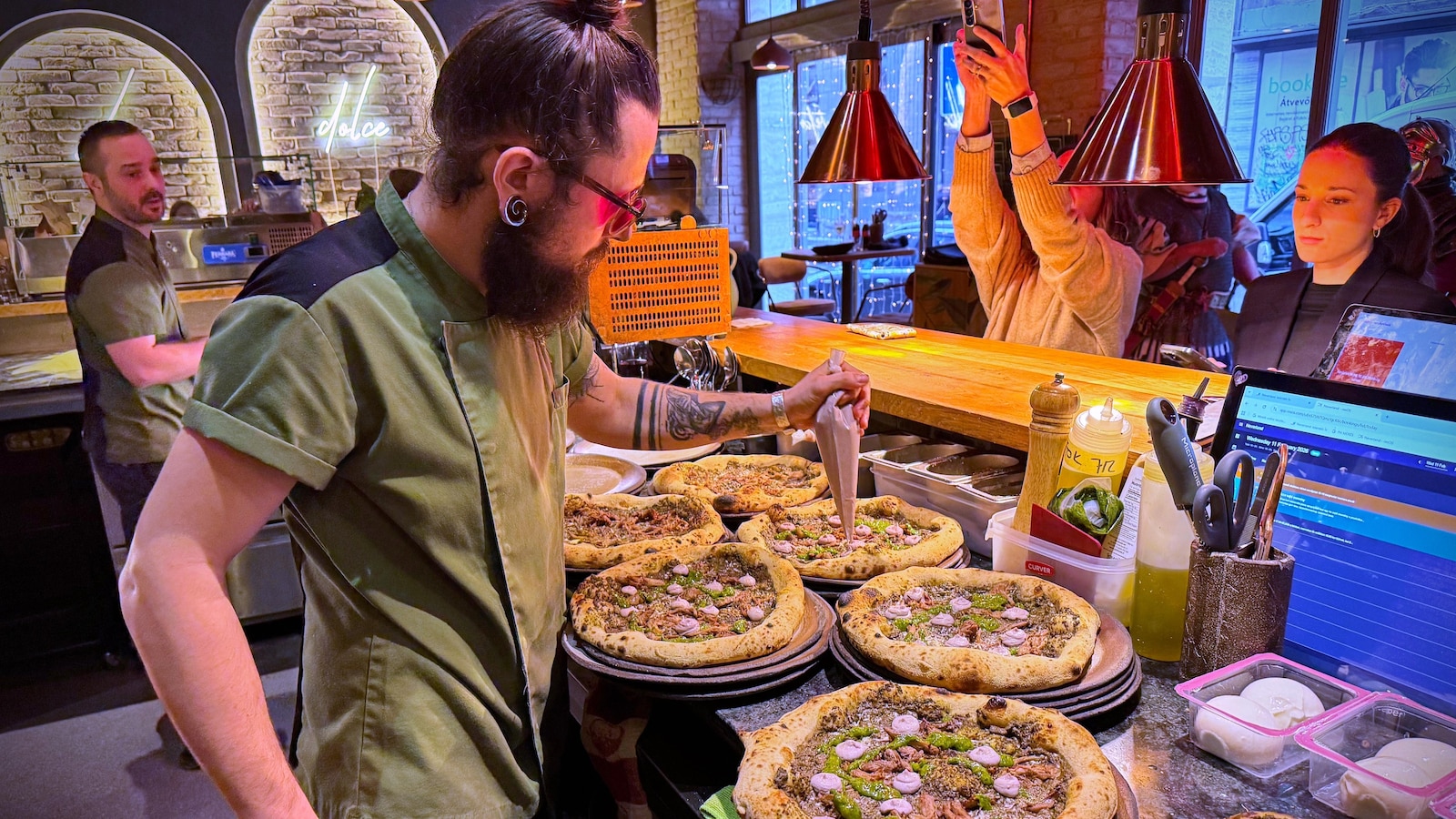

Journey to Ancient Rome: Budapest Pizzeria Recreates 2,000-Year-Old Pizza
A Culinary Time Machine in the Heart of Hungary
In the historic streets of Budapest, a city celebrated for its rich culinary traditions and famous goulash, an innovative pizzeria is taking food lovers on an extraordinary journey through time. Neverland Pizzeria, nestled in the heart of Hungary’s capital, has embarked on an ambitious project that challenges everything we think we know about pizza. Under the creative vision of founder Josep Zara and his dedicated team, this unique establishment has developed a limited-edition pizza that transports diners back two thousand years to ancient Rome—a time when tomatoes hadn’t yet arrived in Europe, mozzarella cheese was unheard of, and the very word “pizza” didn’t exist in any language. This fascinating culinary experiment raises intriguing questions about the origins of one of the world’s most beloved foods and demonstrates how modern chefs can breathe new life into ancient traditions.
The project began with a simple yet profound question that sparked Zara’s curiosity: what would pizza have been like in ancient times? Driven by this wondering, Zara and his team decided to push their investigation as far back as possible, landing squarely in the era of the Roman Empire. Their central question became whether Romans even ate anything resembling what we call pizza today. The answer, technically speaking, is no—at least not in the form we recognize. The tomatoes that form the base of most modern pizza sauces didn’t make their way to Europe until centuries after the fall of Rome, arriving from the Americas during the age of exploration. Similarly, mozzarella cheese, that stretchy, creamy staple of Neapolitan pizza, was yet to be discovered. Historical records suggest that the invention of mozzarella in the 1700s led directly to the creation of pizza as we know it in Naples, Italy.
The Ancient Roots of Modern Pizza
However, while ancient Romans didn’t eat pizza in the modern sense, they did consume something remarkably similar that can be considered pizza’s direct ancestor. Throughout the Roman Empire, people enjoyed oven-baked flatbreads topped with various combinations of herbs, cheeses, and sauces. These savory flatbreads were commonly sold in establishments called thermopolia—ancient Roman snack bars that served quick, affordable meals to urban dwellers who lacked cooking facilities in their homes. These thermopolia were the fast-food restaurants of their day, and the flatbreads they served bear a striking resemblance to contemporary pizza in both concept and preparation method. The connection between these ancient foods and modern pizza became even more tangible in 2023 when archaeologists working in the ruins of Pompeii, the Roman city preserved by volcanic ash from Mount Vesuvius, uncovered a remarkable fresco. This ancient painting depicted a focaccia-like flatbread topped with what experts identified as pomegranate seeds, dates, various spices, and what appeared to be a pesto-like spread. The discovery made international headlines and captured the imagination of food historians and culinary enthusiasts worldwide—including Josep Zara.
Upon seeing the Pompeii fresco, Zara found himself captivated by the possibilities it represented. “That made me very curious about what kind of flavor this food might have had,” he explained. The ancient image sparked an idea that would eventually become Neverland Pizzeria’s most ambitious project: creating a pizza that people might actually have eaten during the Roman Empire, using exclusively ingredients that were widely available and commonly used during that historical period. This wasn’t just about creating an interesting menu item—it was about authentically recreating a taste of history, giving modern diners a genuine sensory connection to the ancient world. To ensure historical accuracy, Zara didn’t rely on guesswork or assumptions. He conducted extensive research into Roman culinary history, consulting with a historian based in Germany who specialized in ancient food culture. Additionally, he studied De re coquinaria, an ancient Roman cookbook thought to have been compiled around the 5th century, which provides invaluable insights into the ingredients, techniques, and flavor profiles favored by Roman cooks.
The Challenge of Historical Authenticity
Armed with knowledge from his research, Zara compiled a comprehensive list of historically documented ingredients and presented it to László Bárdossy, the pizzeria’s head chef. Together, they faced a creative challenge unlike any other in their culinary careers: imagining what could be created using only these ancient ingredients while completely excluding modern staples. “We sat down to imagine what we might be able to make using these ingredients, and without using things like tomatoes and mozzarella,” Zara recalled. “We had to exclude all ingredients that originated from America.” This restriction eliminated not only tomatoes and certain peppers but also many other ingredients that have become fundamental to modern cooking. The constraints forced Bárdossy and his team into months of careful experimentation, testing different combinations and techniques to find something that would be both historically authentic and delicious to contemporary palates.
The development process wasn’t without its setbacks and frustrations. “We had to discard a couple of ideas,” Bárdossy admitted. One of the most significant challenges arose from an unexpected source: the absence of modern infrastructure in ancient Rome. The lack of a reliable water system in Roman times posed a particular problem for pizza making, as more than 80 percent of standard pizza dough consists of water. The team needed to devise a method that would have been practical and possible before the advent of running water while still producing a dough that could rise properly and create an appealing texture. Their innovative solution demonstrated remarkable creativity: they used fermented spinach juice to help the dough rise, a technique that would have been entirely feasible for ancient Roman bakers. For the base of the dough, they turned to ancient grains such as einkorn and spelt, both of which were widely cultivated throughout the Roman Empire and would have been readily available to bakers of that era. The resulting dough proved to be slightly denser than modern pizza dough, reflecting the different properties of these ancient grain varieties compared to the highly refined flours used in contemporary pizza making.
A Taste of Roman Aristocracy
The toppings selected for this historical pizza reflect the sophisticated flavors enjoyed by the Roman aristocracy, showcasing ingredients that appear repeatedly in ancient recipes and writings about Roman banquets. The finished creation features epityrum, a savory olive paste that was a staple of Roman cuisine; garum, the fermented fish sauce that was ubiquitous in Roman cooking and added a complex, umami-rich depth to countless dishes; tender confit duck leg, representing the meats favored by wealthy Romans; toasted pine nuts, which add texture and a subtle sweetness; creamy ricotta cheese, one of the few dairy products available in ancient times; and a grape reduction that provides a sweet-tart counterpoint to the savory elements. This combination of ingredients creates a flavor profile that would have been recognizable and appealing to a Roman diner while remaining interesting and accessible to modern taste buds. As Bárdossy explained, “Our creation can be called a modern pizza from the perspective that we tried to make it comprehensible for everyone.” However, he acknowledged that not all the ingredients would be used in everyday dishes by contemporary standards. The pizza occupies a special niche—appealing to those who are curious about culinary history and adventurous in their eating habits, rather than those seeking conventional comfort food.
Balancing Innovation and Tradition
For Zara, this ambitious project perfectly embodies Neverland Pizzeria’s core philosophy and approach to food. “We’ve always liked coming up with new and interesting things, but tradition is also very important for us, and we thought that these two things together suit us,” he explained. This balance between innovation and respect for culinary heritage defines the restaurant’s identity and sets it apart in Budapest’s competitive food scene. The Roman pizza represents the ultimate expression of this philosophy—it’s simultaneously a bold innovation and a deep dive into the oldest pizza traditions imaginable. By looking backward to move forward, Zara and his team have created something genuinely unique that educates diners while delighting their palates. The limited-edition nature of the offering adds to its special appeal, making it an event rather than just another menu item.
Despite their willingness to experiment with unusual and historically inspired ingredients, Zara was quick to clarify that Neverland Pizzeria does have its limits when it comes to pizza creativity. With a knowing humor that pizza purists will appreciate, he stated firmly, “We do a lot of experimentation with our pizzas. But of course, we definitely do not use pineapple.” This playful comment references one of the most heated debates in pizza culture—whether pineapple belongs on pizza—and signals that while the restaurant is willing to explore ancient Roman flavors, some modern controversies remain off the table. This ancient Roman pizza project at Neverland Pizzeria represents more than just an interesting menu item; it’s a bridge across millennia that connects modern food lovers with their ancient culinary ancestors, reminding us that the human love for delicious, comforting flatbread topped with flavorful ingredients transcends time itself.