
A Journey of 2,300 Miles: Buddhist Monks Complete Historic “Walk for Peace” from Texas to Washington D.C.
Finding Peace Within: The Philosophy Behind the Mission
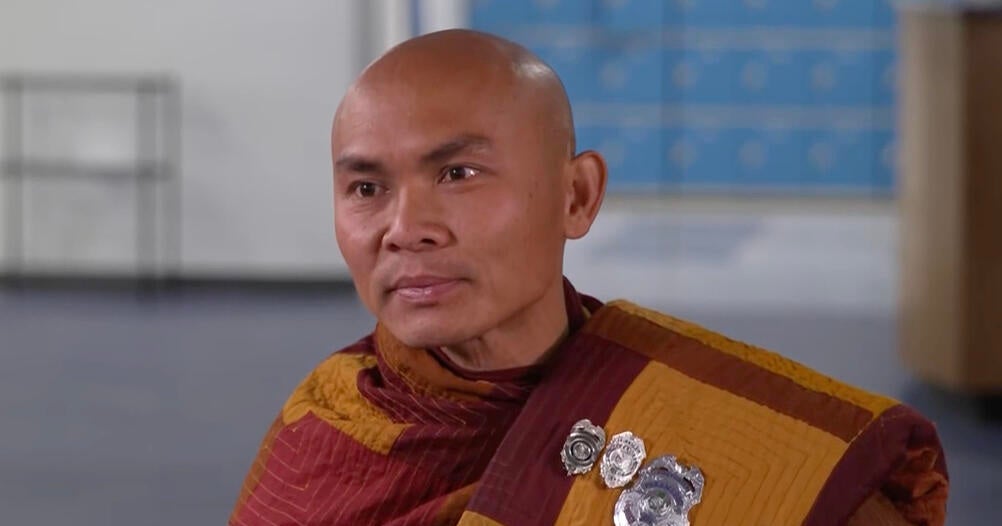
In a world increasingly fractured by conflict and division, one Buddhist monk believed there was still hope for peace—not through grand political gestures or international treaties, but through something much simpler and more profound: inner transformation. Venerable Bhikkhu Pannakara, vice president of the Huong Dao Vipassana Bhavana Center in Fort Worth, Texas, recently completed an extraordinary 2,300-mile “Walk for Peace” that captured the attention of millions and reminded us all that meaningful change begins within each individual heart. Speaking with CBS News after completing the remarkable journey, Pannakara shared a message that resonated with ancient wisdom yet felt urgently relevant to our modern moment: “Peace always begins from within ourself. It’s not the world peace out there.” His words carried the weight of someone who had just spent 109 days putting this philosophy into practice, walking mile after grueling mile with a single-minded focus on spreading awareness about the possibility of peace in our turbulent times. Rather than claiming he alone could change the world, Pannakara emphasized the collective power of people walking together toward a common purpose, demonstrating through action rather than mere words that transformation is possible when we unite around shared values of mindfulness, compassion, and inner calm.
An Epic Journey: From Fort Worth to the Nation’s Capital
On October 26, 2025, what began as a seed of an idea became a living, breathing mission when Pannakara and nineteen fellow Buddhist monks gathered at the Huong Dao Vipassana Bhavana Center and took their first steps on what would become a 15-week odyssey across the southern United States. The group represented a beautiful tapestry of Buddhist community, drawing monks not only from the Fort Worth area but from temples in Georgia, New York, and Utah, as well as practitioners who had traveled from as far away as Thailand and Vietnam to participate in this historic walk. Accompanied by Aloka, a five-year-old dog who earned the endearing title of “peace dog,” the procession of saffron-robed monks became a moving meditation, a visual reminder of commitment to principles that transcend national borders and cultural differences. Their route would take them through small towns and major cities, along quiet country roads and bustling highways, exposing them to the full spectrum of American life. The physical challenge was immense—2,300 miles is roughly the distance from New York to Las Vegas, or from London to Istanbul—but for these dedicated practitioners, the journey itself was the message, each step a prayer for peace, each mile an opportunity to embody the teachings they held dear.
Trials, Tribulations, and the Power of Mindful Breathing
The journey was far from a peaceful stroll through pleasant scenery. Over the course of 109 days, the monks faced conditions that would test the resolve of even the most committed individuals. Pannakara candidly admitted that the hardest part of the entire experience was dealing with freezing weather, the kind of bone-chilling cold that makes every step feel like an act of will. The group encountered dangerous conditions that went beyond mere discomfort—an accident along the route resulted in injuries to two monks, with one suffering wounds so severe that amputation was required. These were not theoretical challenges or metaphorical obstacles; they were real physical hardships that demanded real courage and determination. Yet rather than allowing these difficulties to derail their mission or dampen their spirits, the monks turned to the very practices they were promoting. “We practice mindfulness meditation while we walk,” Pannakara explained, describing how they would focus intently on their breathing even as their bodies screamed for rest or warmth. This focus on breath—a fundamental technique in meditation practice—became more than just a coping mechanism; it was proof of concept for their entire philosophy. By concentrating on the simple, eternal rhythm of inhalation and exhalation, they found that energy was generated, that the seemingly impossible became possible, that inner resources could be tapped even when external conditions were hostile. Their suffering, in a sense, became their teaching, demonstrating that peace isn’t found in perfect circumstances but in how we meet whatever circumstances we encounter.
A Nation Responds: Digital and Physical Support
If the monks had any doubts about whether their message would resonate with modern America, those doubts were thoroughly dispelled by the overwhelming response they received. While the physical crowds that gathered along their route were certainly meaningful—people literally lining the streets to show support, walking alongside them for portions of the journey, offering encouragement and supplies—the digital response was nothing short of extraordinary. Millions of people followed the Walk for Peace through livestreams and updates shared on social media platforms and a dedicated website that chronicled every step of their journey. This fusion of ancient practice and modern technology created something unique: a 21st-century pilgrimage that invited participation from people who might never set foot on the actual path. The culmination of the walk in Washington, D.C., on Tuesday brought cheering supporters who had been tracking the journey from afar, finally able to welcome these dedicated walkers in person. Pannakara took great heart from this response, seeing in it evidence that the core message—raising awareness of peace as a possibility, as something that begins within—had truly been received. When the monks finally arrived at George Washington University Wellness Center, where they spent their final night before a shorter ceremonial walk to the Lincoln Memorial, they carried with them not just the physical weight of 2,300 miles traveled, but the collective hope and goodwill of countless people who had been touched by their simple, profound witness.
Facing Critics with Compassion: Peace Without Conditions
Not everyone who encountered the monks on their journey responded with support and encouragement. In our polarized times, even a walk for peace can become controversial, and Pannakara was refreshingly honest about the opposition they faced. “On our journey alone, there are haters,” he acknowledged. “There are people that shout, and there are people that curse at us as well, and protest everything we have.” For many people undertaking such a journey, this hostility might have felt like defeat, evidence that their message was falling on deaf ears or even stirring up the very conflict they sought to address. But for Pannakara and his fellow monks, these negative encounters became yet another opportunity to embody their teachings. Rather than responding with anger, defensiveness, or discouragement, they simply maintained their focus on their goal: bringing awareness of peace to all people, even those who opposed them. This response illustrated one of Pannakara’s most profound insights: “Peace with a condition is not peace. It will not last.” True peace, he explained, isn’t dependent on everyone agreeing with you, on circumstances being favorable, or on the absence of opposition. Instead, real peace emerges from the ability to “stay calm and cool and patient” regardless of conditions. This isn’t passive acceptance or weakness; it’s a strength that runs far deeper than reactivity, a power that doesn’t depend on controlling external circumstances but on mastering one’s internal response. By maintaining their composure and focus in the face of criticism, the monks demonstrated that peace isn’t something fragile that shatters at the first sign of conflict—it’s a robust quality that can be cultivated and maintained even in hostile conditions.
The Possibility of Peace: A Message of Hope for Our Times
When directly asked whether peace is achievable in what many would characterize as a broken world, Pannakara didn’t hesitate: “It is possible.” This wasn’t naive optimism or wishful thinking from someone sheltered from reality. This was the testimony of a person who had just spent more than three months walking through America, encountering its beauty and its ugliness, its generosity and its hostility, its hope and its despair—and who had witnessed something that gave him genuine reason for hope. “Like these days, from Texas to here, I always say that peace has begun, has bloomed,” he reflected, “because everywhere we go now, people just lining up on the street and gathering to support this mission and to walk with us.” The very fact that so many people—from diverse backgrounds, different faith traditions, varied political perspectives—could unite around a simple walk for peace suggested to Pannakara that the human hunger for peace, for connection, for meaning beyond conflict, remains strong. The Walk for Peace demonstrated that even in our age of division, there exists a deeper current of human longing for something better, something higher than the endless cycle of argument and antagonism. By walking mindfully, breathing consciously, and maintaining inner calm through every challenge, the monks offered a living example that peace isn’t just an abstract ideal or distant dream—it’s a practical reality that can be cultivated through disciplined practice and shared intention. As the monks prepared to return to Texas by bus, having completed their ceremonial walk to the Lincoln Memorial, they left behind more than memories. They left a question for all of us: if twenty monks and a peace dog can maintain inner calm while walking 2,300 miles through freezing weather, accidents, and opposition, what might be possible if more of us committed to cultivating that same peace within ourselves? In answering that question through our own daily practice of mindfulness and compassion, perhaps we’ll discover that the world Pannakara envisions—where together, all people can make a difference—is closer than we think.