



Iranian Activists Push for Satellite Internet Access Amid Unprecedented Communications Blackout
A Nation in Digital Darkness
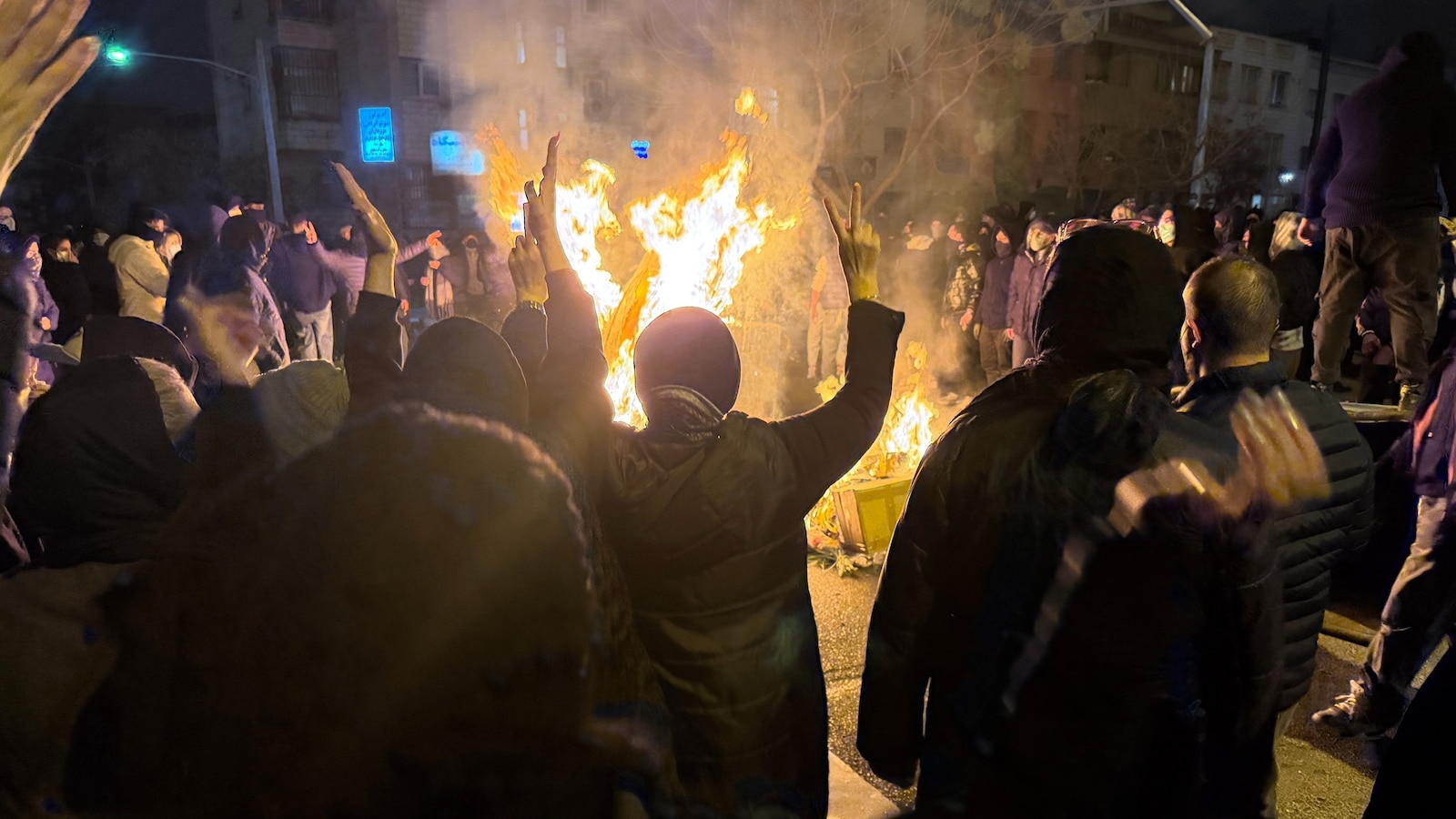
Iran has been experiencing a communications crisis of staggering proportions, with the country entering its second week of a near-total internet blackout following intensified nationwide anti-government protests. What began in late December as demonstrations against economic hardships—rising inflation and the plummeting value of Iran’s national currency—has evolved into widespread anti-government unrest that has spread across the entire nation. The Iranian regime’s response has been swift and brutal, imposing what experts describe as an “unprecedented” crackdown on its citizens. According to the Human Rights Activists News Agency (HRANA), a U.S.-based organization with a reliable network of contacts inside Iran, more than 4,000 people have died since protests erupted on December 28, with nearly 3,800 of those being protesters themselves. While these numbers cannot be independently verified, experts believe the actual death toll is likely even higher. Since January 8, Iranian authorities have maintained an almost complete shutdown of internet services, creating what advocacy group NetBlocks describes as an “information vacuum” that has made it nearly impossible for the international community to assess the full scope of the regime’s violent response to the demonstrations.
The Appeal for Direct-to-Cell Technology
In response to this communications crisis, Iranian activists have launched a lobbying effort aimed at the Trump administration, requesting special authorization for U.S. satellite and communications companies to activate direct-to-cell service over Iranian territory. This technology represents a potential game-changer for protesters and ordinary citizens alike, as it allows mobile phones to connect directly to satellites orbiting in space rather than relying on ground-based telecommunications towers controlled by the Iranian government. Unlike traditional cellular service, which the regime can easily shut down, direct-to-cell technology would bypass Iranian infrastructure entirely, making it virtually impossible for authorities to block. The appeal comes at a critical moment when human rights organizations and international observers are struggling to obtain any reliable information from inside the country. While Iranian Vice President Hossein Afshin promised on Monday that internet service would gradually return to “normal” and existing restrictions would be lifted soon, monitoring data from NetBlocks tells a different story—national connectivity remains at minimal levels, hovering around just 2% of ordinary capacity. Furthermore, evidence suggests the regime may be testing a more heavily filtered intranet system, occasionally allowing select messages through as they develop a more sophisticated censorship infrastructure.
Current Workarounds and Their Limitations
Currently, activists inside Iran have been relying on SpaceX’s Starlink satellite terminals to transmit images and information about the protests to the outside world. These devices, which are roughly the size of a small laptop, are illegal in Iran but can connect directly with satellites to provide WiFi access that completely bypasses government-controlled infrastructure. SpaceX has shown support for the Iranian people by dropping all service charges for Starlink use in Iran as of last Wednesday. However, as Iranian opposition activist and cyber expert Nariman Gharib points out, the number of Starlink terminals currently inside Iran remains severely limited, and smuggling additional devices into the country would be both dangerous and time-consuming. While Starlink connections are independent and highly secure because they don’t route through Iranian infrastructure, the high cost of the devices and their scarcity means users often share their connection with others through virtual private networks (VPNs). According to Amir Rashidi, director of internet security and digital rights at the Miaan Group—a U.S.-based human rights nonprofit focused on Iran and the broader Middle East and North Africa region—these VPNs encrypt traffic but still use local infrastructure, making them potentially detectable through traffic pattern analysis. Gharib has received reports that Iranian authorities are conducting searches of households suspected of possessing illegal satellite dishes used to access international television channels, demonstrating the regime’s aggressive efforts to cut off all external information sources.
The Technical and Political Path Forward
The technical feasibility of activating direct-to-cell service over Iran appears promising, but the path to implementation faces significant bureaucratic and political hurdles. The technology itself is sound—only relatively recent smartphone models can access direct-to-cell networks, and fortunately, the three most popular phones in Iran (the Samsung Galaxy A32, A51, and A54) are all compatible with the technology, requiring no additional hardware as newer models can automatically connect. Gharib estimates that approximately 20% of Iranians currently possess devices capable of accessing such a network. However, implementing this solution requires coordination between multiple U.S. government agencies. The Federal Communications Commission (FCC) would need to approve licenses for American companies to offer direct-to-cell service in Iran, as companies are typically licensed to operate only within specific geographic areas and regulatory parameters. The FCC does possess the authority to issue special temporary authorizations or emergency licenses when circumstances warrant, which could provide a pathway forward. Additionally, the U.S. Department of Treasury would need to ensure that such authorization wouldn’t violate existing sanctions against Iran, adding another layer of complexity to the approval process. Rashidi emphasizes that successful implementation depends on “three key elements”: political willingness from the U.S. and international community, having the right policy framework in place, and adequate funding.
Political Dynamics and Presidential Response
President Donald Trump’s response to the Iranian protests has been mixed, reflecting the complex political calculations surrounding U.S. intervention. Initially, Trump expressed strong support for Iranian protesters, posting on social media Tuesday that they should “keep protesting” and that “help is on its way.” However, by Friday, his position had shifted after the Iranian regime reportedly canceled more than 800 scheduled executions that had been planned for Thursday. Trump told reporters he had decided not to take military action against Iran at this time, suggesting his administration is weighing various non-military options for supporting the Iranian people. The White House has not yet responded to requests for comment specifically regarding the possibility of authorizing direct-to-cell satellite service. Gharib characterizes any delay in getting such a service operational as “entirely bureaucratic” and a question of “political will” on the part of the U.S. government, suggesting that the technical obstacles are minimal compared to the decision-making challenges. Both Gharib and Rashidi agree that political willingness represents the most significant barrier to implementation. For the activists lobbying the Trump administration, the clock is ticking—every day without communication access means more protesters potentially dying in obscurity, their stories never reaching the outside world.
The Stakes and Long-term Implications
The importance of restoring internet access extends far beyond simple convenience—it represents a fundamental question of human rights and the ability of Iranians to have their voices heard during a critical moment in their nation’s history. Being cut off from the internet has left many Iranians feeling utterly helpless and silenced, unable to share their experiences or call for help from the international community. Gharib emphasizes that access to information and freedom of speech are “fundamental rights” and that this issue is “of great significance to the Iranian people.” The parallels to Iran’s 2019 internet shutdown are ominous—NetBlocks noted that the current blackout has already exceeded the core duration of that earlier shutdown, and it was only after connectivity was restored in 2019 that the full scale of the regime’s brutal crackdown became known to the world. Perhaps most alarming are recent intelligence reports from Filterwatch, a project of the Miaan Group, warning that a confidential plan is underway to transform international internet access into a “government privilege” rather than a public utility. State media and government spokespersons have signaled this represents a permanent shift, warning that unrestricted access will not return after 2025. Filterwatch suggests that temporary partial restorations of service may indicate the regime is developing a “whitelist” of privileged users—a very limited number of officials, government organizations, and regime-trusted entities who would be granted special internet access while the general population remains in digital darkness. If this vision comes to pass, the window for providing alternative communication methods to ordinary Iranians may be closing rapidly, making the activists’ appeal for direct-to-cell satellite service not just urgent but potentially the last opportunity to keep lines of communication open to the Iranian people as they fight for their freedom.