


Chile’s New President Launches Controversial Border Wall Initiative
A Swift Move Toward Hardline Immigration Control
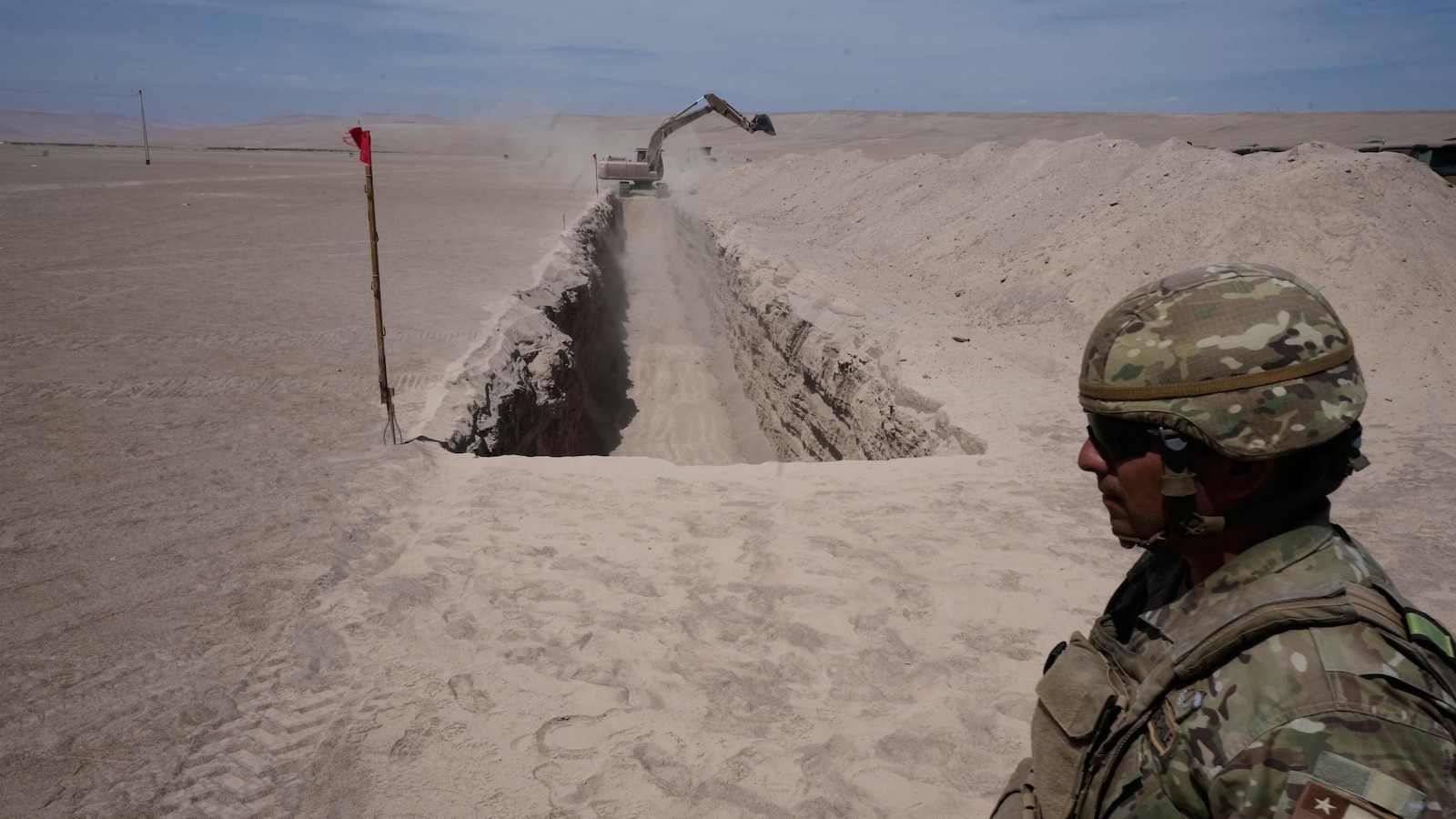
In a decisive display of political determination, Chilean President José Antonio Kast has wasted no time implementing his campaign promises. Less than a week after taking office, the arch-conservative leader traveled to Chacalluta, a remote frontier area in Chile’s far north, to personally oversee the beginning stages of what he’s calling his “Border Shield” plan. Standing in the desert landscape where countless immigrants have crossed from Peru into Chile, Kast announced the construction of a comprehensive border barrier system designed to prevent illegal immigration. The initiative, which formed a cornerstone of his presidential campaign, represents one of the most significant shifts in Chilean immigration policy in recent memory. While the current scene at the border appears modest—just a single bulldozer carving trenches into the arid desert—Kast emphasized the symbolic and practical importance of this moment, declaring it “a milestone for all of Chile.” The president’s ambitious vision includes not just physical barriers but a sophisticated security apparatus featuring ditches, fences, drone surveillance, and military patrols stretching along Chile’s northern frontier.
Echoes of Trump’s Political Playbook
President Kast’s approach to immigration bears striking similarities to the policies championed by his ally, U.S. President Donald Trump. In his first days in office, the Chilean leader exercised emergency executive powers to issue approximately half a dozen decrees focused on strengthening border security and facilitating the deportation of foreigners who entered Chile without proper authorization. This rapid-fire approach to policy implementation through executive action mirrors Trump’s own style of governance, which prioritized swift, decisive action on immigration matters over lengthy legislative processes. The parallel between the two leaders extends beyond mere tactics; both have built political movements around promises to protect their nations from what they characterize as threats posed by illegal immigration, drug trafficking, and transnational organized crime. Kast’s emphatic statement that “we have taken clear and concrete decisions to close our border to illegal immigration, drug trafficking and organized crime” and his insistence on implementing measures “without any delay” reflects a political urgency that has become characteristic of populist conservative movements across the Americas. This approach represents a dramatic departure from Chile’s traditionally more moderate political stance and signals a fundamental shift in how the country views its role in regional migration patterns.
The Changing Face of Chilean Demographics
Chile has experienced a dramatic demographic transformation in recent years, with the foreign-born population doubling between 2017 and 2024—a remarkable shift for a nation that has historically been more of a destination for internal South American migration than a major immigrant hub. Current estimates suggest that more than 300,000 foreigners are living in Chile without proper documentation, with Venezuelans representing a significant portion of this population. The exodus from Venezuela, driven by political persecution and catastrophic economic collapse under the Maduro regime, has sent millions of refugees throughout Latin America, and Chile, as one of the region’s most prosperous and stable nations, has become an attractive destination. These newcomers include families desperately seeking safety and economic opportunity, people who left behind homes, careers, and communities in search of a better life. However, the rapid demographic change has also brought challenges that have tested Chile’s social fabric and infrastructure. The integration of such a large number of immigrants in a relatively short period has strained public services, housing markets, and social support systems, creating tensions in communities that had previously experienced relatively little immigration-related change.
Rising Crime and Public Fears
While Chile continues to maintain some of the lowest homicide rates in Latin America, a region unfortunately known for high levels of violence, recent years have seen the emergence of crime patterns previously uncommon in this traditionally stable nation. Foreign criminal gangs, particularly from Venezuela but also from other countries, have established operations in Chile, introducing new forms of criminal activity that have shocked the public consciousness. Carjackings, kidnappings, and contract killings—crimes that were once rare enough to be shocking—have become regular features in local news coverage, fundamentally altering Chileans’ sense of security. The constant media attention on these crimes has amplified public anxiety and created a perception, whether entirely accurate or not, that the country’s legendary stability is under threat. This climate of fear has led many Chileans to connect these new crime patterns directly with immigration, creating a political environment receptive to hardline measures. While criminologists and social scientists often caution against oversimplifying the relationship between immigration and crime—noting that most immigrants are law-abiding individuals seeking better lives—the political narrative has nevertheless taken hold. President Kast has skillfully capitalized on these public concerns, positioning himself as the leader who will restore order and security by controlling Chile’s borders and removing those who entered the country illegally.
A Nation’s Rightward Turn
Kast’s election and his immediate implementation of hardline immigration policies represent Chile’s most significant conservative shift since 1990, when the country finally emerged from the dark shadow of military dictatorship. For 17 years, from 1973 to 1990, Chile endured brutal authoritarian rule under General Augusto Pinochet, a period marked by widespread human rights violations, political repression, torture, and the disappearance of thousands of citizens. The transition to democracy three decades ago was seen as a definitive break from that authoritarian past, ushering in an era of political moderation and consensus-building. Kast’s personal history adds a controversial dimension to his presidency: as a young man, he actively campaigned for Pinochet, a fact that has alarmed human rights advocates and those who suffered under the dictatorship. His rise to power reflects a generational and ideological shift in Chilean politics, where concerns about security, immigration, and economic stability have, for many voters, overshadowed the historical imperative to distance the country from its authoritarian past. This rightward turn mirrors broader political trends across Latin America and the world, where populist conservative movements have gained traction by promising strong leadership and decisive action on issues like immigration and crime.
Looking Ahead: Implications and Consequences
As President Kast’s “Border Shield” takes shape, Chile faces fundamental questions about its identity, values, and place in the region. The construction of physical barriers and the militarization of border zones represent more than practical security measures—they symbolize a philosophical shift in how Chile relates to its neighbors and its role in addressing regional crises. The implementation of these policies will have far-reaching consequences, not just for the hundreds of thousands of undocumented immigrants currently living in Chile, but for the country’s international relationships, particularly with Peru and other South American nations. There are also practical concerns about whether physical barriers and deportation efforts will actually address the complex root causes of irregular migration and transnational crime, or whether they will simply redirect migration flows without solving underlying problems. Human rights organizations have expressed concern about the treatment of vulnerable populations, including asylum seekers fleeing persecution who may be caught up in broad enforcement efforts. Meanwhile, Kast’s supporters argue that every sovereign nation has the right and responsibility to control its borders and protect its citizens, and that compassion for immigrants must be balanced with the security and economic concerns of Chilean residents. As this single bulldozer continues its work in the desert, carving trenches that will eventually become part of a larger barrier system, it’s clear that Chile is embarking on a new chapter—one that will define the nation’s character and priorities for years to come.