
Legal Experts Predict Dismissal of Controversial DOJ Case Against Don Lemon and Protesters
A Constitutionally Questionable Prosecution
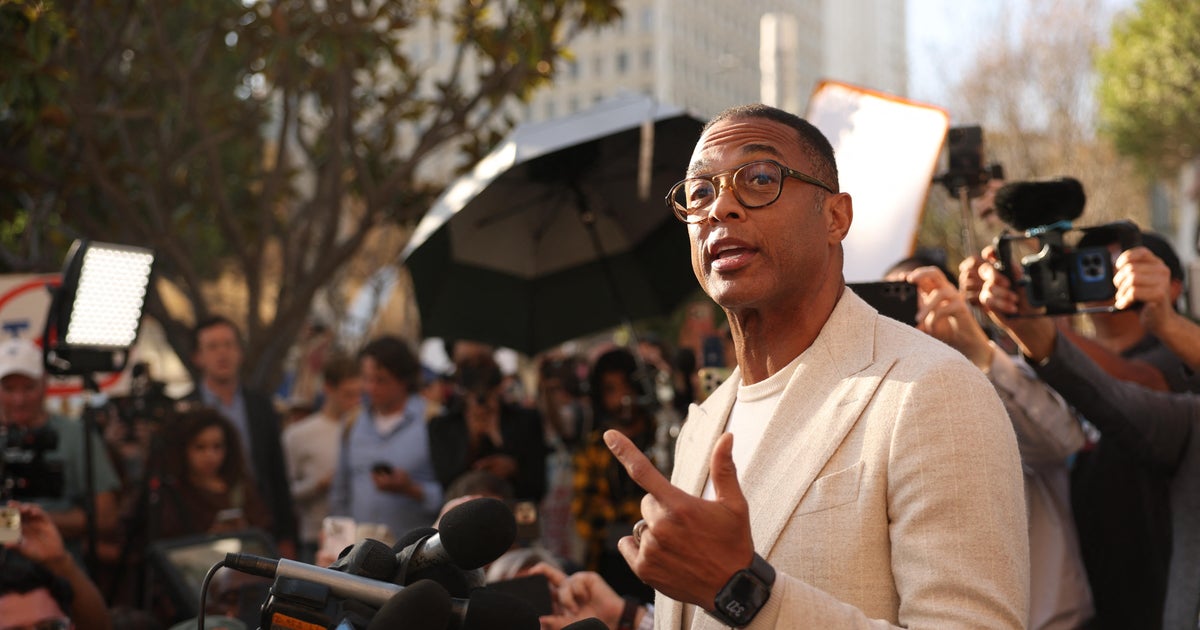
The Department of Justice has found itself embroiled in a legal controversy that many seasoned attorneys believe is fundamentally flawed from the start. On January 29, journalist Don Lemon and eight other individuals were indicted for their involvement in an anti-ICE protest at the Cities Church in St. Paul, Minnesota. The charges hinge on alleged violations of the Freedom of Access to Clinic Entrances (FACE) Act, specifically accusations that they intimidated or interfered with people exercising their religious freedom. Legal experts are now predicting that this case will likely crumble in court, primarily because the Justice Department is attempting to use a law in a way it was never intended—and in a manner that raises serious constitutional red flags. The FACE Act, which was passed by Congress in 1994, was designed to protect women seeking reproductive healthcare from threats and intimidation at clinics. While it included provisions for houses of worship as a political compromise, the Civil Rights Division has never successfully prosecuted anyone for interference at religious facilities under this law. The reason is simple: the constitutional foundation for such prosecutions simply doesn’t exist in the way the government claims it does.
The First Amendment Problem at the Heart of the Case
The core constitutional issue with this prosecution centers on a fundamental misunderstanding—or misapplication—of First Amendment protections. Former Civil Rights Division lawyers point out that the section of the FACE Act that criminalizes interference at houses of worship fundamentally misstates what rights people actually have under the Constitution. The First Amendment protects individuals’ religious freedom from government interference, not from interference by private citizens. In this case, the defendants are all private individuals: protesters and journalists who attended a demonstration. They are not government actors, which means the constitutional framework the FACE Act relies on doesn’t apply. The law has been successfully used in the past, but only in cases involving reproductive health clinics, and that’s because courts have determined that such clinics are engaged in interstate commerce—they receive medical supplies from across state lines and serve patients from different states. This connection to interstate commerce gives the federal government the constitutional authority to prosecute interference. Churches, however, are typically local operations without that same connection to interstate commerce, creating what former prosecutor Laura-Kate Bernstein calls a missing “interstate commerce clause hook.” Kristen Clarke, who previously served as Assistant Attorney General for the Civil Rights Division, didn’t mince words about the case: “This is not a legitimate use of the FACE Act. This is wholly outside the core purpose that the law was passed, and I will not be surprised if these cases are quickly thrown out.”
Red Flags from the Beginning: Rejected Warrants and Missing Career Prosecutors
From the very start, this prosecution has encountered obstacle after obstacle that suggest serious problems with the case itself. When the Justice Department initially sought arrest warrants for Lemon and several others, Magistrate Judge Doug Micko in the District of Minnesota outright rejected them, writing “no probable cause” in the margins of the warrant applications for several defendants. This judicial pushback is highly unusual and speaks volumes about the weakness of the evidence presented. Even more concerning is the fact that career prosecutors in the U.S. Attorney’s Office in Minnesota—experienced attorneys who handle federal crimes as their day job—refused to get involved in the case because they had serious doubts about whether the defendants had actually committed any federal crime. When federal prosecutors with years of experience decline to participate in a case, it’s typically a strong signal that something is fundamentally wrong with the prosecution. The Justice Department didn’t back down, however. Instead, the Civil Rights Division pushed forward, even asking higher courts to intervene when Judge Micko declined to sign the warrants. Chief U.S. District Judge Patrick Schiltz weighed in on the matter, specifically noting in court filings that “there is no evidence” that the journalists “engaged in any criminal behavior or conspired to do so.” Despite all these warning signs from experienced judges and career prosecutors, the politically appointed lawyers in the Civil Rights Division rushed to secure an indictment against all nine defendants.
An Inexperienced Prosecution Team Raises Eyebrows
Adding to concerns about this case is the makeup of the prosecution team itself. The indictment lists only politically appointed Justice Department lawyers from the Civil Rights Division—conspicuously absent are the career prosecutors who typically handle such matters. One of the lead attorneys on the case, Orlando Sonza, is a failed Republican congressional candidate from Ohio who only graduated from law school in 2022. According to his personnel file, his entire prosecutorial experience before joining the Justice Department consisted of approximately a year and a half working in the Hamilton County Prosecutor’s Office as an intern, law clerk, and assistant prosecutor. Another attorney added to the case after the indictment, Greta Gieseke, is also a 2022 law school graduate assigned to the Civil Rights Division’s appellate section. A third lawyer, Josh Zuckerman, graduated from law school in 2020 and spent four years at a private law firm before joining the Justice Department. Only after CBS News began asking questions about the inexperienced team did a more senior prosecutor, Robert Keenan, formally enter an appearance in the case. Keenan is described as a longtime federal prosecutor, though his record on civil rights cases is thin and includes some controversial decisions. In one California case, he argued that a deputy sheriff convicted of civil rights violations should not serve prison time—a recommendation that prompted several of his colleagues to resign in protest. Former federal prosecutor Gene Rossi summed up the concerns many have about the prosecution team: “When a federal prosecutor makes a decision to charge someone criminally, it is imperative that the Justice Department have a seasoned, sage and experienced prosecutor to vet that process. When politics enters that process, bad things happen.”
The FACE Act’s History and Its Proper Application
To understand why this prosecution is so problematic, it’s important to look at the history and intended purpose of the FACE Act itself. When Congress passed this law in 1994, it was responding to a very specific problem: the increasingly violent and threatening tactics being used to intimidate women seeking reproductive healthcare at clinics across the country. To secure Republican support in Congress, Senator Orrin Hatch of Utah proposed extending the law’s protections to include houses of worship as well, creating a compromise that allowed the bill to pass with bipartisan support. Over the three decades since its passage, the Justice Department has successfully used the FACE Act to prosecute people on both sides of the abortion debate—both those who blocked access to abortion clinics and those who protested at anti-abortion crisis pregnancy centers. The key to all these successful prosecutions has been the connection to interstate commerce. Reproductive health clinics operate as commercial businesses that cross state lines: they purchase medical supplies from out-of-state vendors, employ staff who may travel from other states, and serve patients who sometimes cross state lines to receive care. This commercial aspect gives the federal government the constitutional authority to regulate interference with these facilities. Churches and other houses of worship, however, are fundamentally different. They’re typically local operations without the same commercial characteristics, which is why the Civil Rights Division has never successfully prosecuted anyone for interfering with worship services—until now, they’ve never even tried.
Uneven Enforcement and Political Weaponization Concerns
Perhaps the most troubling aspect of this prosecution is the broader context of how the Trump administration’s Justice Department is choosing to enforce—and not enforce—the FACE Act. Just three days after President Trump took office, he pardoned nearly two dozen anti-abortion activists who had been charged under the FACE Act. The following day, former acting Associate Attorney General Chad Mizelle ordered the Civil Rights Division to immediately dismiss three pending prosecutions involving anti-abortion activists and to stop pursuing new cases without permission from the division head. Attorney General Pam Bondi then ordered a review of all FACE Act prosecutions from the Biden administration to determine whether they unfairly targeted conservative Christians. That review is still ongoing. Meanwhile, the Justice Department has allowed cases against abortion rights activists to proceed without interference, including one in Florida where a defendant was sentenced to 120 days in prison in March 2025 for protesting at a crisis pregnancy center. This selective enforcement has led many former Justice Department attorneys to conclude that the FACE Act is being weaponized for political purposes. Johnathan Smith, a former deputy assistant attorney general in the Civil Rights Division, put it bluntly: “We have seen across the civil rights statutes that the department enforces the ways in which they have weaponized the use of these laws, not to protect the civil rights of people of this country, but to further their political agenda. I think this use of the FACE Act is consistent with that pattern.” As the defendants prepare for their arraignment, legal observers will be watching closely to see whether the courts allow this unprecedented use of the FACE Act to proceed, or whether judges will do what many legal experts predict and dismiss the charges as constitutionally unsound.