
The Tragic Death of Ruben Ray Martinez: A Story of Disputed Accounts and Lost Justice
A Fatal Encounter on South Padre Island
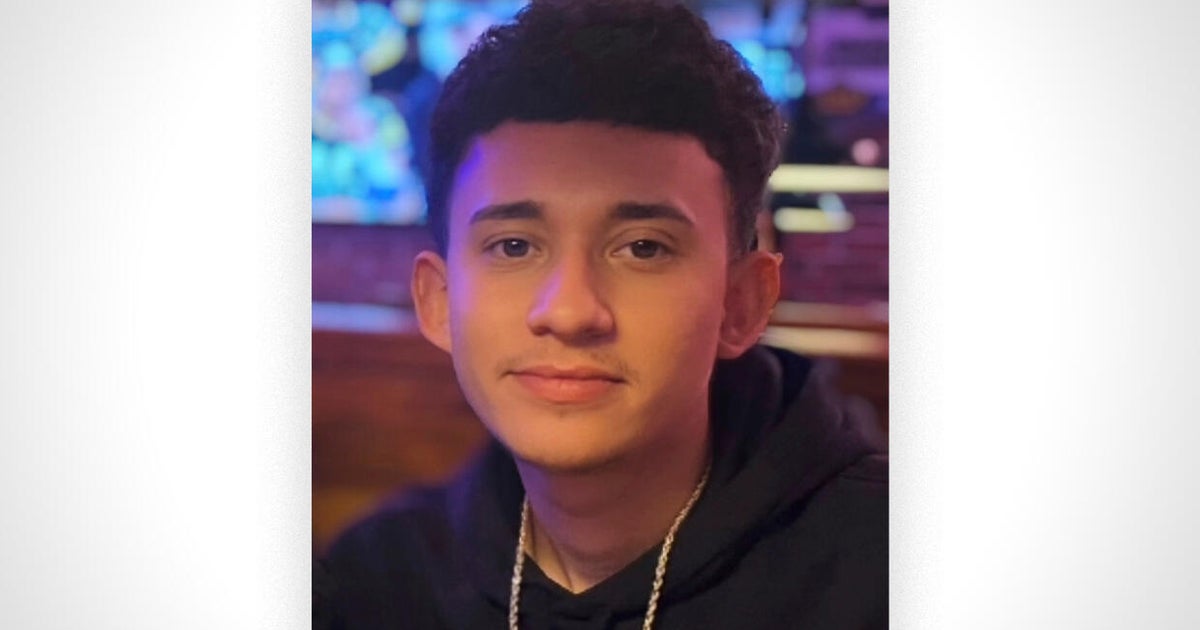
In March 2025, what should have been a carefree birthday weekend celebration turned into an unimaginable tragedy for 23-year-old Ruben Ray Martinez and his lifelong friend Joshua Orta. The two Texas residents had traveled to South Padre Island, a popular spring break destination known for its beaches and vibrant atmosphere, to mark Martinez’s recent birthday. After spending the evening enjoying drinks at a friend’s condo, attempting to get into a local club, attending a pool party, and grabbing a late-night meal at Whataburger, they were headed back to their accommodations when they encountered what appeared to be a traffic checkpoint related to an earlier accident. What happened next would end Martinez’s life and create a controversy that wouldn’t become public knowledge for nearly a year. An Immigration and Customs Enforcement agent shot and killed the young American citizen that night, but this critical detail remained hidden from public view until last week—roughly eleven months after the incident occurred. The delayed revelation has raised serious questions about transparency and accountability in law enforcement, particularly as conflicting accounts of what actually transpired that night have emerged, painting vastly different pictures of the final moments of Martinez’s life.
Two Vastly Different Versions of Events
The official account provided by Department of Homeland Security officials and documented in an internal ICE report tells a story of an aggressive driver who failed to follow instructions and posed a direct threat to federal agents. According to this version, agents from ICE’s Homeland Security Investigations branch were assisting South Padre Island police officers with traffic control in the late-night hours following a car accident when Martinez’s blue Ford approached the area. The report claims that Martinez “failed to follow instructions” and attempted to continue driving through the checkpoint. After commands from agents, the vehicle allegedly “slowed to a stop,” at which point agents surrounded the car and ordered Martinez to exit. The DHS account then takes a dramatic turn, alleging that Martinez “accelerated forward” and struck one of the ICE agents, who “wound up on the hood of the vehicle.” In response to this perceived threat, another ICE agent reportedly fired “multiple rounds” at Martinez through an open side window. The report states that Martinez received first aid at the scene before being transferred to a hospital in Brownsville, where he was pronounced dead. His passenger, Joshua Orta, was taken into custody by South Padre Island police.
However, the declaration dictated by Orta to Martinez’s family lawyers in September 2025 paints an entirely different picture of that night—one that contradicts the official narrative at nearly every significant point. Orta, who described Martinez as a “kind” and “gentle” person who worked at Amazon and Walmart, provided a detailed account that challenges the fundamental premise of the DHS report. According to Orta’s statement, when they approached the checkpoint, one law enforcement officer noticed they had an open container of alcohol in the vehicle and instructed them to “turn around and leave.” As Martinez attempted to comply with this instruction, another officer “walked up to our car and slapped the hood.” Orta was emphatic in his declaration: “I later learned that the trooper’s report said that Ruben had ‘hit’ the officer. That’s not true. I was present, and I state clearly and without hesitation that Ruben did not hit anyone.” He described the officer as seeming to deliberately position himself in front of the car rather than moving out of the way as Martinez tried to follow the first officer’s instruction to turn around and leave. Orta recounted seeing two or three officers yell at them to stop and draw their guns, which seemed completely unreasonable to him given the circumstances: “This was crazy to me because we were only crawling like the car was in gear, but just coasting. Ruben never hit the gas. The troopers were never in danger from Ruben and could have easily stepped aside while we tried to turn around and leave.”
The Fatal Shots and Their Aftermath
The most disturbing part of Orta’s declaration describes the actual shooting itself. According to his account, as they were attempting to turn around—essentially trying to comply with the initial instruction to leave the area—an agent he later learned worked for ICE “approached the driver’s side” of the vehicle. What happened next, in Orta’s telling, was not defensive action but an unprovoked execution: “Without giving any warning, commands, or opportunity to comply, the agent fired multiple shots at Ruben from an extremely close distance—no more than two feet.” Orta described hearing his friend say, “I’m sorry,” before Martinez “slumped backward.” In Orta’s view, the killing was completely “unjustified,” emphasizing that “Ruben was unarmed, non-violent, not fleeing, and not resisting at the time he was shot.” This characterization stands in stark contrast to the DHS statement that the ICE agent fired “defensive shots” and that Martinez “intentionally ran over” another agent. The gulf between these two accounts is not merely a matter of perspective or interpretation—they describe fundamentally different events. In one version, a dangerous driver deliberately attacks a federal agent with his vehicle, necessitating lethal force. In the other, a young man trying to follow conflicting instructions from law enforcement is shot without warning at point-blank range for reasons that remain unclear. The truth of what happened that night matters enormously, not only for Martinez’s family seeking justice and closure, but for public confidence in law enforcement accountability and transparency.
The Critical Witness Who Will Never Testify
The tragedy surrounding Ruben Ray Martinez’s death took another heartbreaking turn just this past weekend, compounding the grief and complicating the search for justice. Joshua Orta, the friend who was with Martinez that night and whose testimony could have been crucial in determining what actually happened, died in a separate car accident on Saturday. Attorneys for Martinez’s family reported that Orta had dictated his declaration to them in September 2025 and was planning to sign it in person this week, but he never got the chance. Alex Stamm, an attorney representing Martinez’s mother, expressed the profound loss: “First and foremost, Joshua’s death is an awful tragedy for his family and friends, and the Reyes family is grieving with them. In terms of Ruben’s death, the world has also now lost a critical eyewitness.” The timing is both tragic and significant—Orta’s declaration, while detailed and specific, lacks his signature, which may affect its weight as evidence in any potential legal proceedings. Stamm emphasized what Orta had told the legal team: “He told us that Ruben’s car was barely moving when he was shot and killed by an officer who was off to the side of the car. He also told us unequivocally that Ruben did not hit anyone.” With Orta’s death, the family has lost the only civilian witness who could have testified under oath about what transpired that night, potentially corroborating or challenging the accounts provided by the law enforcement officers present at the scene.
Questions of Transparency and Accountability
The eleven-month delay in revealing that an ICE agent was responsible for Martinez’s death raises serious questions about transparency in law enforcement shootings, particularly those involving federal agents. When local news outlets reported the shooting in March 2025, the public was not informed that a federal immigration enforcement agent had killed an American citizen during what appeared to be a routine traffic stop. This information only became public last week, and only after the nonprofit organization American Oversight released an internal ICE report. Why was this information withheld for so long? What protocols govern the disclosure of officer-involved shootings by federal agents? And what oversight mechanisms exist to ensure that such incidents are investigated thoroughly and impartially? The Texas Department of Public Safety, which is leading the investigation into Martinez’s death, has stated that its probe remains ongoing, but the passage of nearly a year since the incident—and the recent death of the key civilian witness—raises questions about the pace and thoroughness of the investigation. The draft declaration appears to indicate that Martinez’s family is considering filing a wrongful death claim, which would be one of the few avenues available to them to seek accountability and answers about why their son was killed. The fact that DHS representatives did not immediately respond to requests for comment on Orta’s specific allegations further contributes to concerns about transparency and the willingness of federal agencies to engage with questions about the conduct of their agents.
The Human Cost and the Search for Justice
Behind the conflicting reports, the legal terminology, and the bureaucratic processes lies a profoundly human story of loss and grief. Ruben Ray Martinez was just 23 years old when his life was cut short. He was a working man, employed at Amazon and Walmart, who had gone on a birthday weekend trip with his best friend since pre-kindergarten. His family is now left with nothing but questions, a declaration from a witness who can no longer testify, and official accounts that may not tell the whole story of how their son died. The broader implications of this case extend beyond one family’s tragedy. It touches on issues of law enforcement accountability, the use of lethal force, the challenges of obtaining transparency from federal agencies, and the obstacles families face when seeking justice for loved ones killed by government agents. The conflicting narratives about whether Martinez posed a genuine threat or was simply trying to comply with confusing instructions from multiple officers highlight the life-and-death consequences of split-second decisions by armed law enforcement personnel. As the investigation continues and Martinez’s family considers their legal options, the loss of Joshua Orta as a witness creates an additional hurdle in the pursuit of truth and accountability. The young man who might have provided crucial testimony about his friend’s final moments is gone, leaving behind only his unsigned declaration and the memories of what he witnessed that night on South Padre Island. For Martinez’s family, the search for answers continues, even as the path to justice becomes increasingly difficult to navigate.