
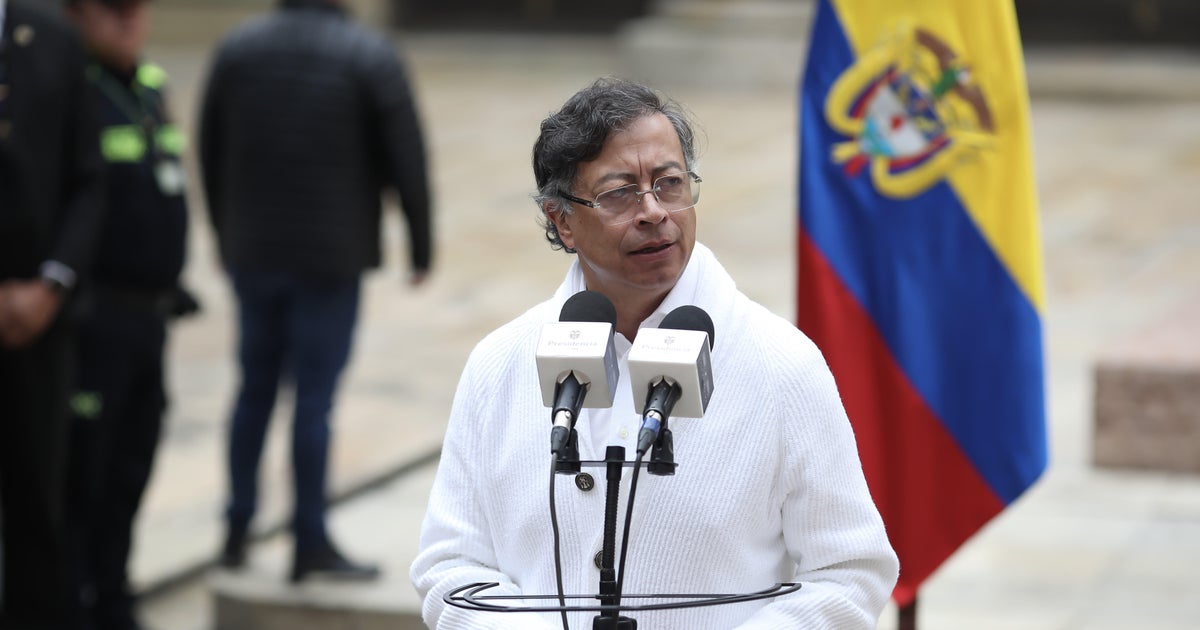

Colombian President Gustavo Petro Under Investigation: What’s Really Going On?
The Breaking News That Shocked Latin America
In a development that has sent shockwaves through both Colombian politics and international relations, CBS News reported on Friday that Colombian President Gustavo Petro has become a subject of multiple drug trafficking investigations being conducted by federal prosecutors in New York. These investigations, running out of both the Southern and Eastern districts of New York, didn’t initially set out to target the Colombian president specifically. Instead, his name surfaced organically during the course of other ongoing narcotics trafficking probes, according to sources familiar with the matter. It’s important to understand what being a “subject” of an investigation actually means—it doesn’t necessarily indicate that criminal charges are imminent. In legal terms, a “subject” is someone whose conduct falls within the scope of an investigation, which is quite different from being a “target,” where substantial evidence exists and an indictment is highly likely. These investigations are still in their very early stages, and it remains uncertain whether Petro will ultimately face any criminal charges. The White House has not requested any investigation into the Colombian leader, with sources confirming that his name came up naturally during other drug-trafficking investigations rather than through any politically motivated targeting.
Petro’s Defiant Response and Historical Context
President Petro wasted no time in defending himself against these emerging allegations, taking to social media platform X to make his position crystal clear. In his translated statement, he categorically denied any involvement with drug traffickers, stating, “never in my life have I spoken with a drug trafficker.” He went further to remind people of his decade-long history of “denouncing the links between the most powerful drug trafficker and the politicians in the Congress.” Petro emphasized his campaign practices, noting that he has “always told my managers” that no donations were to be accepted from two specific groups: bankers or drug traffickers. Rather than viewing these investigations as a threat, Petro has framed them as potentially vindicating, predicting that the outcome would ultimately help “dismantle the accusations” that have been leveled at him from the far right within Colombia. This defiant stance is characteristic of Petro’s political style—he’s never been one to back down from a fight, and he’s positioning these investigations as part of a broader pattern of attacks from his political opponents rather than as legitimate concerns about his conduct.
The Complicated Relationship Between Petro and Trump
The relationship between Gustavo Petro and former President Donald Trump has been nothing short of tumultuous, marked by public accusations, harsh rhetoric, and diplomatic tensions. During a speech at the United Nations last year, Petro didn’t mince words, calling for criminal proceedings against Trump and referring to him as the “New Hitler”—language that obviously didn’t sit well with the Trump administration. The Trump administration, for its part, has been highly critical of Colombia under Petro’s leadership, particularly regarding the country’s inability to contain a dramatic spike in cocaine production. Last October, Trump escalated the conflict by calling Petro an “illegal drug leader,” while Treasury Secretary Scott Bessent announced sanctions against Petro and his family members, accusing him of allowing “drug cartels to flourish” and refusing to take action to stop their activities. These sanctions represented a significant escalation in tensions between the two countries and added a personal dimension to what was already a strained diplomatic relationship. However, politics can be unpredictable, and a phone call in January appeared to have cooled tensions considerably. Both Trump and Petro characterized their conversation as positive, with the president indicating that the two planned to meet at the White House at some point in the future, suggesting that despite their harsh public rhetoric, there might be room for a working relationship.
The Treasury Sanctions and Their Implications
The October sanctions announced by the Treasury Department represented one of the most serious diplomatic moves the United States could take short of breaking off relations entirely. These sanctions didn’t just target President Petro himself—they extended to members of his family, including his wife Verónica, and key political allies like Interior Minister Armando Benedetti. The Treasury Department cited alleged links to drug trafficking networks as the justification for these measures, which would have significant financial implications for those named. Such sanctions typically freeze any assets held in U.S. financial institutions and prohibit American citizens and companies from doing business with the sanctioned individuals. The inclusion of family members in these sanctions is particularly notable, as it suggests the U.S. government believes the potential misconduct extends beyond just the president himself and involves a broader network of individuals in his inner circle. Within Colombia itself, there have been multiple investigations into Petro’s closest associates, creating a pattern of legal scrutiny that extends beyond the U.S. investigations. These domestic investigations have created political headaches for Petro’s administration and provided ammunition for his opponents, who have long accused him of corruption and ties to illicit activities.
The Family Drama: Nicolás Petro’s Arrest and Testimony
Perhaps the most damaging blow to President Petro’s credibility has come from within his own family. In 2023, his son Nicolás Petro was arrested on serious charges including money laundering and illicit enrichment, specifically accused of receiving money from individuals connected to drug trafficking operations. This wasn’t just an opposition accusation or a political attack—it resulted in actual criminal charges and court proceedings. In a development that must have been personally devastating for the president, Nicolás admitted in court that illegal funds had indeed made their way into his father’s presidential campaign. However, he also claimed that Gustavo Petro himself was unaware of these illegal contributions, essentially arguing that his father was unknowingly benefiting from tainted money. This case remains ongoing, with Nicolás Petro cooperating with Colombian authorities, which raises the possibility that further revelations could emerge. Beyond his son’s case, there have been other formal investigations into the financing of the 2022 presidential campaign, including probes into possible illegal donations and spending limit violations. The focus of these investigations included Ricardo Roa, who served as Petro’s campaign manager and currently holds the powerful position of president of Colombia’s state oil company Ecopetrol. While Roa hasn’t been convicted of any crimes, the company’s worker unions have been actively trying to get him removed from his position, suggesting that the controversy continues to follow him despite his high-profile appointment.
A Pattern of Scandals and Growing International Enforcement
The problems for Petro’s administration extend well beyond his son’s legal troubles. In 2023, Interior Minister Armando Benedetti found himself at the center of a scandal when leaked audio recordings captured him claiming he’d secured massive sums of money for Petro’s 2022 presidential campaign and threatening to reveal damning information about campaign financing violations. These recordings were made while Benedetti was serving as ambassador to Venezuela, adding an international dimension to the domestic political scandal. Despite the explosive nature of these recordings, no charges were ever filed, which Petro’s defenders point to as evidence of political motivations behind the various accusations. Around the same time, Petro’s chief of staff, Laura Sarabia, was briefly forced out of her position over a separate scandal involving a polygraph test and alleged illegal phone interceptions of one of her housekeepers. In a move that raised eyebrows among diplomatic observers, Sarabia was recently appointed as Colombia’s ambassador to the United Kingdom, despite reportedly barely speaking English—an appointment that critics view as either remarkably tone-deaf or a calculated political move to protect an ally. The news about Petro’s involvement in U.S. investigations comes at a particularly significant time, as the Justice Department has been ramping up efforts to target political officials throughout Latin America, with CBS News previously reporting a particular focus on Cuba. Earlier this year, the government took the dramatic step of sending forces into Venezuela to capture President Nicolás Maduro, who was brought to New York City to face criminal charges—a move that demonstrates the administration’s willingness to pursue high-profile Latin American leaders. Whether these investigations into Petro will lead to similar dramatic action remains to be seen, but the pattern suggests that U.S. law enforcement agencies are taking a more aggressive approach to corruption and drug trafficking involving political leaders in the region. For now, Petro remains in office and maintains his innocence, but the coming months will be crucial in determining whether these investigations result in concrete charges or quietly fade away.