
Commerce Secretary Howard Lutnick Faces Scrutiny Over Undisclosed Jeffrey Epstein Connections
Contradictions Emerge Between Public Statements and Justice Department Files
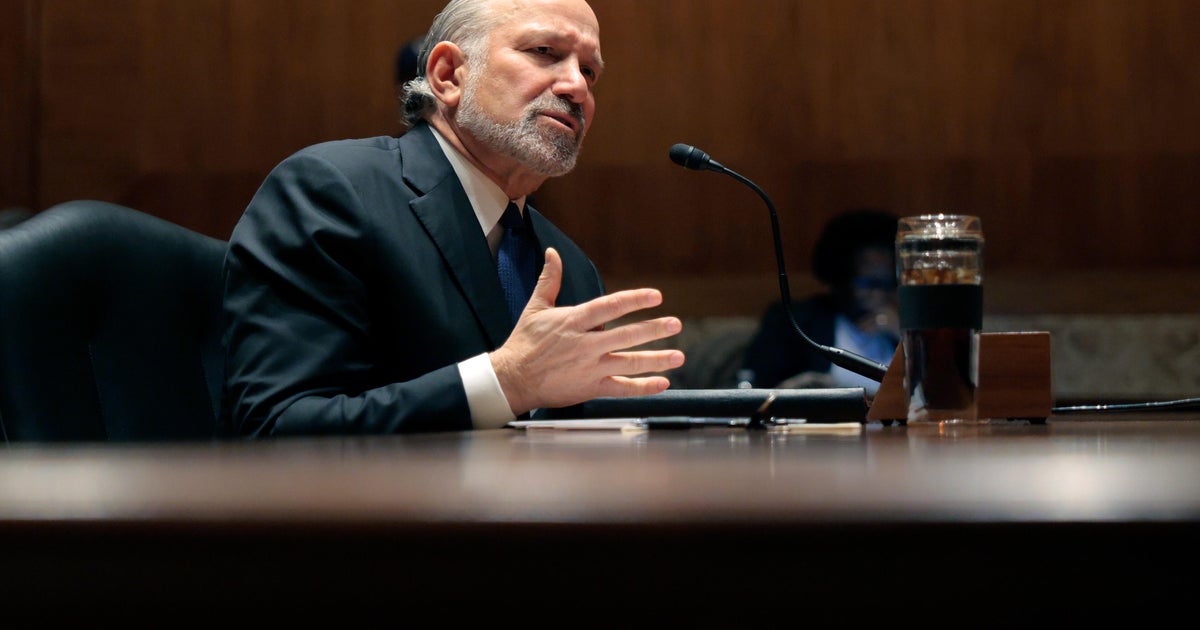
Commerce Secretary Howard Lutnick found himself in hot water this week after being forced to acknowledge a relationship with convicted sex offender Jeffrey Epstein that appears far more extensive than he previously admitted. During a tense Senate hearing on Tuesday, Democratic senators confronted Lutnick with recently released Justice Department documents that paint a picture of ongoing contact and business dealings with Epstein—connections that continued years beyond when Lutnick claimed to have severed ties. The revelations have raised serious questions about the Commerce Secretary’s truthfulness and whether he deliberately misled the public about the nature and duration of his relationship with one of America’s most notorious criminals. Senator Chris Van Hollen of Maryland didn’t mince words, stating bluntly that the newly revealed information calls into question both Lutnick’s credibility and his fitness to hold his current position in government.
The controversy centers on statements Lutnick made in the past claiming he had stopped all contact with Epstein back in 2005, shortly after becoming aware of troubling allegations surrounding his New York neighbor. Last year, when questions first surfaced about his connection to the disgraced financier, Lutnick characterized their interactions as “limited,” suggesting only minimal, unavoidable contact between neighbors in an exclusive Manhattan building. However, the recently unsealed Epstein files tell a dramatically different story. These documents reveal that Lutnick and Epstein maintained contact well into the 2010s, exchanging emails as recently as 2018—just one year before Epstein’s death in a federal jail cell while awaiting trial on sex trafficking charges. The files also show the two men were involved in business ventures together as late as 2014, nearly a decade after Lutnick claims to have distanced himself from Epstein.
The Caribbean Island Visit and Family Vacation Defense
Perhaps the most eyebrow-raising revelation from the Justice Department files involves a 2012 visit that Lutnick and his family made to Epstein’s private island in the Caribbean—the same island that would later become infamous as an alleged location where Epstein trafficked and abused young women and girls. When confronted with this information during the Senate hearing, Lutnick admitted that he, his wife, his children, and another family did indeed visit Epstein’s island retreat. However, he attempted to downplay the significance of the visit by framing it as an innocent stopover during a family vacation. “We had lunch on the island, that is true, for an hour. Then we left with all of my children, with my nannies and my wife all together,” Lutnick explained, his tone defensive. He emphasized that the entire family remained together throughout the visit and insisted there was “nothing untoward” about the lunch meeting, though he admitted he couldn’t recall exactly why they decided to visit Epstein’s island in the first place.
The timing of this island visit takes on additional significance when examined alongside other documents in the Epstein files. Just four days after Lutnick and his family had lunch with Epstein on his private Caribbean retreat, both men signed a business contract on December 28, 2012. The agreement involved their respective investments in an advertising technology company called Adfin, which has since closed its doors. The contract shows Epstein and Lutnick’s signatures on neighboring pages, providing documentary evidence of a business relationship that directly contradicts Lutnick’s previous assertions that he had no meaningful dealings with Epstein after 2005. This business deal is particularly troubling because it occurred more than four years after Epstein had already pleaded guilty to Florida state charges of procuring a child for prostitution and soliciting a prostitute—crimes that should have been red flags to anyone considering doing business with him.
Business Dealings and Ongoing Communication
The Adfin investment, first reported by CBS News, represents just one thread in what appears to be a pattern of ongoing interaction between Lutnick and Epstein that extended across many years. Senator Jeff Merkley of Oregon highlighted during the hearing that the Justice Department files contain evidence of various touchpoints between the two men, ranging from formal business arrangements to casual communications about seemingly mundane topics. One example Merkley cited involved email exchanges where the two discussed their shared frustrations about an art museum’s expansion plans—the kind of ongoing, friendly correspondence that suggests a relationship far more familiar than what Lutnick has characterized. “Collectively, it suggests that when you said in 2005 you cut off all contact, that was not a full and complete accounting,” Merkley told Lutnick, his words underscoring the growing credibility gap between the Commerce Secretary’s public statements and the documentary evidence.
The fact that these business dealings and communications continued well after Epstein’s 2008 guilty plea adds another layer of concern for senators evaluating Lutnick’s judgment and honesty. By 2008, Epstein’s crimes were a matter of public record, and allegations of a much broader sex trafficking operation were already circulating in media reports and legal filings. Despite this, Lutnick apparently saw fit to enter into a business partnership with Epstein in 2012 and maintain email contact with him through 2018. During the hearing, Lutnick attempted to minimize the significance of these interactions, insisting that over a 14-year period, he only met with Epstein twice and “barely had anything to do with that person.” However, this characterization seems difficult to reconcile with business contracts, email exchanges, family visits to private islands, and other evidence suggesting regular, if not frequent, contact between the two men.
Senators Question Fitness for Office
The heated exchange between Lutnick and Democratic senators reflects broader concerns about accountability and transparency among high-level government officials. Senator Van Hollen was particularly pointed in his criticism, stating that “the information recently revealed from the Epstein files show that your statements were at best highly misleading.” This carefully chosen language suggests that Van Hollen believes Lutnick may have deliberately deceived the public rather than simply misremembering the extent of his Epstein connections. The senator went further, directly challenging whether someone who has been less than truthful about such a serious matter should be trusted to hold one of the most important economic policy positions in the federal government. “Mr. Lutnick, that does call into question your fitness for the job you now hold and the question of your credibility,” Van Hollen declared, his words carrying the weight of potential calls for Lutnick’s resignation or further investigation.
The credibility issue extends beyond Lutnick’s personal reputation to potentially affect the Commerce Department’s ability to function effectively. The Commerce Secretary plays a crucial role in setting trade policy, overseeing economic development, and representing American business interests both domestically and internationally. If foreign governments, business leaders, or even members of Congress question whether Lutnick can be trusted to tell the truth about his personal associations, it could undermine his effectiveness in these critical roles. The senators’ line of questioning suggests they view this not merely as a matter of past social misjudgment but as an ongoing concern about Lutnick’s character and his willingness to be forthcoming with uncomfortable truths—qualities essential for someone in his position of public trust.
The Path Forward and Questions About Transparency
In response to the mounting evidence and pointed questions from senators, Lutnick indicated he would consider providing his own records to prove that his interactions with Epstein were limited to what’s already publicly known. “I will surely talk about that. I hadn’t thought about that. I have nothing to hide, absolutely nothing,” Lutnick stated, though he notably stopped short of making a firm commitment to produce such documentation. This hedged response is unlikely to satisfy critics who argue that someone with nothing to hide would immediately and enthusiastically agree to full transparency. The appropriations committee Democrats have formally urged Lutnick to submit comprehensive records of all his interactions with Epstein, suggesting they don’t consider the matter closed and may pursue additional oversight hearings or investigations if he fails to comply.
The Lutnick-Epstein controversy serves as a reminder that associations with Jeffrey Epstein continue to haunt powerful figures across business and government, even years after the financier’s death. As more documents are unsealed and more information comes to light, other prominent individuals may find themselves facing similar scrutiny about the nature and extent of their relationships with Epstein. For Lutnick specifically, the coming weeks will likely determine whether he can weather this storm and retain his position, or whether the credibility damage proves too severe for him to continue serving effectively as Commerce Secretary. The test will be whether he can provide satisfactory evidence that his relationship with Epstein was truly as limited and innocent as he claims, or whether additional revelations will further erode the public trust essential to his role. What remains clear is that questions about judgment, truthfulness, and accountability in public service are far from settled, and the American people deserve complete honesty from those who hold positions of power and influence in their government.