
Inside the $400 Million White House Renovation: How Trump’s East Wing Overhaul Is Being Funded
A Controversial Funding Scheme Comes to Light
The inner workings of President Trump’s ambitious $400 million White House East Wing renovation have been exposed through a newly obtained agreement that reveals how the project is being financed through private donations. The 14-page document, secured by the advocacy group Public Citizen through a Freedom of Information Act lawsuit and shared with CBS News, outlines an arrangement between the White House, the National Park Service, and the Trust for the National Mall. Signed in October 2025, this agreement grants the Trust the authority to collect donations to cover all project costs as determined by the White House. What makes this particularly noteworthy is that this marks the first time the public can see the actual details of the funding mechanism in writing, rather than simply taking the administration’s word for how this massive undertaking is being financed. The document has raised concerns among democracy advocates and legal experts about transparency, potential conflicts of interest, and whether proper oversight procedures are being followed for such a significant project involving a national landmark.
The Money Trail and Who Benefits
According to the agreement’s terms, the Trust for the National Mall stands to collect a 2.5% fee on all funds raised for the project, which drops to 2% for any amount exceeding $200 million. Since President Trump has stated that the $400 million renovation is fully financed, this means the Trust could receive approximately $9 million for its role as the fundraising intermediary. This financial arrangement has drawn scrutiny because it creates a profit motive for a nonprofit organization involved in what is essentially a government building project. The Trust’s spokesperson has defended their involvement, emphasizing that their role is strictly limited to managing donations and that they have no involvement in the design, planning, construction, or execution of the actual renovation work. They’ve also pointed out that they follow standard philanthropic practices by sharing donor names in their annual impact reports, on their website, and in their IRS 990 tax filings as required by law. However, critics argue that the substantial fee structure raises questions about whether this is the most appropriate mechanism for funding renovations to one of America’s most important government buildings, particularly when the arrangement allows for significant anonymity regarding who is actually paying for these changes.
The Anonymity Problem and Donor Disclosure Issues
Perhaps the most controversial aspect of the revealed agreement is its explicit guarantee to “preserve the anonymity and privacy of any donor who wishes to remain anonymous.” The contract specifically tasks the White House with identifying potential donors on behalf of the National Park Service and referring them to the Trust, while also specifying whether each potential donor wishes to donate anonymously. To date, the White House has provided names of approximately three dozen individual and corporate donors but has refused to disclose how much each has contributed, making it impossible for the public to know whether any single donor or small group of donors is financing a disproportionate share of the project. Jon Golinger, a democracy advocate with Public Citizen, has called this troubling, stating that “anonymous donations are the heart of this agreement” and expressing concern that the American people cannot know who might be gaining influence through their financial contributions. While the Trust maintains that they respect donor wishes while complying with all applicable laws and regulations, the arrangement creates an obvious transparency problem when private individuals or corporations can essentially fund renovations to the President’s residence and workplace without public accountability. This is particularly concerning given that the agreement only prohibits foreign donors and requires the Trust to make “reasonable efforts” to screen out donors with pending litigation involving the Interior Department or those seeking business relationships with the National Park Service—but notably places no restrictions on contributions from donors who have business before other federal government agencies.
Conflicts of Interest and Corporate Donors
The lack of comprehensive conflict-of-interest provisions in the agreement has raised red flags among ethics watchdogs. While foreign donations are prohibited and there are some screening requirements for donors with specific Interior Department connections, nothing in the contract prevents contributions from donors who have substantial business interests with other parts of the federal government. A prime example is Amazon, which has donated to the project despite holding billions of dollars in federal contracts across various government agencies. This creates an obvious appearance problem: corporations and individuals with significant financial stakes in federal decisions can contribute anonymously to a project that directly benefits the sitting president. The arrangement essentially allows potential favor-seeking without public scrutiny, as there’s no way for citizens, journalists, or oversight bodies to track whether donors receive favorable treatment from the administration. The timeline of the fundraising effort also raises questions. Fundraisers began soliciting contributions nearly a month before the Trust actually signed the agreement with the administration, with potential donors receiving pledge forms around September 15, 2025, while the contract wasn’t fully executed until October 8. Even more puzzling, the mid-September pledge form made no mention of the massive 90,000-square-foot East Wing makeover, stating only that donations would be used “in support of the White House Ballroom.” Only the October contract specified that funds would go toward the “East Wing Modernization and State Ballroom project at the White House,” suggesting that donors may have been solicited before the full scope of the project was disclosed.
From Renovation to Demolition: The Project’s Evolution
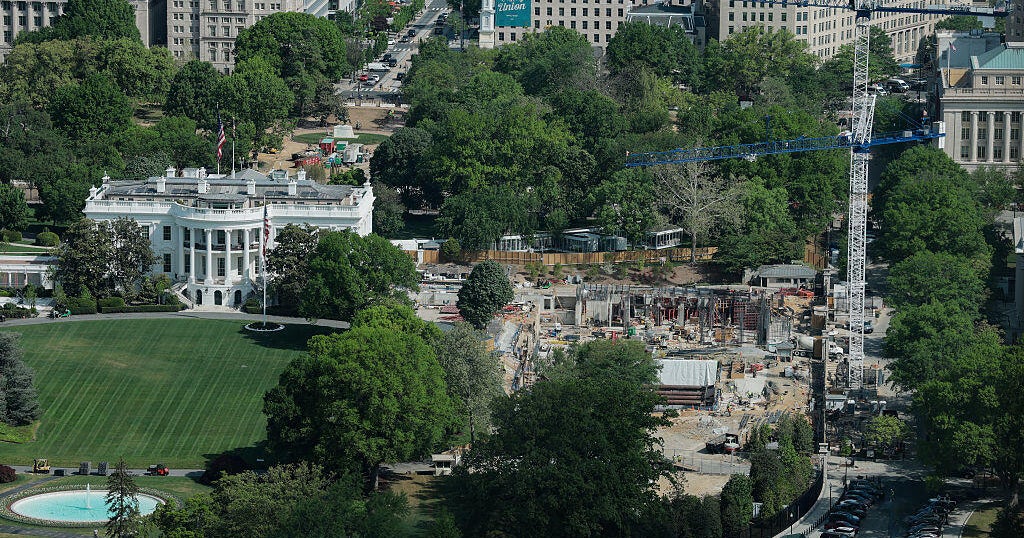
The physical scope of the project has dramatically expanded from initial descriptions, adding another layer of controversy. Demolition crews began tearing down the East Wing on October 20, despite President Trump’s earlier promise that the addition would not “interfere with the current building.” A White House official later explained in January that structural instability, water damage, and mold made complete demolition the most cost-efficient option, though critics question whether these issues were known when the project was first announced and funded. The design plans now call for far more than a simple renovation or expansion: the project includes a new ballroom, office space, a movie theater, a kitchen, and a two-story colonnade connecting the new facilities to the main White House building. Additionally, an underground bunker will house sensitive military and medical infrastructure. Notably, the agreement makes no mention of this underground construction, strongly suggesting that those components will be funded with taxpayer dollars rather than private donations. White House officials have yet to specify how much this below-grade modernization will cost, leaving another significant question mark hanging over the project’s true expense to the public. The Trust for the National Mall has been a longstanding philanthropic partner of the National Park Service and has previously worked with the White House on smaller projects like the tennis pavilion and Rose Garden upgrades, but nothing approaching the scale or cost of this undertaking.
Legal Challenges and the Road Ahead
The funding and approval process for the East Wing overhaul has faced significant legal scrutiny, with a federal judge questioning both the propriety of the arrangements and whether proper congressional authorization was obtained. Late last week, U.S. District Judge Richard Leon ordered a halt to above-ground construction until the East Wing project receives explicit congressional approval, though an appellate court has since allowed construction to continue at least until early June while the legal issues are sorted out. Judge Leon has been particularly critical of the funding mechanism itself, describing the arrangement—whereby the Trust collects hundreds of millions in private donations, turns the money over to the National Park Service, which then transfers it to the White House—as a “Rube Goldberg contraption” in a recent ruling. This characterization suggests the judge views the funding structure as unnecessarily complicated and potentially designed to obscure the true nature of the transactions and avoid standard oversight procedures. The legal challenges raise fundamental questions about whether a sitting president can essentially solicit private funding for major renovations to government property, particularly when donor identities can be kept secret and when those donors may have business before the federal government. As construction continues pending further court decisions, the controversy surrounding this project highlights broader concerns about transparency, conflicts of interest, and the appropriate boundaries between private wealth and public institutions. While a White House official has stated that the East Wing contract has not been changed since it was signed in October, the ongoing legal battles and public scrutiny suggest this story is far from over, with potentially significant implications for how future presidents might seek to fund projects at the White House and other government facilities.