


Cuba Plunges Into Darkness: A Nation Struggles With Cascading Power Crisis
The Latest Blackout Compounds Cuba’s Energy Emergency
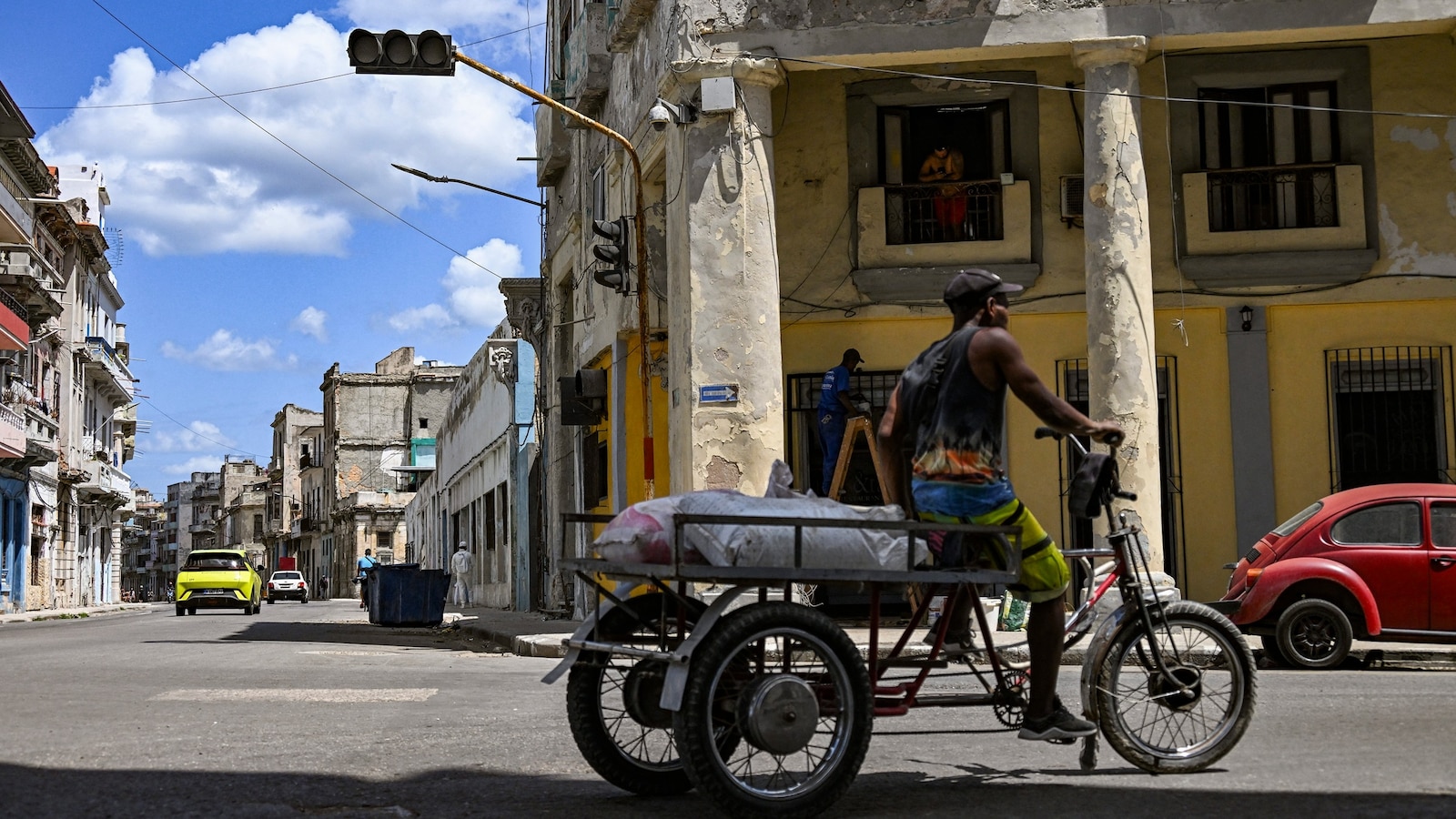
Cuba experienced yet another complete island-wide blackout on Monday, plunging all 11 million residents into darkness as the nation’s deteriorating power infrastructure reached another breaking point. The Ministry of Energy and Mines announced through social media that the entire electrical system had suffered a “complete disconnection,” marking the third major blackout to hit the Caribbean island in just four months. Government officials stated they were investigating the cause of the collapse, noting that no failures had been detected in the operating units before the grid went down. This latest crisis has left ordinary Cubans exhausted and desperate, with many questioning whether life on the island remains sustainable.
For residents like 61-year-old Tomás David Velázquez Felipe from Havana, the constant power failures have become unbearable. The recurring outages mean that whatever little food families manage to obtain quickly spoils without refrigeration, turning basic survival into a daily struggle. “Our people are too old to keep suffering,” he said, expressing a sentiment shared by many who believe that those who can leave Cuba should do so. The blackouts affect every aspect of daily life, from food preservation to medical care, creating a cascading humanitarian crisis that deepens with each passing day. Another resident, 48-year-old Yaimisel Sánchez Peña, shared her frustration about food purchased with remittances from her son in the United States constantly going bad, while also worrying about how the outages affect her elderly 72-year-old mother who “suffers every day.”
A Perfect Storm: Why Cuba’s Power Grid Keeps Failing
Cuba’s electrical infrastructure has been steadily deteriorating for years, creating an increasingly fragile system that experts say is operating far beyond its intended lifespan. William LeoGrande, a professor at American University who has extensively studied Cuba, described the situation as a “perfect storm of collapse.” The country’s aging power grid hasn’t received proper maintenance in decades, and the infrastructure has long exceeded its useful life. LeoGrande praised the Cuban technicians who keep the system running at all, calling them “magicians” for managing to maintain operations given the deplorable condition of the equipment. The thermoelectric plants that generate much of Cuba’s electricity have been running on heavy oil with high sulfur content, which has been actively corroding the equipment and accelerating its breakdown.
The crisis has been significantly worsened by Cuba’s inability to secure necessary oil shipments. President Miguel Díaz-Canel revealed on Friday that the island hasn’t received any oil deliveries in three months, forcing the country to rely entirely on solar power, natural gas, and its failing thermoelectric plants. The situation became critical after the United States intensified pressure on Cuba in January, when President Donald Trump warned of imposing tariffs on any nation that sells or provides oil to the island. This warning effectively created what the Cuban government calls an “energy blockade.” The situation deteriorated further after critical oil shipments from Venezuela—Cuba’s traditional energy partner—ceased following U.S. actions against the South American nation in early January, including the arrest of then-president Nicolás Maduro. While Cuba produces approximately 40% of its own petroleum and generates its own power, this domestic production has proven woefully insufficient to meet the nation’s energy demands.
The Human Cost: Daily Life Under Constant Uncertainty
The repeated blackouts have transformed everyday life in Cuba into a test of endurance, with residents never knowing when they’ll have electricity or for how long. Mercedes Velázquez, a 71-year-old Cuban, expressed the weary resignation felt by many: “We’re here waiting to see what happens.” She recently gave away part of a freshly made soup rather than let it spoil, exemplifying the difficult choices Cubans face daily. “Everything goes bad,” she said simply, capturing the futility of trying to maintain normal life when basic utilities cannot be relied upon. The constant uncertainty affects not just comfort and convenience but fundamental aspects of survival, as families watch their limited food supplies rot and struggle to cope with the tropical heat without fans or air conditioning.
The crisis extends well beyond inconvenience into life-threatening territory, particularly for healthcare. President Díaz-Canel acknowledged that the government has been forced to postpone surgeries for tens of thousands of people due to the unreliable power supply. Hospitals require consistent electricity to operate safely, and the unpredictable blackouts make it impossible to schedule procedures or maintain critical medical equipment. The elderly population, which includes many of the residents quoted above, faces particular risks during extended power outages, as medical devices, climate control, and medication storage all depend on reliable electricity. A week before Monday’s blackout, another massive outage affected western Cuba, leaving millions without power, while an early December blackout similarly impacted the western region, creating a pattern of recurring crises that prevent any recovery or normalization.
Economic Paralysis and the Currency Crisis
Beyond the immediate hardships, Cuba’s power crisis reflects and exacerbates deeper economic problems that threaten the nation’s very viability. Professor LeoGrande explained that the Cuban government simply doesn’t have the hard currency necessary to import spare parts or upgrade the power plants and grid infrastructure. This financial paralysis means that even when officials identify problems and know what repairs are needed, they lack the resources to implement solutions. The situation creates a vicious cycle: the failing power grid damages the economy, which reduces government revenues, which prevents infrastructure repairs, which causes more blackouts, further harming the economy. This downward spiral has been building for years but has accelerated dramatically in recent months.
The Trump administration has explicitly linked any easing of sanctions to Cuba’s willingness to release political prisoners and move toward political and economic liberalization. This conditional approach puts Cuba in a difficult position: implement reforms that the government has resisted for decades or continue suffering under economic pressure that makes basic governance increasingly impossible. President Díaz-Canel confirmed on Friday that Cuba is holding talks with the U.S. government as the situation continues to deteriorate, though whether these discussions will yield any breakthrough remains uncertain. The economic pressures extend beyond just energy, affecting every sector of Cuban society and making it increasingly difficult for the government to maintain even minimal services.
Looking Ahead: Potential Solutions and Likely Outcomes
Professor LeoGrande outlined a possible but difficult path forward for Cuba: drastically reduce energy consumption while rapidly expanding renewable energy capacity, particularly solar power. If the island can successfully implement these changes, it might be able to “struggle along for a while” without regular oil shipments. However, he cautioned that this approach would mean “constant misery for the general population,” with living standards remaining severely depressed. To accelerate solar power deployment beyond what Cuba managed last year would require other countries, principally China, to substantially increase their provision of solar equipment—essentially doubling or more their current support. Whether China or other nations would be willing to make such significant commitments remains an open question.
Without a breakthrough solution, LeoGrande warned of dire consequences: “Eventually, the economy could collapse just completely and then you would have social chaos and probably mass migration.” This prediction echoes the sentiments of ordinary Cubans like Tomás David Velázquez Felipe, who already believe that anyone who can leave should do so. The prospect of mass migration would create regional instability and humanitarian challenges, potentially affecting the United States, Mexico, and other Caribbean nations. As Cuba enters yet another period of darkness, the international community watches to see whether diplomatic negotiations, economic reforms, or technological solutions can prevent a complete collapse. For now, millions of Cubans wait in the dark, hoping that the lights will come back on and wondering how much longer they can endure a crisis that shows no signs of ending. The coming weeks and months will likely determine whether Cuba can find a sustainable path forward or whether the perfect storm of energy, economic, and political crises will finally overwhelm the island nation’s capacity to cope.