


Australia’s Decorated War Hero Faces Murder Charges: A Nation Grapples with Difficult Truths
The Fall of a National Icon
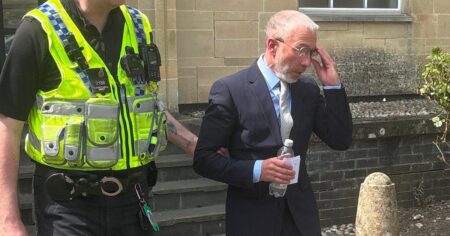
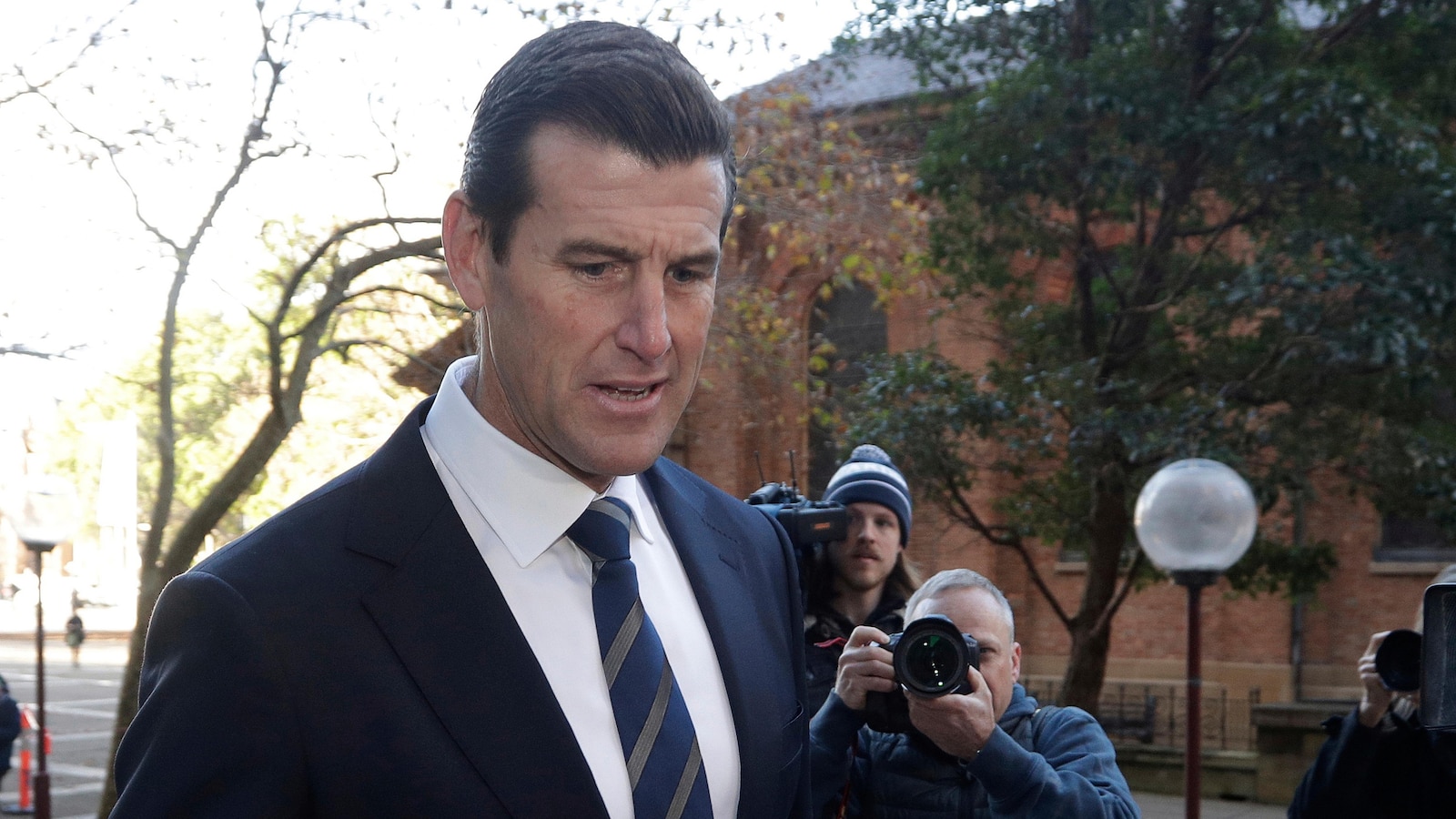
Ben Roberts-Smith, once celebrated as Australia’s most decorated living war veteran, found himself on the opposite side of justice this week when he appeared before a Sydney court on war crime murder charges. The 47-year-old former Special Air Service (SAS) corporal, who earned both the prestigious Victoria Cross and Medal of Gallantry for his service in Afghanistan, chose not to apply for bail during Wednesday’s court proceedings. His arrest at Sydney Airport marks a stunning reversal of fortune for a man who was once held up as the embodiment of Australian military valor. Roberts-Smith spent his first night behind bars and did not appear in court, either in person or via video link, as his legal team requested an adjournment until early June. The charges he faces are grave: two counts of war crime murder and three counts of aiding or abetting war crime murder, each carrying a potential maximum sentence of life imprisonment. These allegations relate to the deaths of five Afghan civilians and prisoners who died between 2009 and 2012 in Uruzgan province, where Australian forces maintained their primary base of operations during the lengthy Afghanistan campaign.
The Broader Context of Australian War Crimes
Roberts-Smith’s prosecution represents just the tip of a deeply troubling iceberg that has shaken Australia’s military establishment to its core. He is only the second Australian veteran of the Afghanistan war to face war crime charges, following former SAS soldier Oliver Schulz, who has pleaded not guilty to killing an Afghan man in 2012 and whose trial isn’t expected until 2027. These cases stem from a comprehensive military investigation report released in 2020 that uncovered evidence suggesting elite Australian Special Air Service and commando regiment troops unlawfully killed 39 Afghan prisoners, farmers, and other noncombatants during the course of the war. This revelation was particularly shocking given that approximately 40,000 Australian military personnel served in Afghanistan between 2001 and 2021, with 41 Australian soldiers making the ultimate sacrifice. The scope of the alleged misconduct has prompted the government to take the unprecedented step of stripping several serving and former military commanders of their medals, holding them accountable for the actions of troops under their command between 2005 and 2016. These developments have forced Australians to confront uncomfortable questions about what was done in their name in a distant conflict that stretched across two decades.
The Specific Allegations and Legal Framework
The charges against Roberts-Smith paint a disturbing picture of alleged misconduct across multiple incidents spanning several years. Police allege that on April 12, 2009, at Kakarak village, Roberts-Smith both personally killed someone and caused a subordinate to kill another person. On September 11, 2012, at Darwan village, he allegedly ordered a subordinate to execute a prisoner or civilian. Then on October 20, 2012, at Syahchow village, he is accused of again both personally killing someone and causing a subordinate to carry out another killing. According to Australian law, war crime murder is defined as the intentional killing of a person who is not actively participating in hostilities—such as civilians, prisoners of war, or wounded soldiers—within the context of armed conflict. This legal definition is crucial because it distinguishes between legitimate combat operations and the unlawful execution of people who pose no threat. While the initial police statement mentioned five counts of war crime murder, the charges formally laid in court were structured differently, with two counts of direct murder and three counts of aiding or abetting such crimes, though all carry identical maximum penalties. The prosecution will need to prove these allegations beyond reasonable doubt, a significantly higher standard than was required in the civil defamation case Roberts-Smith previously lost.
A Battle Already Lost in Civil Court
Before facing these criminal charges, Roberts-Smith had already suffered a devastating legal defeat that foreshadowed his current predicament. In 2018, Australian newspapers published articles accusing him of various war crimes, prompting Roberts-Smith to file a defamation lawsuit against the media outlets. During that civil trial, Roberts-Smith testified emphatically that he had never killed an unarmed Afghan civilian and categorically denied committing any war crimes. He portrayed himself as the victim of jealous fellow soldiers who resented his medals and honors, claiming they had fabricated lies about him out of spite. However, in 2023, a federal judge rejected his defamation claims entirely, ruling that the newspapers had substantially proven their allegations and that Roberts-Smith had likely killed four unarmed noncombatants unlawfully between 2009 and 2012. That civil court finding was based on a “balance of probabilities”—the standard lower burden of proof used in civil cases—meaning the judge believed it was more likely than not that the war crimes had occurred. The defamation case was financially supported by media magnate Kerry Stokes, whose Seven West Media had employed Roberts-Smith as a state manager. Following his comprehensive loss in that case, Roberts-Smith left his position with the media company, losing not only his reputation but also his livelihood.
Political and Community Reverberations
The arrest and prosecution of such a high-profile military figure has sent shockwaves through Australian society and sparked intense debate about responsibility, justice, and support for veterans. Prime Minister Anthony Albanese struck a careful balance in his response, acknowledging this as a “difficult time” for the Australian Defense Force while emphasizing that Australians should continue to thank and honor the men and women who serve in uniform and are prepared to make the ultimate sacrifice for their nation. He stressed the importance of not politicizing what is fundamentally a legal process and declined to comment further on the specifics of the case. Opposition leader Angus Taylor took a different approach, calling on the federal government to provide financial support for the legal defense of all military personnel prosecuted for war crimes, including Roberts-Smith, arguing that the presumption of innocence is crucial and that those accused deserve adequate resources to mount a proper defense. Former Prime Minister John Howard, who initially committed Australian troops to Afghanistan in 2001, acknowledged that Roberts-Smith’s arrest would emotionally impact millions of Australians, describing it as an issue that tests both respect for Australian values and the deep reverence held for those who risk their lives for national security.
The Human Cost and Path Forward
The emotional toll of these prosecutions extends far beyond Roberts-Smith himself, affecting the entire close-knit community of current and former Special Air Service members. The Australian Special Air Service Association released a statement acknowledging the deeply confronting reality facing its community—some members will be required to testify against former comrades they once fought alongside, while others must defend themselves against grave allegations that could result in life imprisonment. This situation represents a profound crisis of conscience for elite soldiers who operated in the morally complex and dangerous environment of counterinsurgency warfare, where the lines between combatants and civilians were often blurred and split-second decisions carried life-or-death consequences. As Roberts-Smith awaits his next court appearance in early June, his case—along with Schulz’s pending trial—will likely take years to fully resolve, keeping these painful questions in the public eye and forcing continued reflection on Australia’s longest military engagement. These prosecutions send a clear message that military service, regardless of how distinguished, does not place anyone above the law, and that even decorated heroes must be held accountable if credible evidence suggests they violated the laws of war. For a nation that prides itself on its military tradition and the ANZAC legend, reconciling the heroism of service with the possibility of war crimes represents one of the most challenging reckonings in modern Australian history.