
Jack Schlossberg: Carving His Own Path Beyond the Kennedy Legacy
Breaking Free from Presidential Shadows
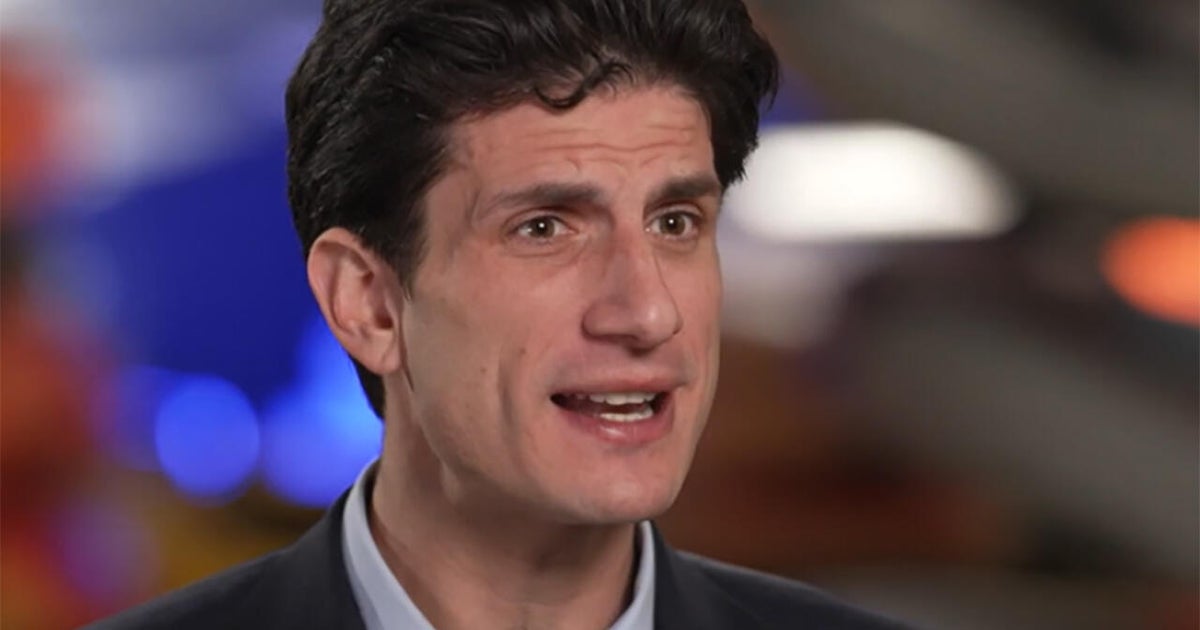
At 33 years old, Jack Schlossberg knows what it’s like to live in the shadow of American royalty. As the grandson of President John F. Kennedy, he’s grown accustomed to people seeing his last name before they see him. But now, as he runs for Congress in New York’s 12th district—seeking to fill the seat being vacated by retiring Congressman Jerry Nadler—Schlossberg is determined to prove he’s more than just another Kennedy trading on family fame. “People can think whatever they like,” he says with characteristic directness. “But I’m me. I’m Jack Schlossberg. And I’m proud of where I come from. But that’s not the only thing about me. I’m my own person, so you can count on me to think for myself.” It’s a delicate balance he’s trying to strike: honoring a legacy that shaped American history while insisting on his own identity and vision for the future.
Yet escaping the Kennedy narrative proves nearly impossible when that family’s story continues to dominate headlines. Just in the past year, the Kennedy family drama has played out on the national stage in unprecedented ways. His cousin, Robert F. Kennedy Jr., a longtime vaccine skeptic, joined the Trump administration as Secretary of Health and Human Services—a move that prompted public rebukes from many Kennedy family members. Schlossberg himself hasn’t held back his criticism: “My cousin, RFK Jr., tries to pretend that he embodies a progressive agenda, when he’s in fact using his last name and lending it to President Trump, who is dismantling everything my family stood for.” The conflict represents more than family disagreement; it’s become a public battle over what the Kennedy name should represent in modern American politics. Adding fuel to this fire, President Trump declassified files related to JFK’s assassination, then controversially added his own name to the Kennedy Center before announcing it would close for what he called renovations. When asked about the “Trump Kennedy Center,” Schlossberg doesn’t mince words: “That name is not gonna last.”
Fighting Fire with Social Media
In an era where political communication has fundamentally changed, Schlossberg has embraced social media with enthusiasm and controversy in equal measure. He’s built an impressive following of two million people across various platforms, where his content ranges wildly in tone and substance. Some posts are deliberately silly and entertaining, designed to show his personality and sense of humor. Others dive deep into policy details, revealing the wonky, intellectual side of someone with degrees from Yale, Harvard Law School, and Harvard Business School. And some posts have sparked genuine controversy and debate about where the lines should be drawn in political discourse. One particularly polarizing moment came when he posted a picture of Vice President JD Vance’s wife, Usha Vance, with his own face superimposed on one of their children, suggesting a fictional “love child.”
When challenged about whether he’d crossed a line with such posts, Schlossberg remained unapologetic and defiant. “I think what’s crossing a line is the propaganda that we see issued every single day by the White House and Vance,” he argued. “So, what are we gonna do—hold back? Hold back on our sense of humor and not tease them, make fun of them back?” He insists that Democrats need to abandon their tendency toward politeness and restraint in the face of what he sees as unprecedented attacks from the Trump administration. “You can point at anything I posted, I will point you back at a president who shares pictures of himself bombing U.S. citizens with fecal matter. This is a new era we’re living in.” For Schlossberg, the gloves-off approach isn’t just strategy—it’s necessity. He sees Trump’s policies as directly attacking New York and other blue states, cutting funding for infrastructure simply out of political spite. “They’re making New York and other blue states pay more just because they don’t like us. And what, I’m not supposed to make fun of JD Vance and his family? Why?” he asks. His argument is that when his own family members—his grandmother Jackie Kennedy and Uncle John Kennedy Jr., neither of whom were elected officials—faced relentless public scrutiny and commentary, the idea that politicians’ families should be off-limits rings hollow. “The time is not now to hold back, sit on your hands and say, ‘Hmm, okay. Well, why don’t we just play it safe?’ Absolutely not! We’re gonna get these people out of here.”
The Unconventional Campaign and Family Support
What makes Schlossberg’s congressional run particularly unusual isn’t just his famous name—it’s how he’s choosing to run. In a field of about a dozen candidates seeking the Democratic nomination for New York’s 12th district, Schlossberg stands out for what he doesn’t have: no formal campaign organization, no campaign manager, no traditional political infrastructure. It’s an approach that might seem naive or reckless, except that it appears to be entirely intentional. His most trusted advisers aren’t political consultants or strategists—they’re his parents, Caroline Kennedy (daughter of JFK and former U.S. Ambassador to Japan) and Ed Schlossberg, an artist and designer. In their first interview together about their son’s campaign, they expressed complete confidence in his unconventional approach.
Caroline Kennedy acknowledged the irony of the situation with a knowing smile: “Some of the other people have been preparing for this for years and years. But he came to this new. I mean, he’s the outsider in this race, actually—which is ironic. Yeah, ironic! And I think, you know, people might laugh when they hear that, but it’s actually true.” The idea of a Kennedy as an “outsider” might seem absurd on its surface, but she makes a compelling point. While other candidates have spent years building traditional political machines and currying favor with party insiders, Schlossberg jumped into the race relatively recently, relying instead on his ability to connect directly with voters through social media and personal interactions. His father, Ed, emphasizes another quality he brings to politics: “We need people with that kind of education, and we need people who are really informed and bring a set of values and have the courage to speak up. And I think Jack does all those things. And a sense of humor!” That sense of humor, they both agree, isn’t just entertainment—it’s a valuable political tool and a coping mechanism that’s helped Jack navigate challenges throughout his life.
Personal Struggles and Resilience
Behind the confident social media presence and the famous last name, Schlossberg has faced significant personal challenges that have shaped who he is today. In his twenties, he suffered a debilitating back and hip injury that required two separate reconstructive surgeries and left him unable to walk properly for approximately four years. It was a devastating setback for a young man in what should have been the prime of his physical life, forcing him to confront limitations and develop resilience in ways he might not have otherwise. But true to form, Schlossberg finds a way to inject humor even into discussing this difficult period: “I blew out my back and my hip, and I had to get my whole hip reconstructed with two different surgeries. And I couldn’t really walk for about four years. But at the same time, in the metaphorical sense, strong backbone. Spine like a ramrod!” The ability to find lightness in darkness, his family says, has been one of his defining characteristics.
His father, Ed, notes that Jack has often been the one lifting others up during difficult times: “We’ve been through a lot of really difficult periods in our life, and he’s always there to lift it up and remember where we are, and we’re still here.” Growing up with two older sisters—Rose and Tatiana—also shaped his character in fundamental ways. “It’s brutal. Absolutely brutal!” he jokes about the experience. “They don’t let you get away with anything. My style’s never good enough. I’ve never gotten an answer right in my entire life. But in all honesty, they taught me everything I know on how to be a strong person. And it’s also made me more conscientious and aware of my own privilege and position as a man in a world that often rewards certain types of behavior and certain people.” That awareness of privilege and gender dynamics isn’t something often heard from male political candidates, particularly those from such rarefied backgrounds, suggesting that his sisters’ influence helped develop a perspective that extends beyond his own experience.
Grief, Determination, and What Family Means
The most profound recent challenge for Schlossberg and his entire family came just one month after he announced his congressional candidacy. In December, his sister Tatiana died at just 35 years old after a battle with cancer that she had chronicled in an essay for The New Yorker magazine. The loss was devastating, but it also clarified his sense of purpose. When asked how Tatiana felt about his decision to run for Congress, Schlossberg’s voice carries both grief and determination: “I can tell you now that she’s still rooting for us, and that the last thing that she said to me was, ‘You better win.’ No one knew me better, and I knew no one better than her.” In his small New York City apartment, he keeps images of Tatiana by his bedside, including photos from her wedding in Martha’s Vineyard at his grandmother’s house. He speaks warmly of her husband, George, and lights up when discussing his role as uncle to Tatiana’s two young children. “The best one!” he declares when asked what kind of uncle he is.
Campaigning is one of the few things that can pull him away from spending time with those children, and it’s clear that being present for them is a priority that competes seriously with his political ambitions. This recent loss has also refined how Schlossberg thinks about family and what that word means to him. When most people hear “the Kennedy family,” they think of those famous photographs featuring what seems like a cast of thousands—aunts, uncles, cousins stretching across multiple generations, all connected to America’s most storied political dynasty. But that’s not how Schlossberg primarily experiences family. “When you talk about the Kennedy family, it’s a lot of people I don’t know,” he explains. “When you talk about what ‘family’ is, it’s me, my sisters, my parents. We’re a unit, and we’re really close.” His parents deliberately kept him and his sisters out of the spotlight as much as possible while growing up, though they couldn’t entirely escape it—his first communion still made the front page of the New York Daily News. “You shoulda been there. It was an amazing event!” he jokes. That tight family unit—Jack, his parents, and his sisters—represents his real foundation, distinct from the broader Kennedy clan and its complications. “Family is complicated,” he acknowledges with understatement that anyone from a large, famous, or simply human family can understand.
As Jack Schlossberg campaigns for Congress, he’s navigating multiple identities simultaneously: grandson of a martyred president, son of American royalty, brother grieving a profound loss, policy wonk with Ivy League credentials, social media provocateur, and self-described outsider trying to break into a political system that both welcomes and resents his famous name. Whether voters in New York’s 12th district will embrace this unconventional candidate remains to be seen, but one thing is clear: Jack Schlossberg is determined to be known for who he is, not just whose grandson he is—even as he acknowledges that separating those two things may be impossible. His campaign represents a test of whether a new generation is ready for a different kind of Kennedy, one who honors the legacy while creating his own path forward with humor, directness, and a willingness to take risks that more conventional candidates might avoid.