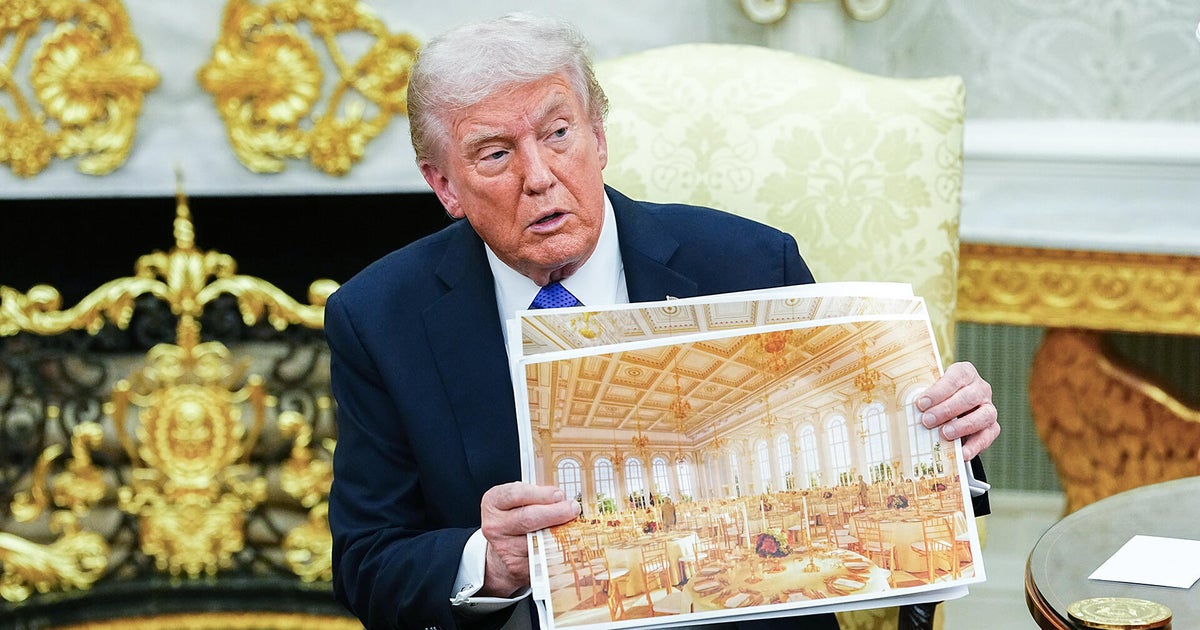

Democrats Continue Push for Transparency on Trump’s $400 Million Ballroom Project
Persistent Oversight Efforts Face Administration Resistance
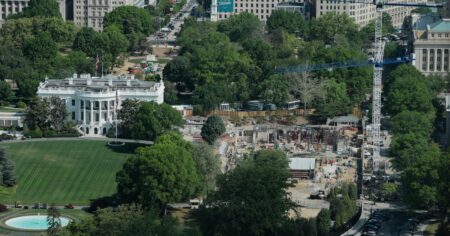
In what has become a test of congressional determination against executive stonewalling, Democratic lawmakers are refusing to back down in their quest for answers about President Trump’s ambitious $400 million White House ballroom project. Senator Elizabeth Warren of Massachusetts and Representative Robert Garcia of California have once again sent letters to federal agencies demanding transparency about how this massive construction undertaking is being funded and managed. Their latest correspondence, directed at the National Park Service, reveals growing concerns about potential corruption and the unusual financial arrangements surrounding the project. The lawmakers are specifically questioning whether the Park Service has become an unwitting accomplice in what they describe as possible ethical violations connected to the ballroom’s financing.
The Democratic representatives have raised serious questions about money flowing from private donors through a nonprofit organization, then being funneled through the National Park Service before reaching a White House office that oversees the construction. This circuitous financial route has set off alarm bells for those concerned about government accountability and the potential for quid pro quo arrangements. Despite multiple attempts to gather information, Warren and Garcia have encountered a wall of silence from the Trump administration and various federal agencies. Without the power to issue subpoenas—a tool available only to the majority party in Congress—their requests remain essentially voluntary, allowing the administration to ignore them without immediate legal consequences. As Senator Warren bluntly stated, “The Park Service can try to dodge Congress, but we won’t stop pressing for answers,” signaling that the lawmakers have no intention of abandoning their oversight efforts despite the obstacles they face.
Ethics Concerns About Donor Influence and Undisclosed Contributions
At the heart of Warren and Garcia’s investigation lies a troubling question that strikes at the core of democratic governance: are wealthy donors buying access and favorable treatment from the administration in exchange for their contributions to the ballroom project? The lawmakers are demanding detailed information about the “amount, source, or terms of the donations,” none of which the Trump administration has been willing to disclose publicly. This lack of transparency has fueled speculation about who exactly is funding this lavish renovation and what they might expect in return. Senator Warren didn’t mince words when addressing these concerns, stating, “We need answers now as to which billionaire corporations are shoveling money to Trump’s vanity projects and what favors they may be seeking in return. Americans deserve to know whether the National Park Service is being used to help facilitate Trump’s corruption.”
The situation raises fundamental questions about the appropriate relationship between private wealth and public projects, especially when those projects directly benefit the sitting president. The use of a nonprofit organization as an intermediary, combined with the involvement of the National Park Service—a federal agency tasked with preserving America’s natural and cultural heritage—creates an appearance of impropriety that the lawmakers believe demands explanation. Citizens have a right to know who is financing major government construction projects and whether those financiers are receiving special consideration from the administration. The refusal to provide straightforward answers to these basic questions only deepens suspicions that there may be something to hide. In a functioning democracy, transparency around government operations isn’t just preferred—it’s essential for maintaining public trust and ensuring that elected officials are serving the public interest rather than the interests of wealthy benefactors.
Legal Challenges and the Rush to Build
The ballroom project isn’t just facing political scrutiny; it’s also embroiled in legal controversy that could potentially halt construction altogether. A federal judge is expected to issue a ruling this month on whether the project can proceed, though legal experts predict that whichever side loses will likely appeal, meaning the legal battle could drag on for months or even years. The Trust for Historic Preservation has filed a lawsuit arguing that the Trump administration failed to obtain necessary approvals before beginning construction, thereby violating existing laws designed to protect historic sites and ensure proper governmental procedures are followed. The Justice Department has pushed back against these allegations, maintaining that the administration has acted lawfully despite acknowledging the accelerated timeline for the project.
This rush to complete the ballroom has raised eyebrows among critics who wonder why the project has been put on such a fast track. Warren and Garcia specifically asked Park Service officials whether they agree with President Trump’s assertion that “IT IS TOO LATE!” to stop the project even if a judge rules it violates the law and orders construction halted. This statement suggests a disturbing disregard for judicial authority and the rule of law—the implication being that once construction reaches a certain point, legal violations become somehow irrelevant. Such an attitude undermines the entire concept of checks and balances that prevent any single branch of government from operating without oversight or accountability. The question posed by the lawmakers forces Park Service officials to choose between rubber-stamping the president’s position or affirming their commitment to following the law regardless of political pressure or construction timelines.
Stacked Review Boards and Questions About Impartiality
As if the ethical and legal questions weren’t concerning enough, the process for reviewing and approving the ballroom design has itself become controversial due to apparent conflicts of interest. Two important review boards—the National Capital Planning Commission and the Commission of Fine Arts—are scheduled to render their judgments on Trump’s ballroom in the coming weeks. However, both panels have been stacked with Trump allies, raising serious doubts about whether these reviews will be conducted impartially or will simply serve as rubber stamps for a project the president has already decided will move forward. The Commission of Fine Arts, which is hearing the administration’s final presentation, has undergone a complete transformation since Trump fired all previous members in October.
The most recent and perhaps most eyebrow-raising appointment to the Commission of Fine Arts is Chamberlain Harris, a White House aide whose qualifications for serving on a board that is supposed to consist of “seven members with expertise in the arts” remain unclear. According to the Commission’s own website, members should include architects and others with experience in the arts and urban planning. Harris’s official biography highlights her work “managing President Trump’s Presidential Portrait Project”—the collection of portraits now displayed in the colonnade leading to the West Wing—but offers little evidence of the kind of professional expertise in art, architecture, or urban planning that would typically qualify someone for this position. White House communications director Steven Cheung defended the appointment by saying Harris “understands the President’s vision and appreciation of the arts like very few others,” but understanding the president’s vision is quite different from possessing independent professional expertise that would allow for objective evaluation of a major construction project. This appointment exemplifies a broader pattern of placing personal loyalty above professional qualifications, transforming what should be independent review boards into extensions of the president’s will.
The Broader Implications for Government Accountability
The fight over the Trump ballroom project represents more than just a dispute about a single construction project—it reflects fundamental tensions about transparency, accountability, and the proper use of government resources in modern American democracy. When private donors can funnel money to presidential pet projects through opaque channels, when federal agencies appear to facilitate these arrangements without public disclosure, and when oversight boards are stacked with political loyalists rather than independent experts, the entire system of checks and balances that protects against corruption and abuse of power begins to break down. The Democrats’ persistent requests for information, though lacking the force of subpoenas, serve an important function by keeping these questions in the public eye and creating a record of the administration’s refusal to provide transparency.
The use of the National Park Service as an intermediary in this funding scheme is particularly troubling because it involves a respected federal agency with a specific mission—preserving America’s natural and cultural heritage—in what appears to be a workaround to avoid normal disclosure requirements that would apply to direct donations to the White House. This raises questions about whether other federal agencies might be similarly enlisted to facilitate arrangements that serve presidential interests rather than the public good. The precedent being set here could have lasting consequences well beyond the Trump administration, potentially normalizing a level of financial opacity around presidential projects that would have been unthinkable in previous eras. Warren and Garcia’s dogged pursuit of answers, even in the face of stonewalling and without the power to compel cooperation, demonstrates that some members of Congress still take their oversight responsibilities seriously and are willing to continue asking uncomfortable questions even when those questions go unanswered.
What Happens Next and Why It Matters
As this situation continues to unfold, several key developments will determine whether the American public ever gets the transparency that Warren and Garcia are demanding. The upcoming federal court ruling on the lawsuit brought by the Trust for Historic Preservation could potentially halt construction if the judge finds that proper procedures weren’t followed, though an appeal seems virtually certain regardless of the outcome. The reviews by the National Capital Planning Commission and Commission of Fine Arts will reveal whether these boards maintain any independence or simply approve whatever the president wants. And the continued pressure from Democratic lawmakers, even without subpoena power, may eventually yield some information through other channels or through investigative journalism that picks up where congressional oversight has been blocked.
For ordinary Americans watching this drama unfold, the ballroom project serves as a case study in how government accountability works—or doesn’t work—when one party controls the levers of power and the opposition lacks the tools to compel cooperation. It highlights the importance of maintaining genuine independence in oversight bodies and review boards, the critical role of transparency in preventing corruption, and the dangers of allowing personal wealth to influence government operations without public scrutiny. Whether this $400 million project ultimately gets built or not, the fight over it has already revealed significant weaknesses in the systems designed to prevent abuse of power and ensure that government serves the public interest rather than private agendas. The persistence of lawmakers like Warren and Garcia, continuing to ask questions even when stonewalled, represents an important check on executive power even when that check lacks the teeth of legal enforcement. Their efforts ensure that these questions remain part of the public record and the national conversation, keeping alive the principle that in a democracy, the people have a right to know how their government operates and who influences its decisions.