

Friendly Fire Over El Paso: When U.S. Agencies Accidentally Target Each Other
The Incident That Has Washington Talking
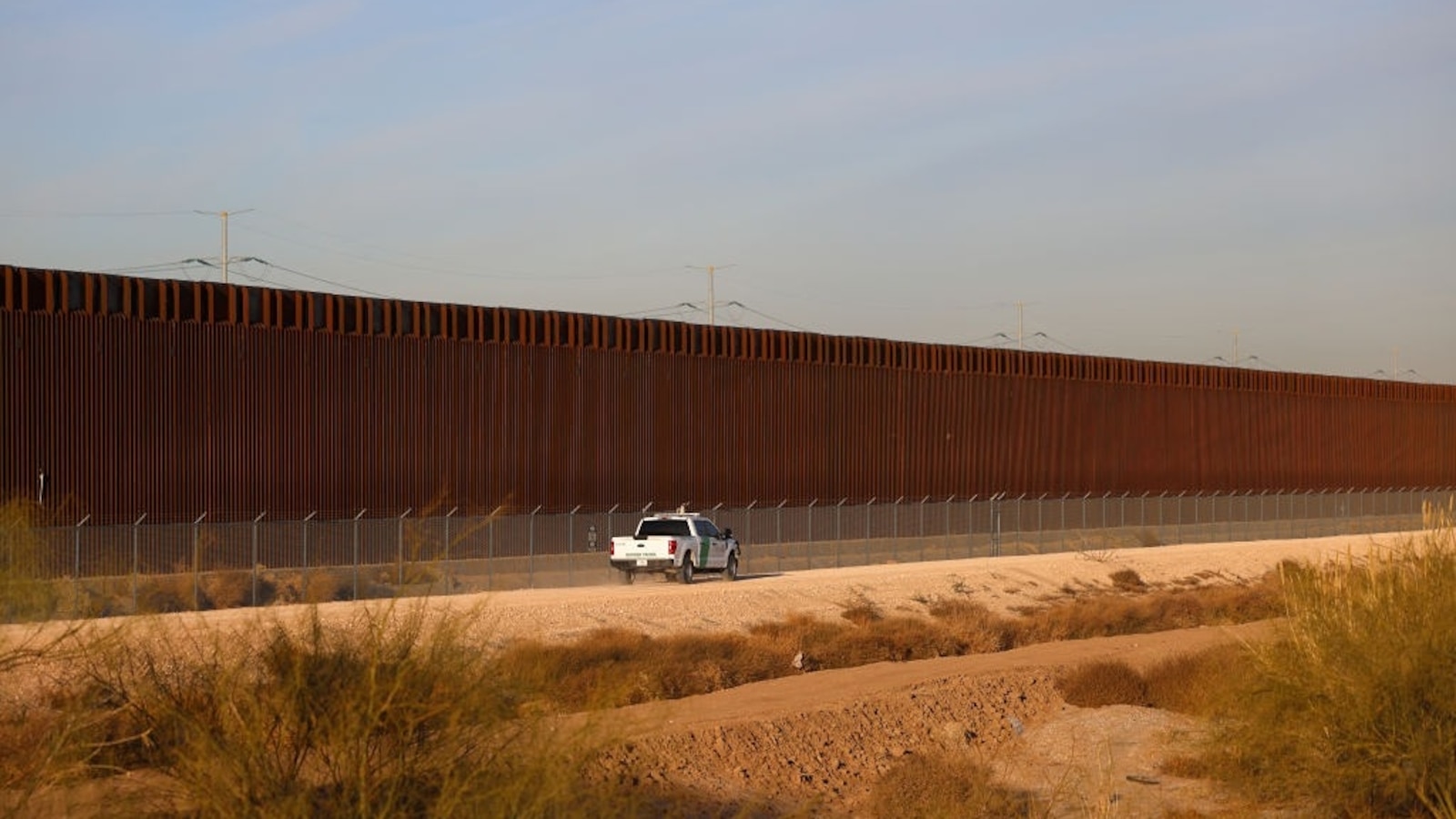
In what can only be described as an embarrassing mishap with serious implications, the U.S. Department of Defense accidentally shot down one of its own government’s drones over the skies of El Paso, Texas. The drone, which belonged to U.S. Customs and Border Protection (CBP), was mistakenly identified as a threat and taken down by military counter-drone systems. According to statements from House representatives and a congressional aide who confirmed the details to ABC News, Congress received a classified briefing about the incident on Thursday. This friendly fire incident has sparked concerns about coordination—or the lack thereof—between federal agencies operating along the southern border, particularly as the Trump administration ramps up security measures in response to what it characterizes as threats from Mexican cartels and foreign terrorist organizations. The mishap occurred in the Fort Hancock airspace, located approximately 50 miles southeast of El Paso, an area that has now been placed under expanded temporary flight restrictions by the Federal Aviation Administration through June 24 for unspecified “security” reasons.
Official Response and Damage Control
In the aftermath of this incident, the Pentagon, CBP, and the FAA scrambled to present a united front, releasing a carefully worded joint statement that attempted to explain what went wrong without assigning blame. According to their statement, “This reported engagement occurred when the Department of Defense employed counter-unmanned aircraft system authorities to mitigate a seemingly threatening unmanned aerial system operating within military airspace.” The agencies were quick to emphasize that the engagement took place “far away from populated areas” and that there were no commercial aircraft anywhere near the location when the incident occurred, presumably to ease public concerns about safety. The statement also highlighted that these agencies would “continue to work on increased cooperation and communication to prevent such incidents in the future”—a tacit admission that coordination between agencies wasn’t quite up to par. Notably, while the statement didn’t provide specific details about the drone that was destroyed, it did reference President Trump’s directive for unprecedented cooperation between the Department of Defense, FAA, and Customs and Border Patrol to address drone threats from Mexican cartels and foreign terrorist organizations along the U.S.-Mexico border, framing the incident within the broader context of border security operations.
The Fallout: Democrats Cry Foul
Congressional Democrats wasted no time in seizing upon the incident as evidence of administrative incompetence and poor planning. Ranking members of the House Committee on Transportation and Infrastructure—Representatives Rick Larsen of Washington, André Carson of Indiana, and Bennie G. Thompson of Mississippi—issued a scathing statement that pulled no punches. “Our heads are exploding over the news that DoD reportedly shot down a Customs and Border Protection drone using a high risk counter-unmanned aircraft system,” the Democratic lawmakers declared. They went further, pointing fingers directly at the White House and claiming vindication for warnings they had issued months earlier. According to their statement, they had previously advocated for a bipartisan, tri-committee bill designed to properly train counter-unmanned aircraft system (C-UAS) operators and establish better coordination protocols between the Pentagon, the Department of Homeland Security, and the FAA. The White House’s decision to sidestep this legislation was, in their words, “a short-sighted idea,” and the El Paso incident represented the predictable “result of its incompetence.” This political criticism underscores the broader tensions between the administration and Congressional oversight bodies regarding how border security operations are being conducted and whether proper safeguards are in place.
A Pattern of Airspace Confusion Along the Border
This isn’t the first time that airspace management and security operations near El Paso have raised eyebrows and generated confusion. The recent drone shootdown follows a particularly chaotic incident from earlier this month when the FAA abruptly shut down airspace over El Paso without adequate explanation or warning. Sources with direct knowledge of that situation told ABC News that the shutdown came just days after the Department of Homeland Security used a laser system to shoot down an unidentified object in the vicinity of Fort Bliss, a major Army installation near El Paso. One source specifically identified the downed object as a balloon, though official statements remained vague. During that earlier incident, the FAA imposed a surprise 10-day closure of all airspace within a 10-mile radius of El Paso, completely halting arrivals and departures at El Paso International Airport for what officials initially described only as “special security reasons.” The move caused significant disruption for travelers and airlines, and within hours, facing mounting pressure and confusion, the FAA rescinded the order. The Trump administration later clarified that the airspace closure was related to military operations to neutralize what they characterized as cartel drones, explicitly denying that it had anything to do with a balloon—despite sources indicating otherwise. These conflicting accounts and the pattern of sudden, poorly explained airspace restrictions suggest a lack of clear communication not only between agencies but also between the government and the public.
The Broader Context: Border Security and Technology
To understand why these incidents are occurring with increasing frequency, it’s important to consider the broader context of how border security operations have evolved and intensified. Under President Trump’s directive, federal agencies have been tasked with an “unprecedented” level of cooperation to counter what the administration characterizes as serious drone threats from Mexican drug cartels and potential foreign terrorist organizations operating along the southern border. This mission has led to the deployment of sophisticated counter-unmanned aircraft systems (C-UAS) that can detect, track, and neutralize drones that might be used for surveillance, smuggling contraband, or other nefarious purposes. However, the same technology that makes these systems effective against genuine threats also makes them potentially dangerous when proper identification and coordination protocols aren’t followed. The skies above the U.S.-Mexico border have become increasingly crowded with various types of aircraft: military drones conducting surveillance, CBP drones monitoring border crossings, helicopters from multiple agencies, and of course, civilian and commercial aircraft. Without robust communication systems and clear procedures for identifying friendly versus hostile aircraft, the risk of exactly the kind of friendly fire incident that occurred over El Paso increases dramatically. The current situation reveals a fundamental tension between the desire to respond quickly and decisively to potential threats and the need for careful verification to avoid tragic mistakes.
Looking Forward: Lessons and Reforms Needed
The accidental shootdown of a CBP drone by the Department of Defense represents more than just an isolated embarrassment—it’s a wake-up call that highlights serious deficiencies in how federal agencies coordinate complex operations in shared airspace. The Democrats’ criticism, while politically motivated, points to a legitimate concern: the administration’s apparent reluctance to embrace comprehensive, legislatively mandated training and coordination protocols in favor of more ad-hoc arrangements. The bipartisan bill that Congressional Democrats referenced would have established formal training requirements for personnel operating counter-drone systems and created clear communication channels between the Pentagon, Department of Homeland Security, and the FAA. Such measures might well have prevented the El Paso incident by ensuring that military operators had access to real-time information about friendly aircraft operating in the area. Moving forward, several reforms appear necessary. First, there needs to be a unified command structure or at least a coordination center where all agencies operating aircraft or counter-aircraft systems along the border can share real-time information. Second, investment in identification technologies that can quickly distinguish friendly from potentially hostile drones would reduce reliance on visual identification or operator judgment alone. Third, clear rules of engagement need to be established that balance the genuine need to counter drone threats against the risk of friendly fire. Finally, there should be transparency with the public and with Congress about these operations, including honest after-action reports when things go wrong, rather than vague statements that avoid accountability. The skies above the southern border are likely to remain contested and complicated for the foreseeable future, but with proper planning, training, and coordination, federal agencies should be able to accomplish their security mission without shooting down each other’s equipment—or worse, endangering lives through preventable mistakes.