


The Timeless Art of Vatican Mosaics: A Journey Inside St. Peter’s Basilica
A Masterpiece Hidden in Plain Sight
When visitors enter St. Peter’s Basilica in Vatican City, they’re immediately overwhelmed by the grandeur surrounding them. This magnificent structure holds the distinction of being the largest and, for Catholics worldwide, the most sacred church on Earth. Among its countless treasures is Michelangelo’s famous Pietà, a sculpture so moving it has brought both humble peasants and powerful popes to tears throughout the centuries. As you wander through the basilica’s vast interior, your eyes naturally drift upward to what appear to be breathtaking paintings adorning every surface. The colors are vibrant, the details exquisite, and the artistic mastery undeniable. However, what most visitors don’t realize is that they’re not looking at paintings at all – nearly everything they see is actually composed of intricate mosaics. This clever artistic illusion is so convincing that it’s virtually impossible to distinguish the mosaics from traditional paintings unless you can get remarkably close, something only possible for the specialized restorers who work 200 feet above the pews inside the Cupola Clementina, one of the basilica’s magnificent domes.
The Ancient Craft of Creating Eternal Beauty
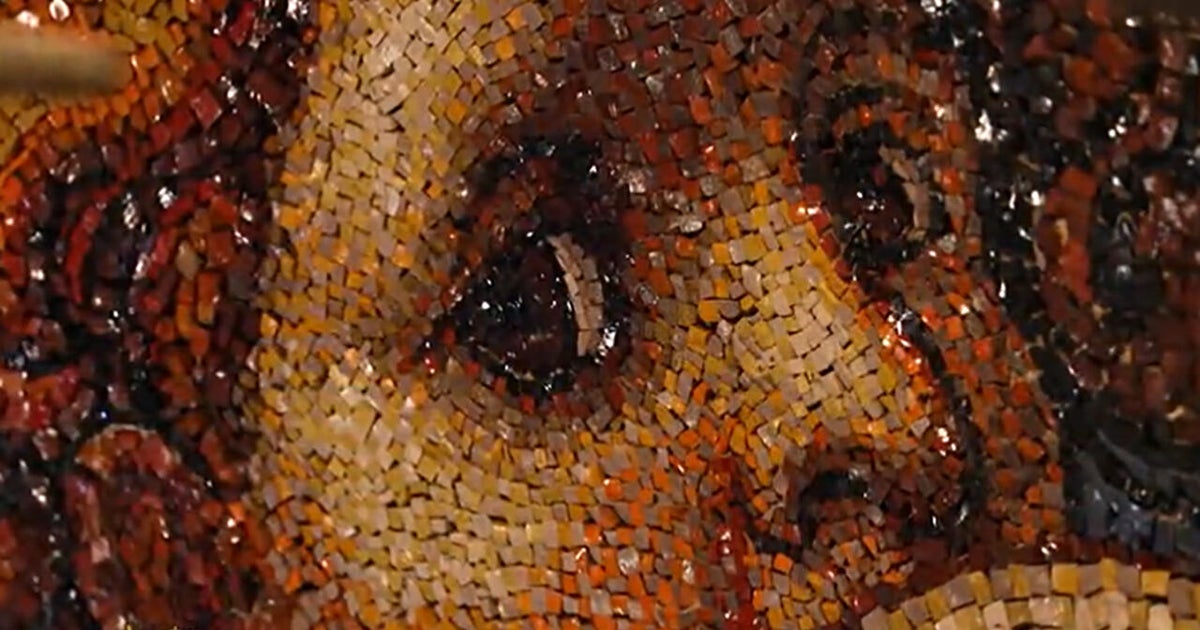
Paolo di Buono, who serves as director of the Vatican’s mosaic workshop, has dedicated his life to preserving and creating these remarkable works of art. When he guides visitors through the upper reaches of the basilica, accessible only to restoration workers, he reveals the stunning truth about these masterpieces. Each mosaic is painstakingly constructed using thousands upon thousands of tiny colored glass fragments, carefully selected and placed with precision that would astound even the most meticulous modern artist. “It is very incredible that they, the mosaicists, used this kind of detail to represent, for example, this beautiful face,” di Buono explains with genuine wonder in his voice. The ancient artists achieved something remarkable through their technique – by using different colors and expertly blending the tiny tiles together, they managed to create an extraordinary range of color shades in an incredibly refined manner. When viewed from the floor of the basilica far below, the effect is strikingly similar to looking at an Impressionist painting, with its play of light and delicate color transitions. The truly amazing part? These mosaics were created centuries before the Impressionist movement even existed, making the medieval and Renaissance-era mosaicists unintentional pioneers of artistic techniques that wouldn’t be formally recognized until hundreds of years later.
Why Mosaics Stand the Test of Time
The choice to create mosaics rather than paintings in St. Peter’s Basilica wasn’t merely an aesthetic decision – it was a practical one rooted in the desire for permanence. Traditional paintings, regardless of how skillfully executed, are inherently fragile. The organic materials used in paints – oils, pigments, canvas, and wood – are all subject to deterioration over time. They fade when exposed to light, crack with changes in temperature and humidity, and can be damaged by moisture, insects, and countless other environmental factors. In a building meant to stand for eternity and serve as a spiritual home for Catholics around the world, such impermanence was simply unacceptable. Mosaics, by contrast, offer a solution to this problem. Constructed from glass and gold – inorganic materials that don’t decay in the same way as organic substances – these artworks are far more eternal. The glass fragments, once set in place, maintain their color brilliance for centuries without fading. The gold remains lustrous, immune to tarnish in its protected setting. This durability means that the faithful who worship in St. Peter’s today see essentially the same vibrant colors and glowing images that greeted worshippers hundreds of years ago, creating a tangible connection across the centuries.
Preserving History in the Sacred Archives
The Vatican’s commitment to preservation extends beyond the visible artworks to the documentation of their creation and the basilica’s history. High within one of St. Peter’s smaller domes exists a remarkable space – the archive of St. Peter’s, overseen by Simona Turriziani. This archive seems to exist in its own celestial realm, literally floating above the church below in a setting that perfectly matches the sacred nature of its contents. When the massive organ in the basilica plays, the music rises up through the building and fills this archival space with sound, creating what Turriziani can only describe as a divine experience. Given the treasures housed within this special place, such transcendent moments seem entirely appropriate. Among the archive’s precious documents is a letter dated February 18, 1562, written and signed with impeccable penmanship by Michelangelo himself – yes, the same artistic genius who painted the ceiling of the Sistine Chapel and created the Pietà. In this letter, the aging master craftsman makes an impassioned plea to a cardinal, demanding payment for one of his workers and threatening to take the matter directly to the pope if the cardinal doesn’t comply. “I put my body and my soul for St. Peter,” Michelangelo wrote, a phrase that still resonates deeply with those who work to preserve his legacy. “Michelangelo said this phrase, and for us it’s very, very emotional,” Turriziani reflects. The archive also contains the earliest records of St. Peter’s mosaics, dating back to 1580, including original blueprints for mosaics such as one depicting St. Peter himself, complete with notations indicating the exact gradients of turquoise color to be used – a technical specification still referenced by artisans today.
Ancient Techniques in Modern Hands
Four-and-a-half centuries after those first mosaic blueprints were created, the methods used in the Vatican’s Studio del Mosaico – the Mosaic Workshop – have remained remarkably unchanged. This isn’t due to resistance to progress or stubborn adherence to tradition for its own sake; rather, it’s because these ancient techniques have proven themselves over millennia to be the most effective way to create lasting art. Both the tools and methods employed by today’s Vatican mosaicists date back not just centuries but, in some cases, millennia. The wooden platforms upon which the artisans stand while creating their masterpieces are identical in design to those used by craftsmen in ancient Rome 2,000 years ago. The primary tool of the trade, called a martellina, is a specialized sharp hammer that allows workers to cut glass fragments into the tiniest possible pieces with remarkable precision. Among the workshop’s most important ongoing projects are portraits of popes, each one painstakingly assembled from thousands of glass fragments over many months. Once completed, these papal portraits are installed in the Basilica of St. Paul Outside the Walls in Rome, creating a visual record of the Church’s leadership through the ages. The workshop also produces special gifts for visiting dignitaries – when U.S. presidents visit the Vatican, the pope routinely presents them with a mosaic landscape depicting the Vatican, a unique souvenir created using the same techniques employed for the basilica’s grand artworks.
Fire, Color, and Eternal Beauty
While traditional painters work with oils and pigments, mosaicists work with an entirely different medium: fire. Paolo di Buono demonstrates what he calls “the filament technique,” a special process that sets Vatican mosaics apart. This technique involves warming and firing glassy colors at high temperatures, literally melting them to create entirely new hues that don’t exist in nature. It’s a form of alchemy, transforming raw materials through heat into something precious and permanent. These custom-created colors are then carefully preserved within the Vatican’s workshops for future generations, stored alongside centuries-old color samples that may one day be needed to restore a faded section of mosaic to its original glory. This forward-thinking preservation ensures that restoration work can maintain absolute fidelity to the original artist’s vision, even hundreds of years after the work was first created. Despite working with these magnificent artworks every single day, di Buono admits he never becomes immune to their power. When asked if he still feels moved by the art on display throughout St. Peter’s, he responds emphatically: “Absolutely. It is not possible to be used to working here because you are always amazed.” His words capture something essential about these mosaics – up close, they’re nothing more than broken fragments of colored glass, seemingly random and chaotic. But when viewed as intended, from far below in the basilica, these fragments come together to create something far greater than the sum of their parts: images of transcendent beauty that truly seem nothing short of heavenly.