
The Hidden Danger of Measles: A Silent Time Bomb in the Brain
A Childhood Interrupted: Deepanwita’s Story
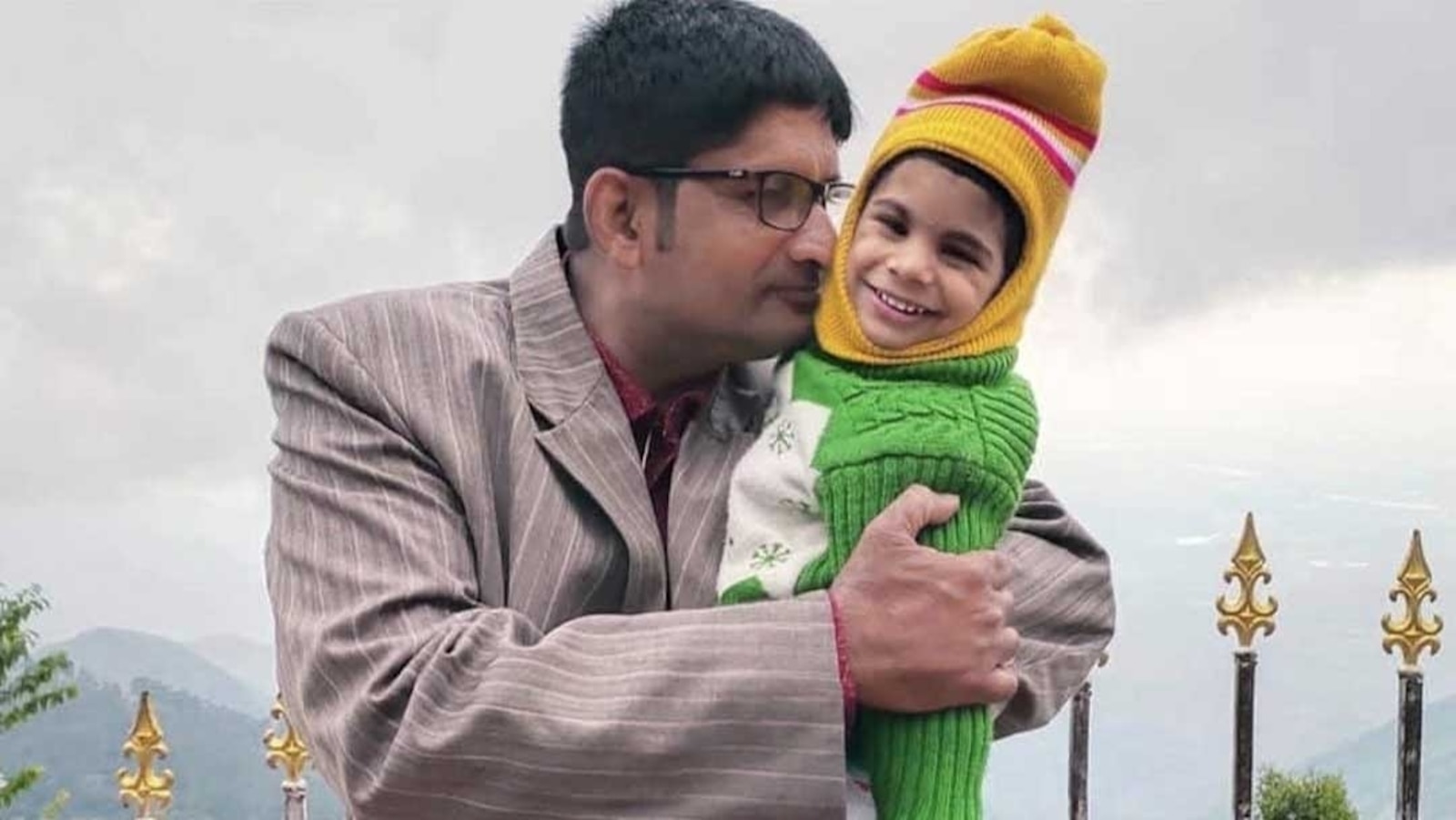
When 5-year-old Deepanwita Dasgupta began stumbling while playing at her home in Bangalore, India, her parents initially dismissed it as typical childhood clumsiness. Perhaps her shoes didn’t fit properly, they reasoned. After all, their daughter was an energetic, bright child who loved unicorns and had taught herself to navigate a phone to watch her favorite show, Blippi, even before learning her ABCs. She was the kind of spirited girl who would sneak butter from the refrigerator just to enjoy a few forbidden licks—affectionate, intelligent, and wonderfully mischievous in the way young children often are.
But the stumbling didn’t stop. Soon, Deepanwita’s limbs began jerking uncontrollably. When doctors performed a spinal tap, they discovered something terrifying: measles virus in her cerebrospinal fluid. A measles infection she had likely contracted as an infant had silently invaded her brain, lying dormant for years before awakening with devastating consequences. Now 8 years old, Deepanwita is paralyzed and unable to speak. The vibrant little girl who once sang birthday songs the loudest has been robbed of her childhood by a complication most people have never heard of: subacute sclerosing panencephalitis, or SSPE. Her story represents a tragic reminder that measles isn’t just a rash and fever that passes—for some unlucky victims, it plants a time bomb in the nervous system that can explode years later.
Understanding SSPE: The Silent Killer
Subacute sclerosing panencephalitis sounds like something from a medical textbook, but it’s a very real and devastating condition that can develop years after a measles infection. According to the Infectious Diseases Society of America, three in ten people infected with measles experience complications ranging from diarrhea to death. While some complications appear immediately or within weeks, SSPE is insidious—it typically takes years to manifest, sometimes a decade or more after the initial measles infection has cleared.
Dr. Yasmin Khakoo, who leads the national Child Neurology Society and practices in New York City, explains that many people underestimate measles because they know someone who recovered without problems. But this thinking is dangerously flawed. “People think, ‘Oh, you know, if we get measles, then we’ll be fine, because I know my neighbor had it and they’re fine,'” she notes. The reality is that measles can be catastrophic. Children have suffered brain swelling requiring them to relearn basic functions like walking. And then there’s SSPE—a condition that allows a person to seemingly recover from measles completely, no longer contagious and appearing perfectly healthy, only to have the virus secretly attack the brain years later. While some patients become severely disabled, the condition is almost always fatal.
Researchers estimate that approximately one in 10,000 people who contract measles will develop SSPE, but the risk increases dramatically for those who get measles before age 5. A 2017 study of California children found that one case of SSPE occurs for about every 1,400 known measles cases in children under 5, and one for every 600 infected babies. In countries where measles remains endemic, such as India, doctors see SSPE cases routinely. Before effective vaccines became widespread in the United States, the condition occurred frequently enough that a doctor created a national registry of SSPE patients in the 1960s.
The Rising Threat in America
Medical professionals are now sounding urgent alarms: as vaccination rates decline and measles spreads in the United States, cases of SSPE are likely to increase. The numbers are sobering. Since the beginning of 2025, the Centers for Disease Control and Prevention has recorded over 3,500 measles cases—more than in the entire previous decade. The vast majority of these cases occurred in unvaccinated individuals, many of them children. Last year, Connecticut doctors diagnosed a 6-year-old with SSPE, and in California, a school-age child who had contracted measles as an infant died from the condition.
Dr. Adam Ratner, a member of the American Academy of Pediatrics’ Committee on Infectious Diseases and author of “Booster Shots,” warns bluntly: “We are likely to see SSPE cases going forward, especially if we don’t get this under control.” The concern among medical professionals has grown so significant that in January, the Child Neurology Society published an educational video about SSPE specifically aimed at U.S. clinicians, many of whom have never encountered the condition in their careers.
Dr. Aaron Nelson, a neurology professor at NYU Grossman School of Medicine who recently treated a 5-year-old with SSPE, emphasizes the heartbreaking helplessness doctors feel when confronting this disease. “We don’t have a way of knowing who’s going to get it, and we don’t have a way of very effectively treating it,” he explains. “The one best thing that we can do, ideally, is to prevent children from having to go through it in the first place.” The recommended two-dose measles vaccine reduces an exposed person’s risk of contracting measles from 90% to just 3%, thereby dramatically reducing the chance of developing SSPE. While vaccines carry small risks such as febrile seizures and a bleeding condition, measles itself poses a higher risk of causing both complications.
Heartbreaking Cases and Missed Diagnoses
The recent California case that prompted Dr. Nava Yeganeh and her colleagues to issue a public news release in September illustrates the cruel randomness of SSPE. The child who died had contracted measles as an infant, before being old enough to receive the vaccine. The family had done everything right, wanting to protect their child, but the child was vulnerable because not enough people in the community were vaccinated to provide “herd immunity”—the protection that occurs when at least 95% of the population is immune to measles.
“This is an example of someone who did everything right, wanted to protect their child against this infection, and unfortunately ended up losing their child because we didn’t have herd immunity for them,” said Yeganeh, medical director of the Vaccine Preventable Disease Control Program at the Los Angeles County public health department, who has treated two SSPE patients. Her decision to publicize the case stemmed from concern that doctors might miss future diagnoses. “We’ve had very few cases of measles in the last 25 years in this country,” she noted. “Unfortunately, that’s changing, and so we wanted to make sure that everyone was aware of this long-term complication.”
Indeed, researchers found that over the years, doctors had missed some SSPE cases among patients who died with undiagnosed neurological illness. Dr. Nelson himself never expected to see SSPE outside of medical school textbooks—he thought it was a relic of the past. But in October, he found himself presenting a case at the Child Neurology Society’s national conference: a 5-year-old whose family had traveled to the U.S. for medical care after the child started stumbling, jerking, hallucinating about bugs and animals, and having seizures. The child had been infected with measles as an infant, too young for vaccination. “Imagine that: Having a child who is healthy and happy, moving to talking less and less, eventually not able to walk,” Nelson said. “It’s a very sad thing… I’ve now seen something I shouldn’t have ideally seen ever in my career.”
The Global Perspective: Lessons from India
The devastating impact of SSPE is perhaps most visible in India, where measles remains endemic and about 200 families caring for people with SSPE are connected through a single chat group in the Bangalore area alone. Dr. Sheffali Gulati, who leads the pediatric neurology program at the All India Institute of Medical Sciences in New Delhi, studies SSPE and sees approximately ten new patients with the condition each year—what she calls the “delayed echo” of measles outbreaks. The youngest patient she has treated was just 3 years old.
Dr. Gulati has observed a troubling trend: “The ages are coming down, and a death or a vegetative state can develop as soon as in six months to five years of onset.” Despite extensive research, she hasn’t found any treatments that can reverse SSPE’s course, only some that might slow its progression. Much of her work involves counseling devastated parents, helping them understand that the situation is catastrophic, not their fault, and that there’s nothing they can do except accept it. Globally, measles outbreaks have increased in recent years, and physicians in countries including the United Kingdom and Italy have recently documented clusters of SSPE cases.
For Deepanwita’s family, life has become a series of small moments they try to treasure amid overwhelming grief. Her mother, Anindita Dasgupta, believes Deepanwita smiled when her favorite cousin called recently. The little girl still moves her hands and feet independently and sometimes turns her head, especially when her father enters the room. She communicates with her parents through her eyes and a few sounds—a heartbreaking contrast to 2022, when she started the birthday song at a cousin’s party and sang the loudest. At her own eighth birthday celebration last year, Deepanwita wore a pink eyelet dress and a nasal feeding tube. She could only blink and move her eyes as she sat propped before two cakes she would never taste. Unable to swallow, she received only a dab of icing on her tongue from her mother—a tiny gesture loaded with love and loss.
The Path Forward: Prevention and Research
Dr. Roberto Cattaneo, a molecular biologist at the Mayo Clinic in Rochester, Minnesota, has dedicated years to studying SSPE. His recent research used postmortem brain tissue to map how the measles virus spreads from the frontal cortex to colonize the entire brain. Yet even with this advanced understanding, he acknowledges that what happens during those dormant years between initial infection and the appearance of neurological damage remains a “black box.” The virus may replicate in the brain the entire time, undetected, gradually killing neurons. With the human brain containing ten times as many neurons as there are people on Earth, the brain may compensate for this damage for years until it simply cannot anymore.
Dr. Cattaneo is currently applying for funding to continue his research on the disease and potential treatments, but he does so with frustration and sadness. “The problem could be solved with vaccination,” he states plainly. The tools to completely eliminate SSPE already exist—we simply need to use them. The United States should have zero cases of SSPE, he argues. “It’s just painful” that preventable cases continue to occur.
The message from medical professionals is clear and urgent: SSPE represents one of the most tragic consequences of declining vaccination rates. It doesn’t discriminate based on a family’s choices—babies too young to be vaccinated depend on the rest of the community to maintain high vaccination rates for protection. When those rates drop, vulnerable children pay the price, sometimes years later when a virus that seemed long defeated suddenly attacks their developing brains. As measles cases surge across America, doctors who thought they’d never see this textbook disease in real life are now watching children deteriorate before their eyes, unable to offer effective treatment, only comfort to families whose lives have been shattered. The solution exists in a simple, safe vaccine that has saved millions of lives. The question is whether communities will choose to use it before more children like Deepanwita lose their futures to a preventable disease.