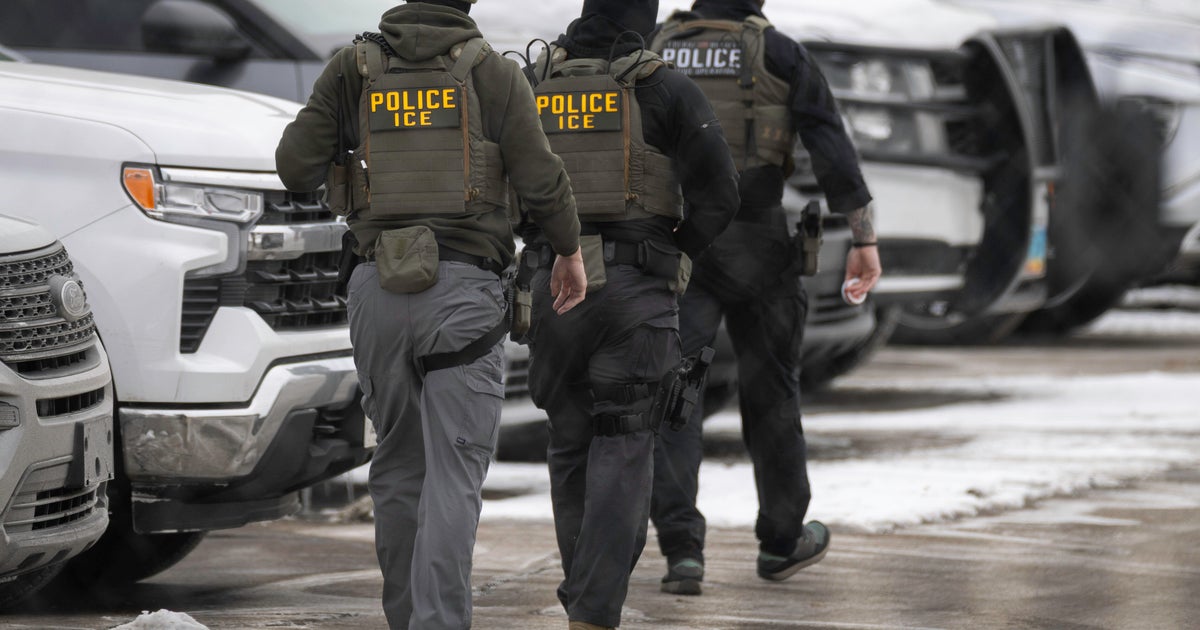

Justice Department Drops Charges Against Two Men in Controversial ICE Assault Case
New Evidence Contradicts Initial Government Account
In a significant reversal that raises serious questions about federal immigration enforcement tactics, the U.S. Department of Justice has moved to dismiss all federal charges against two men who were accused of assaulting Immigration and Customs Enforcement officers during an incident in Minneapolis last month. The decision affects Alfredo Alejandro Aljorna and Julio Cesar Sosa-Celis, a Venezuelan national who was shot in the leg by an ICE officer during the confrontation. U.S. Attorney Daniel Rosen filed the motion on Thursday, citing “newly discovered evidence” that proved to be “materially inconsistent” with the allegations that had been made against the two men. The dismissal was entered with prejudice, which is legally significant because it means the government cannot attempt to bring these same charges against the defendants again in the future.
The original charges, filed in January through a federal criminal complaint, accused both men of forcibly assaulting, resisting, or impeding federal officers who were performing their official duties. The incident gained national attention not only because Sosa-Celis was shot during the encounter but also because it occurred during a heightened period of federal immigration enforcement activity in Minnesota. The shooting happened amid what officials called “Operation Metro Surge,” a concentrated effort by immigration authorities in the Twin Cities area that ultimately sparked widespread protests and civil unrest throughout the state.
Conflicting Stories and Inconsistent Accounts
What makes this case particularly troubling is that the government’s own accounts of what actually happened that day were contradictory from the very beginning. The day after the shooting occurred, the Department of Homeland Security released a statement describing Sosa-Celis as having fled from what they characterized as a “targeted traffic stop” in Minneapolis. According to this initial DHS version of events, Sosa-Celis allegedly drove away from officers, crashed his vehicle into a parked car, abandoned the vehicle, and continued fleeing on foot. When an ICE agent caught up with him, DHS claimed that two men attacked the agent using a broom handle and a snow shovel as weapons. The statement further alleged that Sosa-Celis managed to break free from the officer’s grasp and began striking the officer himself, prompting an agent to fire what DHS described as a “defensive shot to defend his life.” According to this account, Sosa-Celis and two other men then ran into a nearby apartment building but were eventually taken into custody.
However, when the FBI prepared an affidavit to support the criminal charges against the two men, their version of events told a substantially different story. According to the FBI’s account, it was actually Aljorna—not Sosa-Celis—who had fled the scene in a vehicle. The FBI affidavit stated that Sosa-Celis was the person who initially struck the ICE officer with a broomstick while the officer was attempting to arrest Aljorna. The document then alleged that Aljorna broke free and began attacking the ICE officer with the same broomstick. Perhaps most significantly, the FBI’s own affidavit acknowledged that the officer involved “had poor or sporadic lighting” during the incident and “had difficulty seeing the assailants.” This admission raises obvious questions about how reliable the officer’s account of the encounter could possibly be if he couldn’t clearly see what was happening.
Adding another layer to the conflicting narratives, a cellphone video recorded in the moments immediately following the shooting—which was later shared publicly by a Minnesota state lawmaker—appears to tell yet another version of events. In the video, a woman can be heard speaking to a 911 operator, apparently describing her husband being chased by ICE agents before he reached their home, where he was then shot in front of his family members. This account differs substantially from both the DHS and FBI versions, which portrayed the shooting as occurring during an active assault on an officer rather than at someone’s home in front of their family.
Video Evidence Proves Decisive
Frederick Goetz, the attorney representing Aljorna, spoke to CBS News about the dismissal and expressed his delight with the decision to drop all charges with prejudice. He specifically commended the U.S. Attorney’s Office in Minnesota for “doing the right thing,” a particularly notable statement given that the office has recently been experiencing a wave of staff resignations amid broader turmoil within the Justice Department. Goetz provided crucial insight into what appears to have been the decisive factor in getting the charges dismissed: video surveillance footage that captured the actual incident. According to Goetz, “the video surveillance evidence that captured the incident was materially inconsistent with the federal agent’s claims of what happened.” He further explained that “the agent’s claims of being assaulted were not backed up by the video evidence.”
This revelation is deeply concerning because it suggests that the initial charges were brought based primarily on an officer’s account that video evidence later proved to be inaccurate or false. The fact that objective video evidence contradicted the law enforcement narrative raises troubling questions about what might have happened to these defendants if such footage hadn’t existed. How many other people have been charged and possibly convicted based on officer testimony that couldn’t be verified or contradicted by independent evidence? The case also highlights the critical importance of video documentation in holding law enforcement accountable and protecting the rights of individuals who encounter federal agents.
A Pattern of Deadly Force and Growing Unrest
The shooting of Sosa-Celis did not occur in isolation but was part of a disturbing pattern of violence by federal immigration agents in Minneapolis during this period. The incident happened just one week after ICE agent Jonathan Ross fatally shot Renee Good in south Minneapolis, and it occurred ten days before two Department of Homeland Security agents in the city fatally shot Alex Pretti. This cluster of shootings involving federal immigration enforcement officers—three separate incidents resulting in one person wounded and two people killed within a span of less than three weeks—understandably sparked outrage and fear throughout the community.
In the days and weeks following the shootings of Good and Pretti, thousands of protesters took to the streets of Minneapolis and surrounding communities, marching and demonstrating against what they viewed as excessive and dangerous tactics by federal immigration agents. The protests created significant tensions throughout the Twin Cities area, with residents demanding accountability and changes to how immigration enforcement was being conducted in their communities. The situation became so volatile that President Trump publicly threatened to invoke the Insurrection Act, which would have allowed him to deploy active-duty military forces into Minnesota to respond to the civil unrest. The threat to use military force against American citizens protesting in their own communities represented a dramatic escalation that fortunately did not come to pass.
Operations Wind Down Amid Controversy
In recent days, border czar Tom Homan has taken direct control of immigration enforcement operations in Minnesota. On Thursday—the same day the charges were dismissed against Aljorna and Sosa-Celis—Homan announced the end of the surge of immigration agents in the state. He cited what he described as a high number of “public safety arrests” during “Operation Metro Surge” and stated that there was now a diminished need for federal officers to respond to what he characterized as “agitators.” The timing of this announcement, coming on the same day that federal prosecutors admitted their case against two alleged “assailants” was contradicted by video evidence, is notable and suggests that the operation may not have proceeded as successfully or as justly as officials initially claimed.
This case serves as a stark reminder of the importance of due process, the value of independent evidence such as video footage, and the dangers that can arise when law enforcement accounts are accepted without sufficient verification. The fact that two men faced serious federal charges that could have resulted in significant prison time, based on allegations that video evidence later proved to be “materially inconsistent” with what actually happened, should give everyone pause. It raises fundamental questions about oversight of immigration enforcement operations, the accountability of federal agents who use force against civilians, and the protection of constitutional rights during a period of aggressive enforcement activity. While the charges have now been dismissed, the physical and emotional trauma experienced by Sosa-Celis, who was shot, and Aljorna, who faced the prospect of federal conviction, cannot be undone. Their ordeal highlights the very real human consequences when law enforcement power is exercised without adequate safeguards and accountability.