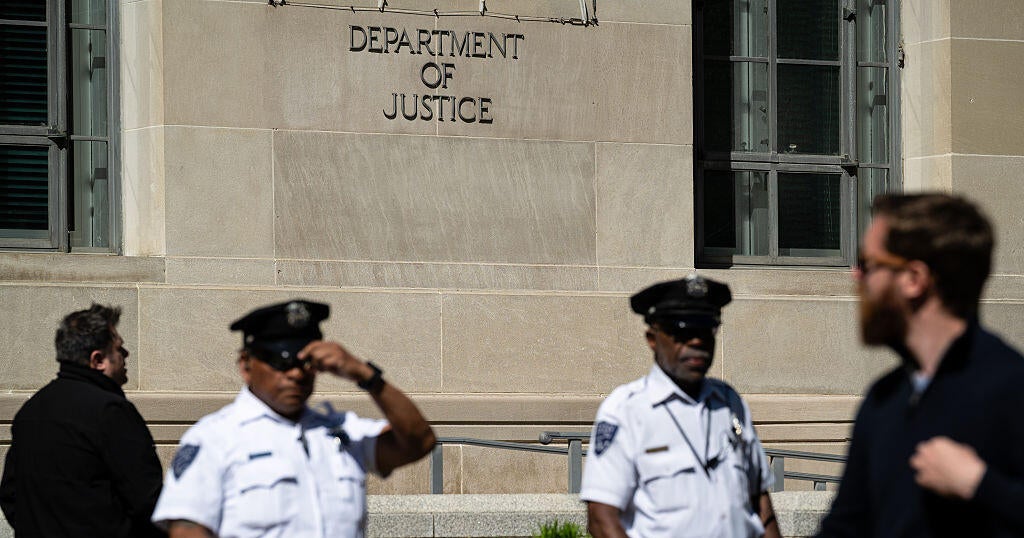

Justice Department Diverts Billions Toward Immigration Enforcement While Victim Services Face Crisis
A Massive Shift in Funding Priorities
The Justice Department is currently preparing to distribute up to $3.5 billion in new grants, with the overwhelming majority focused on immigration enforcement and related law enforcement activities. According to multiple sources who spoke with CBS News, these upcoming grant solicitations will fund a wide range of initiatives including the construction of new immigration detention facilities, the purchase of advanced police surveillance equipment, and the hiring of additional law enforcement personnel. Perhaps most notably, a portion of this funding—approximately $300 million—will be allocated to recruiting local prosecutors to serve as temporary special assistant U.S. attorneys. These prosecutors will work within the Justice Department’s newly established National Fraud Enforcement Division, which specifically targets fraud involving public benefits, particularly cases involving individuals living in the country without legal authorization. This solicitation was quietly posted on a Tuesday evening, only after CBS News had already begun asking questions about these new grant programs. The timing and scope of these grants represent a dramatic reorientation of Justice Department priorities, steering resources heavily toward immigration-related enforcement at a scale rarely seen before.
Victims Services Organizations Left in the Lurch
While the Justice Department races to distribute billions for immigration enforcement, a very different story is unfolding for organizations that provide critical services to crime victims, conduct criminal justice research, and support juvenile justice programs. These groups are facing an unprecedented crisis as they struggle to survive amid massive delays and outright terminations of existing DOJ grant programs—many of which were specifically authorized and funded by Congress. The situation has become so dire that the Justice Department is actively pulling back millions of dollars from grants that support victims services, hate crime prevention, and substance abuse treatment programs, redirecting this money toward other activities that aren’t even grant-related. Claire Selib, who serves as executive director of the National Organization for Victim Advocacy, put it bluntly: “Terminations and delays in funding are literally killing programs.” Her nonprofit organization is dealing with multiple funding emergencies after the Justice Department canceled one of their grants last year, while three other applications they submitted have been stuck in limbo for six months with no decision. The ripple effects are devastating—programs are shutting their doors, services are being drastically scaled back, and dedicated staff members who work directly with vulnerable populations are being laid off.
The Administration’s Position and the Grant Program Chaos
A Justice Department official defended the agency’s approach, stating that the DOJ is working to ensure that “all taxpayer-funded grant money is appropriately supporting initiatives to Make America Safe Again, and all discretionary funds not aligned with this mission are subject to review and reallocation.” The official emphasized that the first step in this process involved terminating grants that were not directly supporting law enforcement efforts to improve public safety, and insisted that all grant money and programs are being utilized consistent with parameters established by Congress. However, the reality on the ground tells a more complicated story. The Justice Department’s grant programs have been in a state of disarray since President Trump took office. On April 22, 2025, the DOJ terminated more than 350 grants that had been awarded during President Biden’s administration, affecting a wide spectrum of recipients from police departments and local prosecutors to organizations providing services to crime victims. The department gave these grantees just 30 days to file appeals. As Wednesday marks the one-year anniversary of these cuts, some organizations are still anxiously waiting for any response to their appeals, while others only recently learned their appeals were denied—nearly a year after their funding was abruptly terminated.
Staffing Shortages and Bureaucratic Delays Creating a Bottleneck
The funding uncertainty has been significantly worsened by severe delays in processing and distributing grant funds that remain active. Many experts and advocates attribute these delays to a dramatic reduction in Justice Department staffing levels, combined with a new executive order that requires additional layers of review by political appointees before grants can be solicited or awarded. The impact has been staggering—more than an entire fiscal year passed without the Office of Justice Programs even soliciting applications for many of its congressionally mandated funding opportunities. For example, the office didn’t begin soliciting fiscal 2025 applications for the popular Edward Byrne Memorial Justice Assistance Grant (commonly known as JAG), which helps fund local police departments across the country, until March 13, 2026—an unprecedented delay. Similarly, the National Institute of Justice, which funds vital criminal justice research projects, has only issued three grant solicitations since President Trump took office. Grants specifically focused on assisting victims of human trafficking for fiscal year 2025 were only solicited in December and still haven’t been awarded. Liz Ryan, who previously ran the Office of Juvenile Justice and Delinquency Prevention—a DOJ grant-making office that funds programs to improve the youth justice system—summed up the situation: “They’re neglecting their regular responsibilities.”
Real-World Consequences in Communities Across America
The bureaucratic chaos and shifting priorities are having devastating real-world consequences in communities that desperately need support. Bill McKinney, who runs the New Kensington Community Development Corporation in Philadelphia’s Kensington neighborhood—an area severely impacted by the opioid epidemic—told CBS News that the Justice Department canceled the organization’s $1.5 million grant last year. Making matters worse, the department has yet to respond to two additional grant applications his group submitted back in August and October of 2025. “We are already at risk, and we are already being dismantled,” McKinney explained. The canceled grant had funded the group’s CURE Violence program, a public health-based antiviolence initiative that employs mediators with real-life street experience to work directly in communities to deescalate potentially violent situations before they spiral out of control. After months of waiting, the DOJ finally informed the group a few weeks ago that their appeal had been denied, meaning the program is now expected to close its doors by October. “It is terrible, and it doesn’t make any sense,” McKinney said, expressing the frustration felt by countless organizations across the country that are watching proven, effective programs disappear due to funding decisions that seem disconnected from community needs and public safety realities.
Financial Gymnastics and Congressional Constraints
The funding delays are occurring against a backdrop of increasingly scarce resources, despite Congress actually increasing allocations to certain Justice Department offices. Although Congress approved a 95% funding increase to the DOJ’s Community Oriented Policing Services (COPS) grant office and an 11% increase to the Office of Justice Programs, it simultaneously cut funding to other areas within the department. To cover shortfalls in immigration courts, federal prisons, and various litigating offices, the DOJ approved a $75 million transfer out of its grant offices earlier this year. In March, the department notified Congress it might need to transfer up to an additional $95.8 million by year’s end if necessary. To date, the department has targeted $117 million for transfer from a diverse array of grants that assist trafficking victims, combat hate crimes, reduce backlogs of untested sexual assault kits, support efforts to help missing and exploited children, and fund drug addiction and mental health assistance programs. These transfers are happening despite Congress imposing new limits on how much grant money the DOJ can redirect toward non-grant activities. The Justice Department is attempting to address these funding gaps by relying on the $3.5 billion allocated through the One Big Beautiful Bill Act to reimburse states and law enforcement for immigration-related activities incurred between 2021 and 2028. However, this new funding comes with significant strings attached—the grants cannot be used to fund violence prevention and reduction programs, and any local law enforcement agency that accepts the money must agree to cooperate with federal immigration authorities. As Jean Bruggeman, co-executive director at Freedom Network USA, pointed out: “What concerns me is if they are trying to roll out more funding for law enforcement to investigate and prosecute, without rolling out the funding for the services needed by the survivors.” This imbalance highlights a fundamental shift in priorities that may leave vulnerable populations without the support services they desperately need.