
Ethics Charges Filed Against DOJ Pardon Attorney Over Georgetown University Controversy
A Threatening Letter Sparks Federal Ethics Investigation
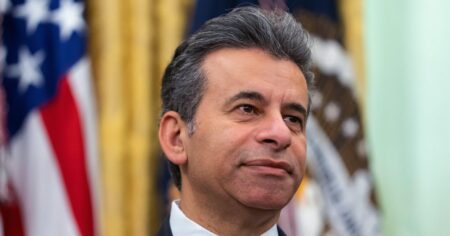
The legal world is buzzing after ethics charges were filed against Ed Martin, the Justice Department’s pardon attorney, by Washington D.C.’s attorney misconduct watchdog. The controversy centers around a letter Martin sent to Georgetown University Law Center in February while serving as interim U.S. attorney for the District of Columbia. According to court documents made public this week, Martin’s letter questioned the prestigious law school’s diversity and inclusion programs and threatened serious consequences without even giving the university a chance to respond. The disciplinary action raises important questions about how government officials can use their power and whether threatening academic institutions crosses constitutional lines. This case has quickly become another flashpoint in the ongoing national debate about diversity, equity, and inclusion (DEI) programs in higher education, with Martin’s actions now under intense legal and ethical scrutiny.
The Letter That Started It All
On February 17, Martin fired off a letter to Georgetown Law that would ultimately land him in hot water with ethics officials. In the correspondence, he told university administrators that a whistleblower had come forward claiming the school was teaching DEI concepts. Without requesting clarification, waiting for an explanation, or even giving the school an opportunity to address his concerns, Martin immediately imposed what he called “sanctions” against Georgetown. These sanctions were harsh and immediate: Martin instructed his entire staff at the U.S. attorney’s office to stop hiring any Georgetown Law students as fellows, interns, or employees. This blanket ban effectively cut off career opportunities for hundreds of students who had nothing to do with curriculum decisions and were simply pursuing their legal education at one of the nation’s most respected law schools. The abrupt nature of the sanctions, combined with the lack of any opportunity for dialogue or due process, became central to the ethics complaints that would follow. Legal experts noted that Martin’s approach was extraordinarily heavy-handed, especially considering Georgetown Law’s long history of providing talented attorneys to government service, including many who have gone on to distinguished careers in federal law enforcement and prosecution.
Constitutional Violations Alleged
The ethics charges filed by Hamilton “Phil” Fox III, the Disciplinary Counsel of the D.C. Bar, paint a troubling picture of government overreach and constitutional violations. According to the formal complaint filed with the D.C. Court of Appeals’ Board on Professional Responsibility, Martin’s conduct violated both the First and Fifth Amendments of the U.S. Constitution. The charges specifically allege that Martin, acting in his official capacity as a government representative, attempted to coerce Georgetown Law into changing both what it teaches and how it teaches by holding student employment opportunities hostage. The filing states clearly: “Acting in his official capacity and speaking on behalf of the government, he used coercion to punish or suppress a disfavored viewpoint, the teaching and promotion of DEI.” Furthermore, the complaint argues that Martin demanded Georgetown relinquish its free speech and religious rights as a condition for students to receive employment benefits they would otherwise be entitled to receive. This kind of quid pro quo—demanding an institution give up constitutional rights in exchange for government benefits—strikes at the heart of fundamental American freedoms. Legal scholars have noted that if these allegations are proven, they represent a textbook case of how government power should not be wielded, particularly by someone entrusted with upholding the law as a federal prosecutor.
DOJ Pushes Back With Partisan Accusations
Rather than address the substance of the ethics charges, the Justice Department responded with a strongly worded statement attacking the D.C. Bar itself as a partisan organization with political motivations. The department’s statement claimed: “The DC bar’s attempt to target and punish those serving President Trump while refusing to investigate or act against actual ethical violations that were committed by Biden and Obama administration attorneys is a clear indication of this partisan organization’s agenda.” This defense strategy—attacking the credibility of the ethics enforcement body rather than defending Martin’s actions—suggests the department may have difficulty justifying the letter on its legal merits. The response also fits into a broader pattern from the current administration of characterizing any oversight or accountability measures as politically motivated attacks. However, legal ethics experts have pointed out that the D.C. Bar’s Office of Disciplinary Counsel has a long history of investigating attorney misconduct regardless of political affiliation, and that ethics rules apply equally to all attorneys, whether they work for Republican or Democratic administrations. The department’s combative response may play well politically with the administration’s base, but it does little to address the serious constitutional questions raised by Martin’s conduct toward Georgetown.
A Controversy-Plagued Career Path
Ed Martin’s brief stint leading the U.S. attorney’s office in Washington, D.C., was marked by controversy from the very beginning. His appointment raised eyebrows throughout the legal community largely because of his prior advocacy work on behalf of individuals who participated in the January 6, 2021, attack on the U.S. Capitol. Martin took the helm of the U.S. attorney’s office just as President Trump issued sweeping pardons to everyone involved in that insurrection. During his tenure, Martin presided over numerous firings and demotions while repeatedly violating Justice Department norms and protocols. Among his most controversial actions were sending threatening letters not just to Georgetown, but also to members of Congress and other institutions. These communications raised serious concerns about whether Martin understood the boundaries of his authority and the appropriate role of federal prosecutors in a democratic system. When it became clear that Martin could not secure enough votes for Senate confirmation—even with Republicans controlling the chamber—he was replaced as U.S. attorney by Jeanine Pirro, the former Fox News host. In a highly unusual move, Martin announced to his entire staff that he was under investigation by the D.C. Office of Disciplinary Counsel, though he didn’t provide details at the time. Despite being removed from the U.S. attorney position, Martin wasn’t let go from the Justice Department entirely; instead, he was shuffled into other roles, including pardon attorney and chief of Attorney General Pam Bondi’s Weaponization Working Group.
Current Status and Broader Implications
Today, Martin remains employed at the Department of Justice as its pardon attorney, though he has been stripped of his leadership role in the Weaponization Working Group. The pardon attorney position is particularly sensitive, as it involves making recommendations to the President about who should receive executive clemency—a responsibility that requires sound judgment, fairness, and adherence to constitutional principles. The fact that someone facing serious ethics charges for allegedly violating constitutional rights continues to hold this position has raised concerns among legal ethics experts and former Justice Department officials. The Georgetown case represents more than just one attorney’s questionable judgment; it symbolizes the tensions surrounding DEI programs in American institutions and how government power can be misused to advance ideological agendas. Universities across the country are watching this case closely, as are government employees and civil liberties organizations. If ethics officials determine that Martin crossed constitutional lines, it could establish important precedents about the limits of government coercion in academic settings. The case also highlights ongoing questions about accountability within the Justice Department and whether political appointees can use their positions to intimidate institutions with different viewpoints. As this ethics investigation proceeds, it will test whether professional responsibility rules can effectively check the power of government officials who may prioritize political ideology over constitutional principles, and whether the legal profession’s self-policing mechanisms can function effectively in our polarized political environment.