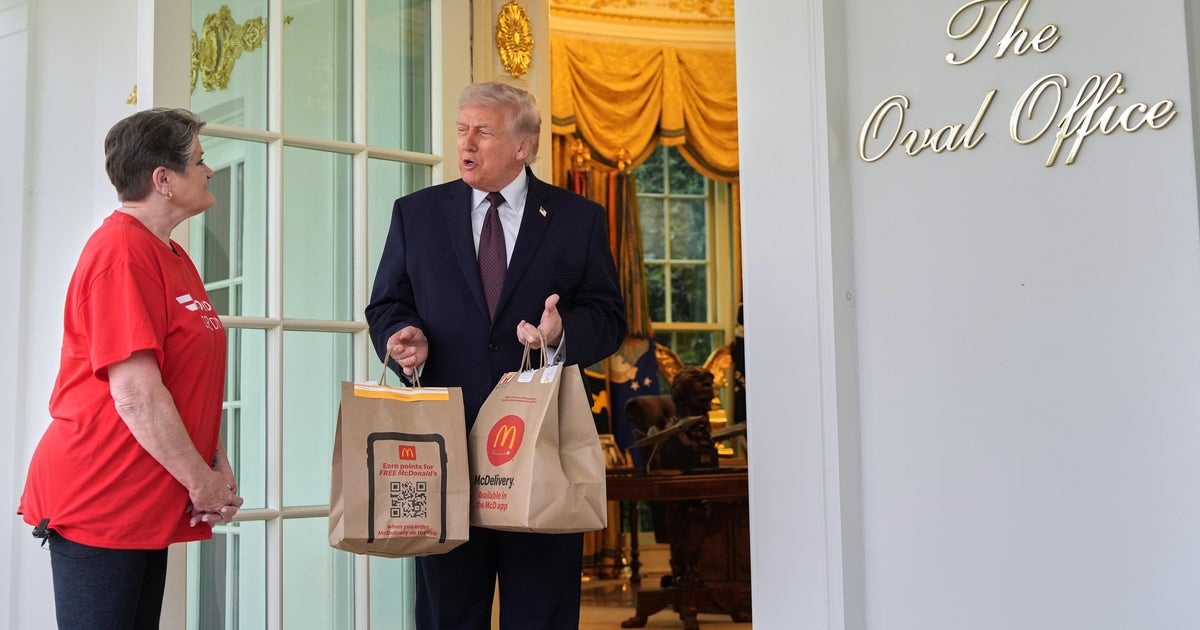

A McDonald’s Delivery to the White House: An Unexpected Media Moment
When a Routine Delivery Became a Presidential Photo Op
What started as an ordinary DoorDash delivery turned into an unforgettable experience for Sharon Simmons, a grandmother from Arkansas who found herself thrust into the national spotlight on Monday. Simmons arrived at the White House to deliver a McDonald’s order, only to be greeted by President Trump himself, who invited her to join him for an impromptu press conference outside the Oval Office. The casual encounter quickly transformed into a televised event where Simmons became the unexpected face of the administration’s “no tax on tips” policy. Standing alongside the president before a gaggle of reporters, the delivery driver found herself answering questions not just about her work, but about her political views and personal life. It was the kind of moment that captures the unpredictable nature of modern American politics—where ordinary citizens can suddenly find themselves in extraordinary circumstances, cameras rolling and the nation watching.
A Policy That’s Making a Real Difference for Working Americans
At the heart of this unusual White House encounter was a serious economic issue affecting millions of service workers across America. Sharon Simmons wasn’t just at the White House for a photo opportunity—she was there to put a human face on the “no tax on tips” policy that President Trump championed. For Simmons, this policy has been nothing short of life-changing, particularly during one of the most challenging periods of her life. With her husband battling cancer, every dollar counts, and the ability to keep more of her hard-earned tips has provided crucial financial relief. According to Simmons, the policy has put an additional $11,000 in her pocket compared to what she would have earned if tips were still taxed. That’s not just a number on a spreadsheet—it represents peace of mind, medical bills paid, and the ability to support her family during a health crisis. When the president asked her about the policy, calling it “very special,” Simmons readily agreed, offering genuine testimony to how tax policy can have tangible, meaningful impacts on everyday workers trying to make ends meet in an economy where gig work has become increasingly common.
The Uncomfortable Politics of an Unscripted Moment
While the discussion of tax policy remained relatively comfortable territory for Simmons, the encounter took several awkward turns as President Trump steered the conversation into more controversial waters. In what appeared to be an attempt to score political points, the president directly asked Simmons whom she voted for—a personal question that put her in an uncomfortable position on live television. Simmons handled it diplomatically, responding with a playful “maybe” that avoided giving a direct answer while keeping the mood light. The president pressed further, suggesting he’d heard she was “a great supporter,” to which she offered no confirmation. The situation became even more uncomfortable when Trump, after criticizing Democratic policies, asked Simmons point-blank whether she believes “men should play in women’s sports”—attempting to draw her into one of the most contentious cultural debates in contemporary American politics. To her credit, Simmons maintained her composure and boundaries, firmly stating that she didn’t have an opinion on that matter. When the president persisted, suggesting “I’ll bet you do,” she stood her ground: “No, no. I’m here about no tax on tips.” It was a moment that highlighted both the awkwardness of being unexpectedly thrust into the political spotlight and the grace required to navigate it without becoming a pawn in broader political messaging.
The Reality of Gig Work in Modern America
Sharon Simmons represents millions of Americans who have turned to gig economy platforms to earn a living in an increasingly flexible but precarious job market. Since starting with DoorDash in 2022, she has completed an impressive 14,000 deliveries—a testament to her work ethic and the demands of making a living through app-based delivery services. As a grandmother of ten with a seriously ill spouse, Simmons exemplifies the diverse demographics of gig workers who don’t fit the stereotype of young people earning side money. For many like her, these platforms represent primary income sources that offer something traditional employment often doesn’t: flexibility to manage personal responsibilities alongside work. In a statement released by DoorDash after her White House appearance, Simmons emphasized this aspect of her work: “Thanks to DoorDash, I have been able to provide for my family while keeping the schedule that works best for me, something I never thought would be possible.” The “no tax on tips” policy has amplified these benefits, allowing workers like Simmons to keep more of what they earn—money that goes directly toward supporting families, paying medical bills, and managing the rising cost of living that affects working Americans everywhere.
Small Moments and Large Questions About Access and Representation
The image of a DoorDash driver standing beside the President of the United States, answering questions from the White House press corps, carries symbolic weight that extends beyond the immediate story. On one level, it represents a kind of populist accessibility—the idea that ordinary workers can have direct access to the highest levels of power and that their stories matter in national policy discussions. Simmons herself expressed this sentiment, noting what “an incredible honor” it was to “represent Dashers from all over the country at the White House.” At the same time, the encounter raises questions about how ordinary citizens are used in political messaging and whether such spontaneous moments truly represent authentic dialogue or carefully orchestrated photo opportunities. When a reporter asked Simmons if the White House tips well, her hesitant “potentially” prompted the president to hand her cash on camera—a gesture that read as both generous and performative. These ambiguities don’t diminish Simmons’s genuine experience or the real impact of the policies being discussed, but they do reflect the complex ways that personal stories become intertwined with political narratives in our media-saturated age.
The Intersection of Policy, Politics, and Personal Experience
What makes Sharon Simmons’s White House appearance noteworthy isn’t just the unusual circumstances, but what it reveals about how economic policy affects real people navigating difficult circumstances. Behind the political theater and awkward questions lies a substantive issue: how America’s tax system treats service workers who depend on tips for a significant portion of their income. For decades, these workers have seen a portion of their tips disappear to federal taxes, reducing take-home pay for some of the lowest-wage workers in the economy. The “no tax on tips” policy represents a meaningful change—one that, according to Simmons’s testimony, resulted from “the advocacy of thousands of Dashers from around the country who fought to ensure we were included in this policy.” This detail matters because it shows that the policy didn’t emerge from nowhere; it came from workers organizing and advocating for themselves. Whether delivered through a made-for-TV moment at the White House or through quieter legislative processes, policy changes that put thousands of dollars back into workers’ pockets represent victories worth celebrating. That a grandmother delivering McDonald’s to the White House can see an $11,000 difference in her annual income because of a tax policy change demonstrates that government decisions have real consequences—sometimes life-changing ones—for ordinary Americans just trying to provide for their families during tough times.