
The Hidden Tragedy of South Africa’s Traditional Initiation Schools
A Rite of Passage Turned Fatal
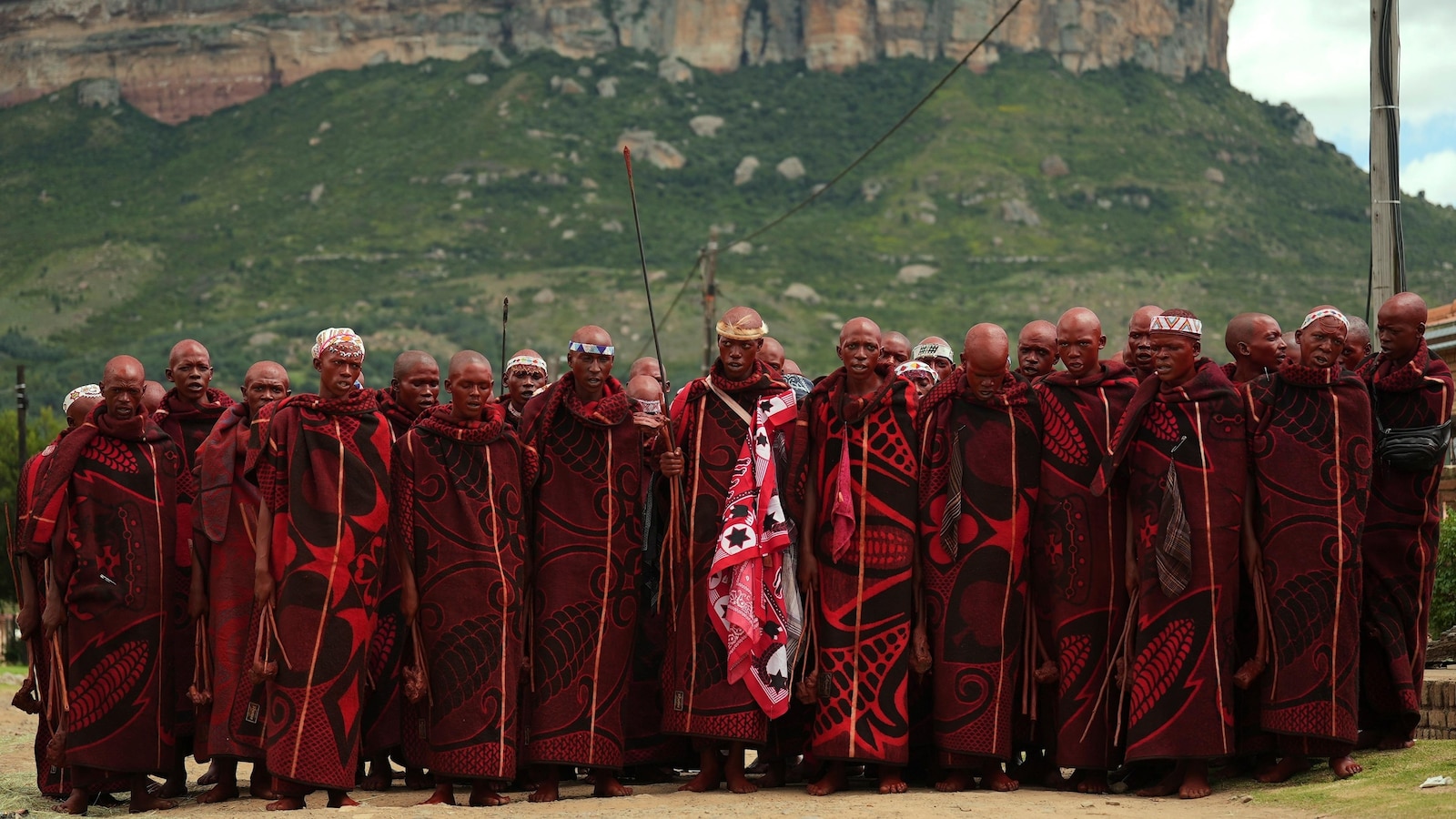
Lamkelo Mtyho was just 22 years old when he embarked on what should have been the proudest moment of his young life. Wrapped in traditional blankets and covered in ceremonial clay, he joined his peers at a traditional circumcision initiation school in South Africa’s Eastern Cape province. For generations, this secretive ritual has marked the passage from boyhood to manhood in many South African ethnic groups, and Mtyho’s family eagerly awaited his triumphant return as a man, full of cultural knowledge and ready to take his place in society. He had dreams of finding work in town and becoming “the man of the house” for his family. But three weeks after he entered the initiation school, his family received devastating news: Lamkelo was dead. Tragically, he was not alone. In the latest round of initiation ceremonies, at least 48 boys and young men lost their lives in what should have been a celebration of cultural heritage and personal growth. His grandmother, Nozinzile, learned from a relative working as a guard at the school that Lamkelo had collapsed while walking to the river to bathe. Despite attempts to resuscitate him, it was too late. She now sits outside the hut where her eldest grandchild once helped with chores, grappling with a loss she never imagined possible.
The Deadly Silence Surrounding Sacred Traditions
The true extent of deaths during traditional initiation ceremonies remains shrouded in the same secrecy that surrounds the rituals themselves. Participants take vows of silence about what happens during initiation, making it extraordinarily difficult for families, authorities, and the public to understand what goes wrong and how to prevent future tragedies. When The Associated Press attempted to investigate, at least half a dozen former initiates refused to speak about their experiences, reflecting the powerful cultural prohibition against breaking silence. This wall of secrecy means that police and government officials typically only announce deaths when significant numbers occur, and there are remarkably few court cases or autopsies to shed light on what happened. The statistics that do emerge paint a horrifying picture: former health minister Zwelini Mkhize revealed to parliament that 476 young people died during a five-year period—all of them healthy before entering initiation. “These deaths are unacceptable and should never have happened,” he stated, yet the deaths continue. The main causes include poorly trained practitioners, unsanitary or reused cutting tools, dehydration, and badly managed septic wounds. The remote locations of most initiation schools mean that medical help is usually far away when complications arise. Making matters worse, participants often receive dangerous advice, such as avoiding drinking water in order to heal faster—guidance that can prove fatal.
Why Families Continue to Take the Risk
Despite the well-documented dangers, hundreds of thousands of South African families continue to send their sons to initiation schools twice a year, with the next season beginning each June. The cultural importance of these ceremonies cannot be overstated for many of South Africa’s ethnic groups. A successful initiation brings elevated status for marriage, the right to participate in certain cultural activities, and recognition as a full member of the community. The return of initiates is marked with traditional hymns, the recital of clan names, and community celebrations featuring songs, chanting, and dancing. Boys and young men who complete the traditional initiation gain respect and standing that medical circumcision, available at hospitals, simply cannot provide. “Initiation is a culture left behind to us by our elders. We grew up practicing it, as it teaches a young man to respect everyone, including those who are not initiates in society,” explained traditional leader Morena Mpembe, who oversees a registered school in Phuthaditjhaba in Free State province. The cultural pressure to undergo traditional rather than medical circumcision is so strong that even boys who were medically circumcised at a young age may still feel compelled to participate in the traditional ceremony to gain full acceptance in their communities.
The Proliferation of Illegal Initiation Schools
The crisis is significantly worsened by the existence of hundreds of illegal initiation schools that operate without oversight or regulation. High unemployment and economic inequality in South Africa mean that fees for government-regulated initiation schools—which can be substantial—are out of reach for many families. Illegal schools fill this gap, operating in the shadows and attracting those who cannot afford registered alternatives. Most schools, whether legal or illegal, take place in mud huts or makeshift shacks shared by dozens of young men, deliberately located away from public view. A 2022 visit by lawmakers to the Eastern Cape discovered that in just one municipality—OR Tambo—there were actually more illegal schools (68) than legal ones (66). “It is very difficult for the government to monitor initiation schools which are not registered. They are not known until there is a tragedy of some sort,” admitted Mluleki Ngomane, an official with the Gauteng provincial body overseeing schools in that region. The lack of oversight at illegal schools has led to documented cases of participant abuse, violence between initiates, drug and alcohol abuse, and even the kidnapping of boys for forced participation. Some boys, eager to “become men,” slip away to illegal schools long before they reach 16—the minimum age now required by South African law. Gang involvement has made the situation even more dangerous, with some groups establishing initiation schools as a means of recruitment and control, further damaging the ritual’s reputation and safety.
Government Attempts at Regulation and Reform
In response to the mounting death toll, South African law since 2021 requires initiation schools to meet strict health and safety standards to gain registration. Over 5,000 such schools now exist, and they must register three months before each initiation season begins. The requirements are comprehensive: schools must have enough surgical tools so that each is used only once, preventing cross-contamination and infection. Traditional “surgeons” and “nurses”—the terms used for those who perform the circumcisions and provide care—must receive training in hygiene, infection prevention, wound care, and HIV awareness. Boys aged 16 and above can only be admitted with explicit parental consent. Enforcement efforts have ramped up, with at least 46 people arrested in January and February for connections to illegal schools, including 16 traditional surgeons, 28 traditional nurses, and two parents accused of falsifying boys’ ages to allow younger children to participate. In a rare conviction in February, a 26-year-old man received a two-year prison sentence for unlawfully circumcising two boys, aged 17 and 18. However, a 2017 investigation by the Cultural, Religious and Linguistic Rights Commission revealed significant challenges to effective oversight. The report noted that “due to the principles of sacredness and secrecy of this practice, also compounded by the inaccessibility of rural locations,” monitoring remains extremely difficult, and there is “clear confusion” about what role local authorities should play. The report found that by the time circumcision complications become apparent, it is often too late for medical treatment to save the young person’s life.
The Difficult Path Forward
The tension between preserving cultural heritage and protecting young lives creates an extraordinarily complex challenge for South African society. Many families and community members view initiation as an essential tradition that must be safeguarded, while simultaneously acknowledging the very real dangers posed by illegal and poorly regulated schools. Makhanya Vangile, a mother of two initiates, captured this dilemma: “Here, we have guardsmen from our chief who go and check up on how the boys are being fed, their living conditions and safety. They are able to stop things like boys bringing harmful stuff like alcohol, knives and guns instead of traditional sticks.” Her comments reflect the belief that with proper oversight and adherence to traditional values—rather than corruption by modern vices—initiation can be conducted safely. However, the continuing deaths suggest that much more needs to be done. Better enforcement of existing regulations, increased resources for monitoring both legal and illegal schools, mandatory pre-initiation medical examinations to identify preexisting conditions, and education campaigns to dispel dangerous myths—such as avoiding water during healing—are all necessary steps. Perhaps most importantly, finding ways to make registered, regulated schools more affordable and accessible could reduce the demand for illegal alternatives that operate without oversight. As South Africa looks toward the next initiation season beginning in June, the question remains: how many more young men like Lamkelo Mtyho, healthy and full of dreams, will lose their lives during a ritual meant to celebrate their transition to manhood?