
Democrats Stage Historic Boycott of Trump’s State of the Union Address
A New Form of Protest Takes Shape in Washington
In a significant departure from traditional political decorum, dozens of Democratic lawmakers chose to boycott President Trump’s State of the Union address on Tuesday, marking a shift in how the opposition party expresses its disagreement with the current administration. Rather than repeating the dramatic in-chamber protests witnessed in previous years—where signs were held high, slogans were worn on clothing, and members walked out or shouted their objections—Democrats this year opted for a more coordinated and strategic approach. This change represents not just a tactical shift but a reflection of the deepening political divide in Washington and the search for more effective ways to communicate their opposition to both the president and the American people.
The contrast with last year’s address is particularly striking. During that joint session of Congress, Democratic Representative Al Green of Texas made headlines when he was physically escorted from the chamber after standing up and shouting in protest during President Trump’s remarks. That moment encapsulated the raw emotion and frustration felt by many Democratic lawmakers, but it also raised questions about effectiveness and decorum. This year’s approach suggests that Democrats have concluded that quieter, more organized resistance might send a stronger message than individual acts of defiance within the House chamber itself. House Minority Leader Hakeem Jeffries of New York framed the choice clearly for his colleagues: they could either attend the speech with “silent defiance” or stay away entirely and participate in alternative programming designed to present a counter-narrative to the president’s vision for America.
Counterprogramming Becomes the New Battleground
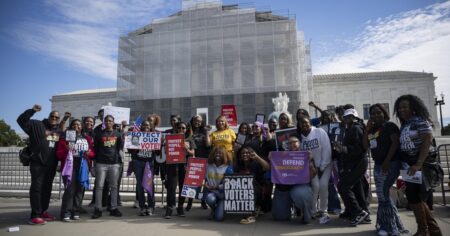
The most visible alternative to attending the State of the Union came in the form of the “People’s State of the Union,” an event organized on the National Mall that attracted several prominent Democratic senators and representatives. This gathering represented an attempt to reclaim the narrative and offer what Democrats view as a more authentic assessment of the nation’s condition. Senators Ed Markey of Massachusetts, Jeff Merkley of Oregon, Chris Murphy of Connecticut, Tina Smith of Minnesota, and Chris Van Hollen of Maryland all committed to attending this counter-event, alongside Representatives Pramila Jayapal of Washington, Becca Balint of Vermont, and Greg Casar of Texas. Senator Markey’s statement captured the spirit of the event perfectly: “If Trump will not honor the American people, then the people should turn off his remarks and turn toward each other – toward their neighbors, their communities, and the real power of this country.”
Another counterprogramming event, cleverly titled the “State of the Swamp,” took place earlier in the evening at the National Press Club. This gathering attracted Senator Ron Wyden of Oregon and Representatives Seth Moulton of Massachusetts, Dan Goldman of New York, and Eugene Vindman of Virginia, among others. The name itself—”State of the Swamp”—represented a pointed rebuke to President Trump’s original campaign promise to “drain the swamp” in Washington, suggesting instead that his administration has contributed to or worsened the very problems he claimed he would solve. These organized counter-events served multiple purposes: they provided Democratic lawmakers with a platform to articulate their own vision for the country, demonstrated unity in opposition, and generated their own media coverage to compete with the president’s address. Some Democrats, including Representative Alexandria Ocasio-Cortez of New York, chose to boycott the speech without participating in any organized counterprogramming, making their statement through absence alone.
Making Statements Through Strategic Guest Invitations
Beyond boycotts and counterprogramming, some Democrats who did plan to attend or have representation at the event chose to make their statements through carefully selected invited guests. Representative Robert Garcia of California, who has been leading Democrats on the Oversight Committee in their efforts to secure the release of documents related to Jeffrey Epstein, announced that he would be bringing Annie Farmer, one of the survivors of Epstein’s abuse, as his guest. This choice carried particular significance given the ongoing controversies and questions surrounding the Trump administration’s connections to various figures involved in the Epstein scandal. Interestingly, Garcia himself planned to attend counterprogramming events while Farmer would attend the president’s address, allowing the Democrats to make their point both inside and outside the chamber simultaneously. This strategy of using guest invitations to highlight specific issues or victims has become an increasingly common tactic in recent years, transforming what was once a simple courtesy into a form of political messaging and protest.
The Voices of Defiant Attendance
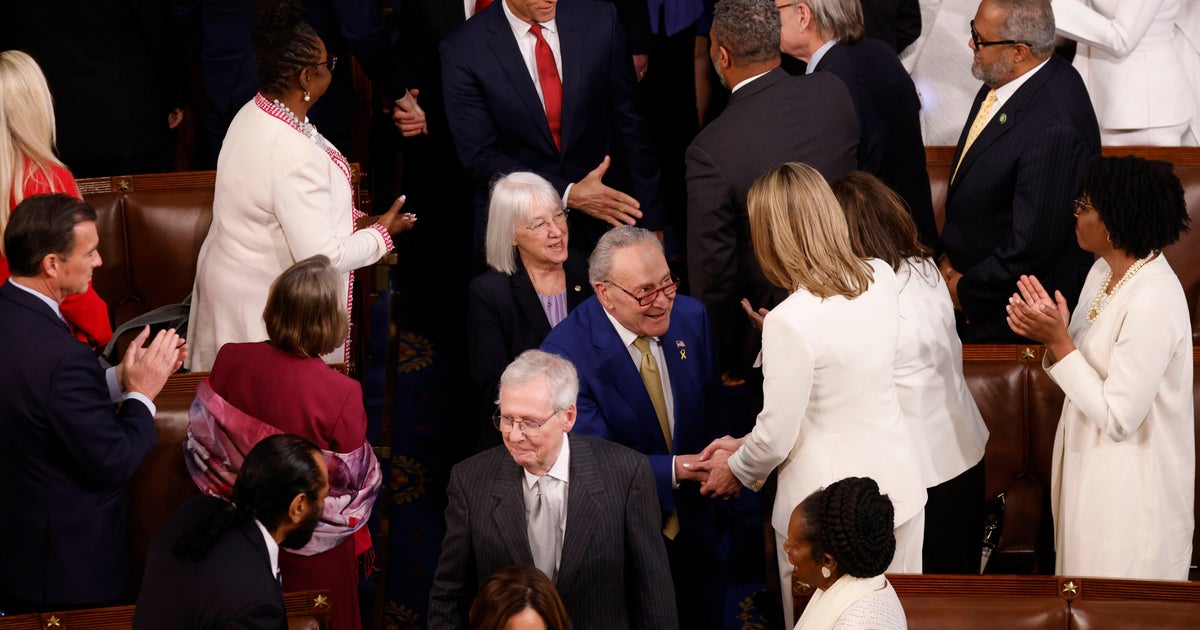
Not all Democrats chose to stay away from the State of the Union address. Senator Richard Blumenthal of Connecticut represented those who believed that attending the speech, even in opposition, sent its own important message. Blumenthal explained his decision to reporters by saying, “I think it’s important to confront him face to face. I refuse to let him bully me out of the room, and I will be defiant in whatever way is appropriate, certainly by silence.” His approach suggested that physical presence in the chamber, even without vocal support or applause, could be its own form of resistance. Blumenthal’s position reflected a viewpoint held by some Democrats that abandoning the chamber entirely might be seen as surrendering ground or appearing afraid to face the president directly. He acknowledged that different members would “choose other ways to express their disagreement or disapproval,” recognizing that the party’s response to the State of the Union had become more fractured and individualized, with each member weighing their own conscience and political calculations in deciding how to proceed.
The Battle Over Decorum and Institutional Respect
The Democratic boycott and counterprogramming efforts drew sharp criticism from House Speaker Mike Johnson, who accused the Democrats of abandoning institutional traditions and showing disrespect for the presidency itself. “I think it’s detestable that members would boycott the speech,” Johnson told CBS News before the address. “We’ve never done that. It doesn’t matter if there’s a Democrat president, you go and respect the office, you respect the decorum, the institution, the tradition of having had this speech made, and it’s sad to me that Democrats are choosing to opt out of that.” Johnson’s criticism attempted to cast the Democratic actions as unprecedented and fundamentally at odds with congressional norms, positioning Republicans as the defenders of institutional integrity and traditional political courtesies regardless of partisan differences.
However, House Minority Leader Hakeem Jeffries fired back at the Speaker’s comments, rejecting what he characterized as Republican hypocrisy on matters of decorum and institutional respect. “Mike Johnson and House Republicans are not in a position to lecture anyone about decorum,” Jeffries stated firmly. “Not with this president, who’s completely and totally out of control in every way possible.” Jeffries’ response highlighted what Democrats see as a fundamental contradiction in Republican criticism: how can they demand respect for traditions and norms when, in the Democratic view, President Trump himself has consistently violated those very standards throughout his political career? This exchange between the Speaker and the Minority Leader encapsulated the broader debate about political norms in the Trump era—whether traditional courtesies should be maintained even when one party believes the other has already abandoned the underlying principles those courtesies were meant to protect. The disagreement over the boycott became, in many ways, a microcosm of the larger struggle over what political norms mean in an era of deep polarization and mutual distrust between the parties.