


The Hidden Toll: Devastating Injuries from Iranian Drone Strike in Kuwait
A Catastrophic Attack Leaves Lasting Scars
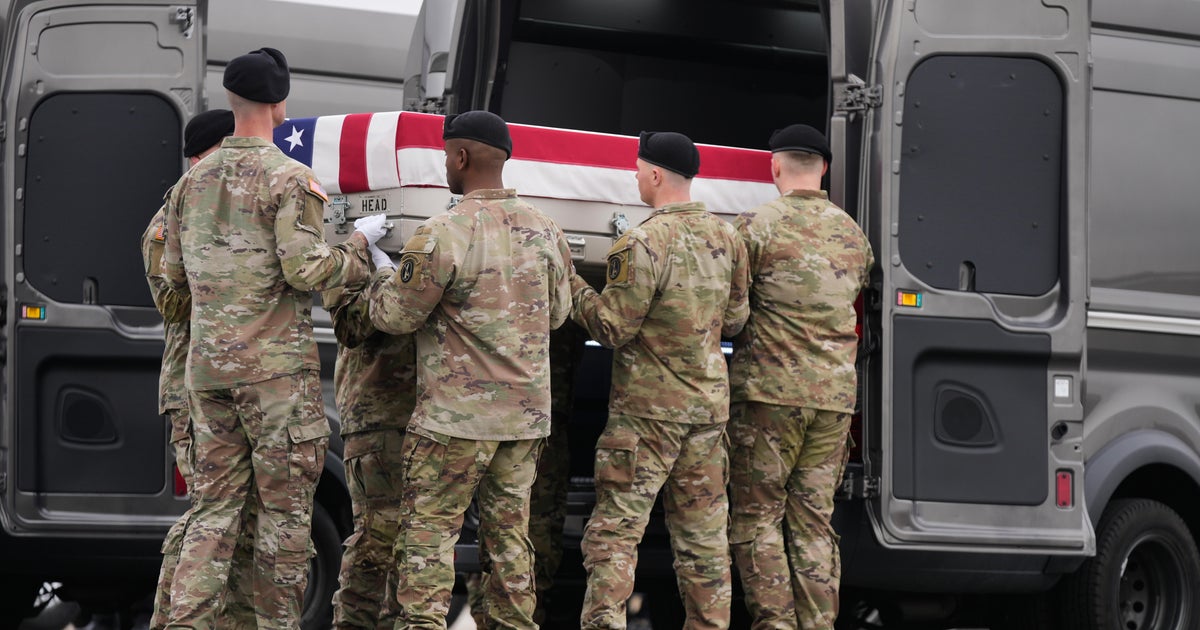
In the opening hours of the conflict with Iran, a drone attack on a U.S. military facility in Kuwait proved far more devastating than initially reported to the public. The March 1st strike on a tactical operations center at Shuaiba port, just outside Kuwait City, claimed the lives of six American service members and left dozens more with severe, life-altering injuries. According to multiple sources speaking with CBS News, the true scope of the casualties paints a grimmer picture than official statements suggested. Service members suffered traumatic brain injuries, severe burns, shrapnel wounds throughout their bodies, and injuries so serious that at least one person required the amputation of a limb. The immediate aftermath was described as chaotic and terrifying, with thick smoke rapidly filling the damaged building and making rescue efforts extraordinarily difficult for those trying to reach their fallen and wounded comrades trapped inside. Two service members were initially reported missing after the attack and were later discovered buried beneath the rubble of the collapsed structure, adding to the tragedy of that terrible morning.
Widespread Medical Evacuations and Ongoing Treatment
More than a week after the attack, over thirty American military personnel remained hospitalized across three continents, receiving treatment for battle injuries sustained in Kuwait. As of Tuesday night, these wounded service members were distributed among three major military medical facilities: one person was being treated at Brooke Army Medical Center in San Antonio, Texas; twelve were receiving care at Walter Reed Medical Center in the Washington, D.C. suburbs; and approximately twenty-five remained at Landstuhl Regional Medical Center in Germany. The severity of many injuries necessitated urgent medical evacuation from the combat theater. On Tuesday alone, about twenty wounded Americans arrived at Landstuhl aboard a C-17 military transport aircraft, all classified by military medical authorities as having “urgent” injuries requiring immediate specialized care and evacuation from the region. These evacuees suffered from a range of serious conditions including traumatic brain injuries, memory loss, and severe concussions—injuries that can have lasting impacts on cognitive function and quality of life. To handle this influx of critically injured personnel, more than one hundred medical staff members were deployed to Landstuhl to provide the intensive care these service members desperately needed.
The Gap Between Official Statements and Reality
The disconnect between initial official reports and the actual scale of casualties highlights the complex challenges military officials face when communicating wartime information to the public. When the Department of Defense first addressed the Kuwait attack on March 1st, they confirmed the six fatalities but characterized the injuries as relatively limited, stating that five service members were seriously wounded while “several others sustained minor shrapnel injuries and concussions.” This language significantly understated the true number of casualties and the severity of injuries that many sustained. The Pentagon has established protocols for notifying families of wounded service members that prioritize protecting those families from learning details about their loved ones’ conditions through media reports or public statements. This careful approach to family notification necessarily means that public information is often limited and sometimes appears to minimize the true human cost of military operations. The military’s definition of a “serious injury” is one that “requires medical attention, and competent medical authority declares that death is possible but not likely to occur within 72 hours”—a technical definition that may not capture the full range of life-changing injuries that fall just short of this threshold but still devastate lives and military careers.
Understanding How the Attack Succeeded
Defense Secretary Pete Hegseth addressed the attack during a Pentagon briefing, explaining in frank terms how even sophisticated air defense systems can be overwhelmed or evaded. “You have air defenses, and a lot’s coming in, and you hit most of it,” Hegseth said, describing the reality of defending against drone swarms and missile attacks. “Every once in a while, you might have one, unfortunately, we call it a squirter, that makes its way through.” In this tragic case, that single drone that penetrated American defenses struck a tactical operations center—a facility that, while fortified, could not withstand the explosive power of modern weapons. “These are powerful weapons,” Hegseth acknowledged, a simple statement that carries the weight of the casualties and destruction that resulted. The attack in Kuwait wasn’t the only deadly strike against American forces that day. At least one American service member was killed in a separate attack in Saudi Arabia on March 1st, though details about potential additional injuries from that incident remain unclear. These multiple, coordinated strikes across different locations demonstrate the capability and intent of Iranian forces to target American military personnel throughout the region.
The Broader Picture of American Casualties
By the eleventh day of the conflict, Pentagon spokesman Sean Parnell provided an updated casualty count that revealed the accumulating toll on American forces. Approximately 140 U.S. service members had been injured since the beginning of hostilities, though Parnell’s statement did not specify where or when each of these injuries occurred. Offering what reassurance he could, Parnell noted that “the vast majority of these injuries have been minor, and 108 service members have already returned to duty.” However, even by the Pentagon’s own accounting, eight service members remained classified as severely injured and were “receiving the highest level of medical care”—a number that represents lives forever changed and families facing uncertain futures. Military sources emphasized to CBS News that robust air defense systems have been deployed to protect all U.S. personnel within range of Iranian attacks, a necessary response to the ongoing threat. Despite the protective measures in place, the casualties continue to mount. When CBS News sought additional clarification about service members’ injuries and the specific incidents in which they were sustained, Pentagon spokespeople did not immediately respond to these questions, maintaining the pattern of limited public information that has characterized official communication throughout the conflict.
The Human Cost Beyond the Numbers
Behind every statistic and official statement are real people—sons and daughters, husbands and wives, fathers and mothers—whose lives have been irrevocably changed by a conflict that erupted with stunning speed and violence. The service member who lost a limb now faces a lifetime of adaptation, rehabilitation, and overcoming challenges that most of us will never experience. Those suffering from traumatic brain injuries and memory loss may struggle with cognitive difficulties, personality changes, and the invisible wounds that are often the hardest to treat and the least understood by those who haven’t experienced them. The families gathered at bedsides in San Antonio, Washington, and Germany are living through every military family’s worst nightmare, waiting for news, hoping for recovery, and trying to comprehend how their lives changed so dramatically in a single moment. The medical personnel caring for these wounded warriors are working around the clock, drawing on the hard-earned expertise from decades of conflict to save lives and preserve function wherever possible. This attack, occurring in the opening hours of the war, set a devastating tone and served as a stark reminder that modern warfare, with its drones and precision weapons, can inflict catastrophic casualties in seconds. As the conflict continues and more Americans remain in harm’s way, the true cost—measured not in strategic objectives or geopolitical outcomes, but in shattered bodies and grieving families—continues to grow in ways that official statements can never fully capture.