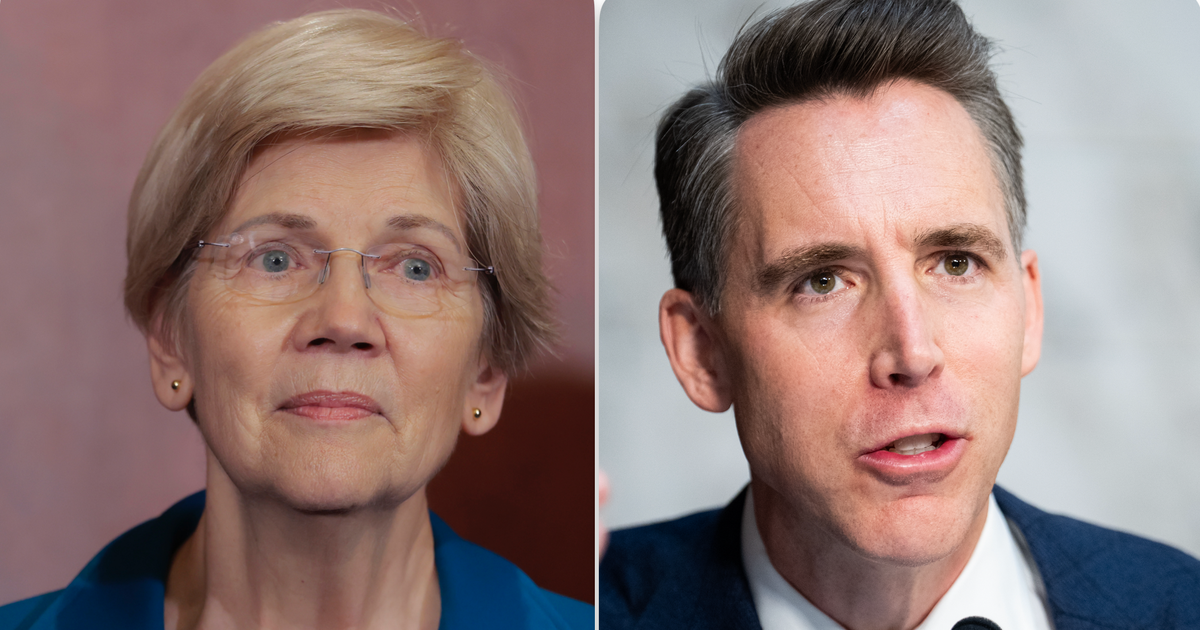

An Unlikely Alliance: Warren and Hawley Unite to Take On “Big Medicine”
When Political Opposites Find Common Ground
In the often polarized landscape of American politics, it’s rare to see lawmakers from opposite ends of the spectrum join forces. Yet that’s exactly what’s happening with Democratic Senator Elizabeth Warren of Massachusetts and Republican Senator Josh Hawley of Missouri. These two couldn’t be more different politically—Warren is a progressive who made a presidential run in 2020, while Hawley stands as one of President Trump’s most reliable allies. But they’ve found something they can agree on: the American healthcare system is broken, and massive corporate consolidation is making it worse. Their unlikely partnership has produced new legislation aimed squarely at what they’re calling “Big Medicine”—the handful of enormous healthcare conglomerates that have quietly taken control of virtually every aspect of how Americans receive and pay for medical care.
This bipartisan cooperation matters because healthcare affordability consistently ranks among voters’ top concerns, especially as midterm elections approach. When families are struggling to pay for prescription medications, doctor visits, and insurance premiums while simultaneously watching the quality of their care decline, politicians from both parties know they need to offer solutions. Warren and Hawley’s bill represents a bold attempt to address these kitchen-table issues that affect millions of Americans every day, regardless of their political affiliations. The fact that a progressive Democrat and a Trump-aligned Republican can work together on this issue signals just how serious the problem has become and how urgent the need for reform truly is.
Understanding the Problem: How Healthcare Giants Control the Entire System
To understand what Warren and Hawley are trying to fix, you need to know how drastically the healthcare landscape has changed. A handful of massive corporations now control multiple pieces of the healthcare puzzle simultaneously. Think of companies like UnitedHealthcare and CVS Health—they’re not just insurance companies or pharmacies anymore. They’ve grown into sprawling empires that own the insurance company that pays your claims, the Pharmacy Benefit Manager (PBM) that negotiates drug prices, the pharmacy where you pick up prescriptions, and even the doctor’s office where you receive care. This means they essentially control both sides of every transaction in the healthcare system.
The senators are particularly focused on PBMs, which most Americans have never heard of despite their enormous influence over prescription drug costs. These middlemen sit between drug manufacturers and insurance companies, supposedly negotiating discounts and managing prescription benefits. The top three PBMs—Optum, Caremark, and ExpressScripts—handle nearly 80% of all prescription drug claims in America. Here’s the kicker: each of these PBMs is owned by a parent company that also operates health insurance, owns pharmacies, and runs medical practices. UnitedHealthcare owns Optum Rx, while CVS Health owns both CVS Caremark and the insurance giant Aetna. This consolidation creates a system where the same corporate entity sets the prices, pays the bills, and profits from the services—leaving consumers with little leverage and few alternatives.
Warren and Hawley argue this arrangement creates perverse incentives. When one company controls the insurer and the price-setter, they can steer patients toward their own more expensive services, manipulate the system to maximize profits, and potentially evade regulations designed to protect consumers. Independent pharmacies, unable to compete with these vertically integrated giants, are being squeezed out of business. The senators point to evidence that these conglomerates may be using their employed physicians to increase government payments to their insurance divisions, essentially gaming the system at taxpayers’ expense while everyday Americans see their healthcare costs continue to climb.
The Proposed Solution: Breaking Up Healthcare Monopolies
The Warren-Hawley legislation takes direct aim at this concentration of power with provisions that supporters have compared to the Glass-Steagall Act—the Depression-era law that separated commercial and investment banking after the 1929 stock market crash led to the Great Depression. Just as that landmark legislation said banks couldn’t engage in both types of banking simultaneously, this new bill would prohibit healthcare companies from owning both sides of medical transactions. The core principle is simple: a healthcare company shouldn’t be allowed to both set the price for a service and be the entity paying for that service.
Specifically, the legislation would prevent a parent company from simultaneously owning a medical provider and a PBM or insurance company. It would also stop prescription drug or medical device wholesalers’ parent companies from owning medical providers. To enforce these rules, the bill would establish financial penalties for violations and empower multiple federal agencies—including the Federal Trade Commission, the Department of Health and Human Services, and the Justice Department—to sue companies that don’t comply. This multi-agency enforcement approach is designed to ensure that healthcare giants can’t simply ignore the new rules or find regulatory loopholes.
The industry, unsurprisingly, disputes the senators’ characterization of the problem. When pressed by Representative Alexandria Ocasio-Cortez at a congressional hearing last month, CVS Health Group president David Joyner rejected the idea that the current system represents harmful market concentration. “I would suggest it’s a model that works really well for the consumer,” Joyner testified. Industry representatives argue that their integrated model creates efficiencies and cost savings that benefit patients. However, this defense rings hollow to millions of Americans who have watched their healthcare costs soar while these same companies report record profits quarter after quarter.
Why This Matters Now: Politics, Economics, and the Midterm Elections
The timing of this legislation isn’t coincidental. Both political parties are acutely aware that voters are frustrated with healthcare costs, and with midterm elections on the horizon, showing action on this issue could prove politically valuable. Consumer prices and economic concerns are expected to be central to how Americans vote, and healthcare affordability sits at the intersection of these anxieties. When families are forced to choose between filling a prescription and buying groceries, or when a single medical emergency can lead to bankruptcy, people demand that their elected officials do something meaningful.
There’s already been some movement on these issues. The recent appropriations package signed by President Trump included new regulations targeting PBMs, reflecting the bipartisan frustration with these middlemen. Trump has also issued executive orders on prescription drug prices, including one specifically directing officials to “reevaluate the role of middlemen” in the pharmaceutical supply chain. Warren and Hawley themselves previously collaborated on PBM-focused legislation in 2024, but this new bill significantly expands the scope of their earlier efforts. The broader approach suggests they’ve concluded that piecemeal reforms won’t be sufficient—the entire structure of healthcare consolidation needs to be addressed.
Both senators have framed their push in populist terms that resonate with frustrated voters. Warren stated that “massive health care companies have created layers of complexity to jack up the price of everything from prescription drugs to a visit to the doctor,” and argued that breaking up these conglomerates is “the only way to make health care more affordable.” Hawley echoed this sentiment, saying “Americans are paying more and more for healthcare while the quality of care gets worse and worse” as “Big Pharma and the insurance companies continue to gobble up every independent healthcare provider and pharmacy they can find.” This messaging—attacking corporate giants on behalf of “working Americans”—represents common ground between progressive and populist conservative politics.
Crossing the Aisle: A Pattern of Unlikely Partnerships
The Warren-Hawley partnership on healthcare isn’t happening in isolation. Both senators have established track records of crossing party lines when they identify shared concerns, particularly on issues involving corporate power and consumer protection. Warren recently worked with Republican Senator Tim Sheehy of Montana on “right to repair” legislation that would make it easier for consumers to fix their own electronics and equipment—a bill that earned endorsement from the Trump administration. In an even more surprising development, President Trump himself called Warren last month after she delivered an economic speech, wanting to discuss a potential plan to cap credit card interest rates.
Hawley, for his part, has shown willingness to break with conservative orthodoxy on economic issues. Last year, he introduced legislation with Democratic Senator Peter Welch of Vermont to raise the federal minimum wage to $15 an hour—a position that conservatives have traditionally opposed as government overreach into the labor market. These examples demonstrate that both Warren and Hawley have carved out populist positions within their respective parties, making them natural partners on issues where anti-corporate sentiment transcends traditional ideological boundaries.
This pattern of collaboration matters because it demonstrates that bipartisan legislation on significant issues is still possible, even in our highly polarized era. When a progressive champion and a Trump loyalist can find common cause, it suggests the underlying issue has genuine merit beyond partisan positioning. It also potentially creates a broader coalition for reform—if the legislation can appeal to both progressive Democrats concerned about corporate power and populist Republicans worried about how elites are rigging the system against ordinary Americans, it stands a better chance of actually becoming law than bills supported by just one party.
The Road Ahead: Can This Bill Actually Become Law?
Of course, introducing legislation and passing it into law are two very different things. The healthcare industry wields enormous lobbying power in Washington, and these companies aren’t going to simply accept regulations that would fundamentally reshape their business models. Expect an intense lobbying campaign arguing that breaking up these integrated companies would actually increase costs, reduce efficiency, and harm patient care. Industry groups will likely fund studies, mobilize patient advocacy organizations, and deploy armies of lobbyists to water down or defeat the bill.
The legislation will also face questions about implementation and unintended consequences. How exactly would existing conglomerates be separated? What timeline would companies have to divest various divisions? Would this create disruption in patient care during the transition? Could smaller, separated entities actually deliver better outcomes, or might breaking up these companies create different problems? These are legitimate questions that will need to be addressed as the bill moves through the legislative process—if it moves at all.
Nevertheless, the introduction of this legislation represents an important moment in the ongoing debate about healthcare reform in America. For too long, conversations about fixing healthcare have been trapped in the tired debate between those who want single-payer systems and those who want pure free markets. Warren and Hawley are proposing a different approach: maintaining a multi-payer system but breaking up the massive corporate consolidation that has undermined genuine competition. Whether or not this specific bill becomes law, it’s shifting the conversation toward the role of corporate power in driving healthcare costs—and that’s a discussion America desperately needs to have. When politicians as different as Elizabeth Warren and Josh Hawley agree that something is fundamentally broken, the rest of us should pay attention.