


Paris Welcomes Its New Mayor: Emmanuel Grégoire’s Journey to City Hall
A Historic Victory Rooted in Progressive Politics
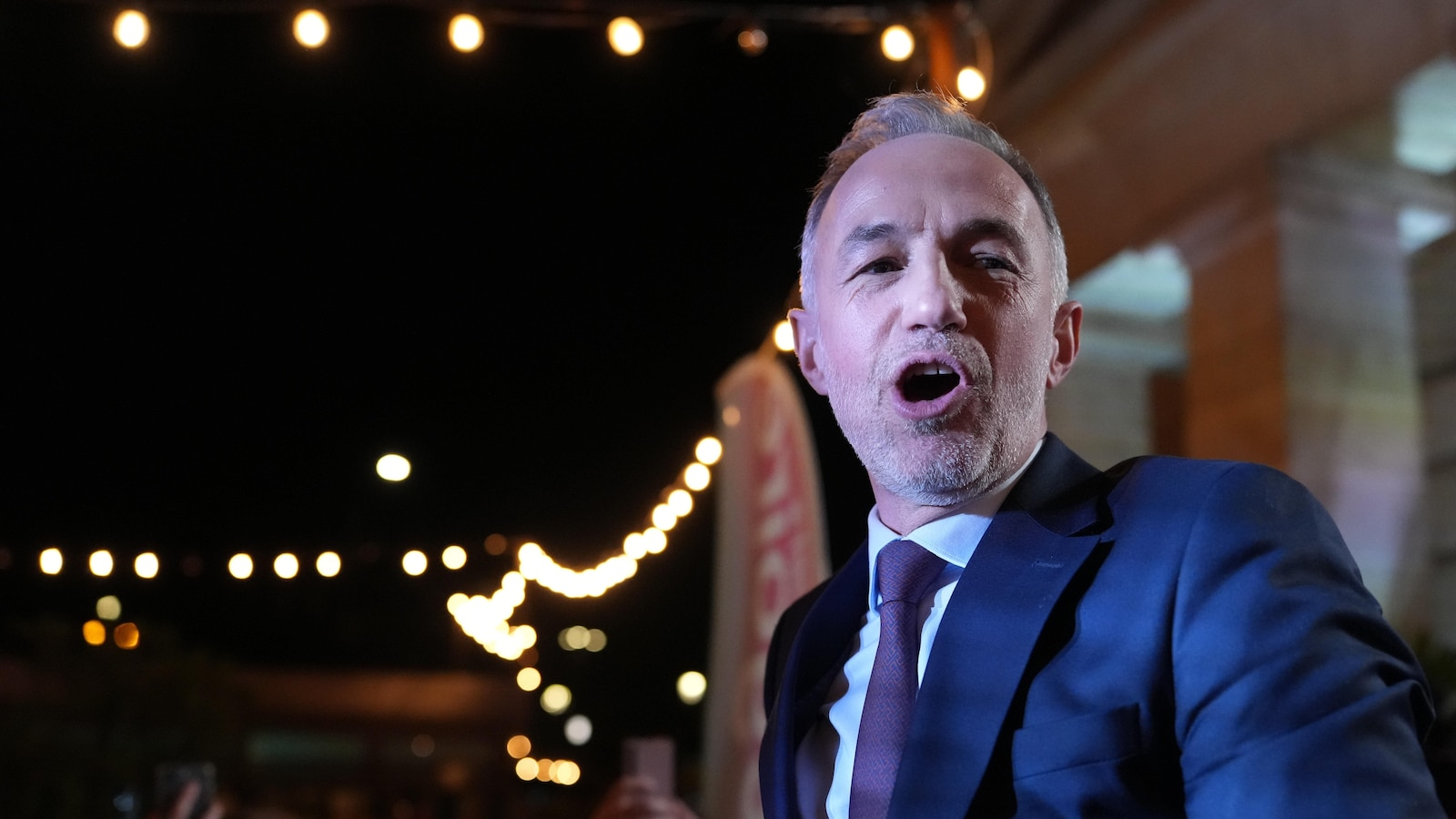
The streets of Paris witnessed a symbolic moment last Sunday when Emmanuel Grégoire, a 48-year-old Socialist politician previously working in the shadows of city politics, claimed victory in the mayoral runoff election. In a gesture that perfectly encapsulated his campaign promises, Grégoire chose to cycle through the city’s streets on a public bike toward City Hall, demonstrating his commitment to making Paris greener and more sustainable. The election results showed a decisive win, with Grégoire securing over 50% of the votes, comfortably defeating his main challenger, the conservative Rachida Dati, who garnered 41%, while hard-left candidate Sophia Chikirou received approximately 8% of the vote. This victory marks a significant continuation of Socialist leadership in Paris, as Grégoire succeeds Anne Hidalgo, who had led the city through challenging times including the devastating 2015 extremist attacks and the triumphant 2024 Paris Olympics. Hidalgo, first elected in 2014 and reelected in 2020, decided not to pursue a third six-year term, opening the door for her long-time colleague to step into the spotlight.
From Behind-the-Scenes Operator to Leading Man
For those familiar with Parisian politics, Emmanuel Grégoire’s name might ring a bell, but for the broader French public, he remained something of an enigma until recently. This discrete political operator has spent years working in the trenches of local government, building expertise and connections that would prove invaluable in his mayoral campaign. His political journey began in 2002 when, at just 24 years old, he joined the Socialist party, demonstrating an early commitment to progressive politics. His rise through the ranks was methodical and impressive—eight years after joining the party, he became chief of staff to Paris’s then-mayor Bertrand Delanoë, gaining invaluable experience in city management. His career trajectory took him beyond city politics when he worked in the prime minister’s office during Socialist President François Hollande’s administration, broadening his understanding of national governance. Returning to Paris politics, Grégoire was elected to the Paris City Council in 2014, and from 2018 to 2024, he served as Hidalgo’s first deputy mayor, overseeing crucial portfolios including budget management, urban policies, and public services—a role that gave him comprehensive knowledge of the city’s operations. In 2024, he expanded his political reach by winning election to the National Assembly, and by last year, he had officially launched his campaign to succeed Hidalgo as mayor. Speaking to The Associated Press before the election, Grégoire emphasized what he saw as his greatest strength: “An advantage we have is that we know Parisians very well. I believe that in politics, it’s healthy when grassroots work pays off more than social media.” This comment was a subtle dig at his rival Dati, known for her media-savvy approach and frequent television appearances, suggesting that Grégoire valued substance over style and deep community connections over flashy publicity.
Confronting Personal Trauma in the Public Eye
In a courageous and unexpected move during the campaign, Grégoire chose to publicly reveal a deeply personal trauma from his childhood, demonstrating a vulnerability rarely seen in high-level political campaigns. He disclosed that between the ages of 9 and 10, while in elementary school, he had been a victim of sexual abuse during after-school activities at a municipal swimming pool. Speaking to France Inter Radio last year, Grégoire explained the long-lasting impact of this trauma: “This is the story of a child who was sexually abused for several months. At the time, I couldn’t find the strength, the means, or the words to express that pain and suffering. I kept it hidden for decades.” This revelation came at a particularly sensitive time in Paris politics, as several reports of alleged abuse in Paris public schools had recently emerged, making child protection a central campaign issue. Grégoire acknowledged that these recent cases had “reopened his own scar,” making it impossible for him to remain silent about his own experience. However, his disclosure was not without political complications—critics accused him of having done nothing to address the issue during his time in city government. Grégoire defended himself by pointing out that since 2024, he was no longer directly in charge at City Hall, suggesting that responsibility for recent failures lay elsewhere. This personal revelation humanized Grégoire in ways traditional political messaging never could, showing voters a man who had overcome significant childhood trauma to reach the highest levels of French political life, while simultaneously positioning him as someone who understood the critical importance of protecting children from abuse.
Drawing Clear Political Boundaries on the Left
One of the defining aspects of Grégoire’s campaign was his careful navigation of France’s complex left-wing political landscape, particularly his firm rejection of an alliance with the hard-left party France Unbowed, led by veteran politician Jean-Luc Mélenchon. At the city level, Grégoire successfully constructed and led a broad left-ecologist coalition that brought together Socialists, Greens, and Communists—a challenging feat in itself given the ideological differences within this spectrum. However, he drew a clear red line when it came to France Unbowed, a party that had traditionally been an ally of other left-wing movements but had recently become controversial and isolated. Political rivals accused France Unbowed politicians of tolerating antisemitic rhetoric within their ranks, a charge that proved deeply damaging in a country still grappling with issues of antisemitism and religious tension. Additionally, some critics blamed the hard left for inflaming tensions after a far-right militant was beaten to death in Lyon last month, suggesting the party’s inflammatory rhetoric contributed to political violence. Before the runoff election, France Unbowed candidate Sophia Chikirou proposed joining forces with Grégoire to present a united left-wing front against the conservative Dati, but Grégoire declined, stating bluntly that they did not share the same “values.” This remark reflected Grégoire’s perception of Chikirou and her party as too radical, while he positioned himself as defending a more moderate, pragmatic approach to left-wing politics. This strategic positioning allowed Grégoire to appeal to moderate voters concerned about extremism while maintaining his progressive credentials, ultimately contributing to his electoral success by presenting himself as a reasonable alternative to both the conservative right and the hard left.
Tackling Tourism, Housing, and Quality of Life
Housing affordability and the impact of tourism on residential neighborhoods emerged as central themes of Grégoire’s campaign, with the new mayor famously declaring that “Airbnb is my enemy.” This bold statement reflected his deep concern about the transformation of Paris neighborhoods due to the proliferation of short-term tourist rentals. Grégoire explained his position with nuance: “I’m fine with Parisians renting out their primary residence when they go on vacation. But I don’t want entire neighborhoods in Paris to be emptied of their residents because apartments are used exclusively to house tourists.” As one of the world’s premier tourist destinations, Paris has seen tens of thousands of apartments converted to tourist accommodations rather than serving as homes for actual Parisians, driving up housing costs and fundamentally changing the character of historic neighborhoods. To address this crisis, Grégoire pledged to create 60,000 new social and affordable housing units during his tenure as mayor, an ambitious goal that will require significant political will and creative urban planning. Drawing on his experience working with other major cities facing similar challenges, Grégoire told the Associated Press: “We have the same problems in Paris as in New York, San Francisco, cities with which I have worked a lot on these issues. What happens if we don’t regulate? Speculation drives residents out.” Beyond housing, Grégoire also committed to managing over-tourism at Paris’s most famous sites, including the perpetually crowded Louvre Museum and the picturesque but overwhelmed Montmartre neighborhood, by promoting less-visited locations and encouraging tourists to explore different parts of the city. In line with his predecessor’s environmental policies, Grégoire promised to further expand the city’s network of cycling lanes, making Paris even more bike-friendly, and to continue efforts to clean the River Seine, ensuring that the environmental progress made in preparation for the 2024 Olympics would continue and expand under his leadership.
A Complicated Succession and a New Beginning
Despite Grégoire’s long tenure working alongside Anne Hidalgo and their shared political vision for Paris, the path to succession proved unexpectedly rocky, revealing tensions that nearly derailed Grégoire’s mayoral ambitions. In a surprising public revelation last month, Grégoire told the Franceinfo news broadcaster about a significant dispute between himself and Hidalgo: “Anne Hidalgo didn’t back me. She did everything she could to torpedo my candidacy. I am neither her candidate nor her heir.” Though Grégoire declined to elaborate on the specifics of their feud, the comment suggested significant personal and political friction between the two longtime colleagues. Despite acknowledging their closely shared views on policy matters, Grégoire insisted his approach would be “different,” describing himself as “available, accessible and always listening”—characteristics he suggested distinguished him from his predecessor’s leadership style. The succession drama unfolded publicly when Hidalgo initially threw her support behind another Socialist figure to succeed her, rather than her long-serving deputy. However, after party members ultimately chose Grégoire as their mayoral candidate last year, Hidalgo had little choice but to pivot and offer her endorsement. The reconciliation appeared complete on Sunday evening when Hidalgo welcomed Grégoire to City Hall with a warm hug and a rose, graciously praising his “very, very beautiful victory.” This moment of unity helped close a potentially divisive chapter in Paris Socialist politics, allowing the party to present a united front going forward. As Grégoire settles into his new role, he faces the challenging task of honoring the progressive legacy established by his predecessors while establishing his own distinct leadership style and addressing the pressing challenges facing Paris, from housing affordability and over-tourism to climate change and social cohesion. With his deep knowledge of city operations, his coalition-building skills, and his commitment to grassroots politics over media spectacle, Paris’s new mayor has positioned himself as a pragmatic progressive ready to lead the French capital through its next chapter.