
Energy Secretary Assures Americans: Gas Price Spike Will Be Short-Lived Amid Iran Conflict
Temporary Pain for Long-Term Gain
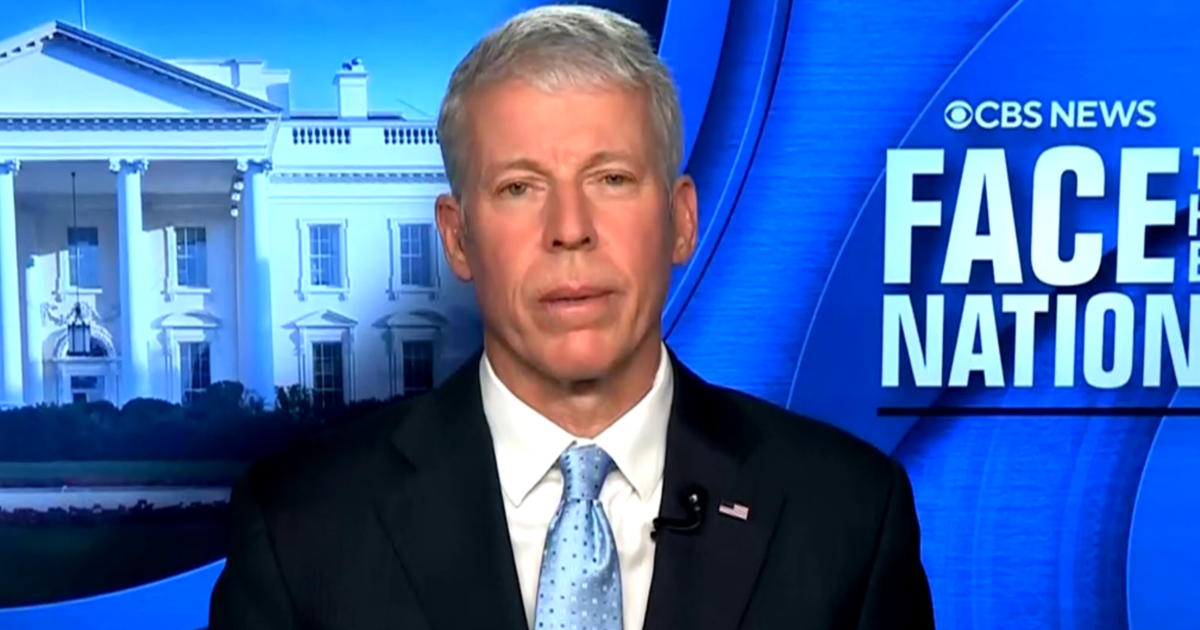
In a reassuring message to Americans watching their fuel costs climb, Energy Secretary Chris Wright appeared on CBS’s “Face the Nation” Sunday to address growing concerns about energy prices as the conflict with Iran intensifies. Wright’s central message was clear and direct: while families are feeling the pinch at the pump right now, this situation won’t last long. He emphasized that the current spike in energy costs represents a temporary disruption rather than the beginning of a prolonged crisis. According to Wright, Americans can expect relief in a matter of weeks, not months, and the end result will actually position the world for more stable and potentially lower energy prices in the future. His confidence stems from what he describes as abundant global oil supplies and the expectation that military operations will successfully neutralize Iran’s ability to destabilize the region and threaten international energy flows.
The Current State of Gas Prices and Global Supply
The numbers tell a story that has concerned many Americans lately. According to data from AAA, gas prices have jumped 14% in just one week, with the national average reaching $3.45 per gallon as of Sunday. This represents a significant reversal from December, when prices had dipped below the $3 threshold, offering consumers some welcome relief during the holiday season. However, Energy Secretary Wright wants Americans to understand that these rising prices don’t reflect an actual shortage of oil. He pointed out that the Western Hemisphere, and the United States in particular, has no energy shortage whatsoever. In fact, America is currently a net exporter of both oil and natural gas, meaning we produce more than we consume and sell the surplus to other countries. The real problem, Wright explained, lies in the disruption of normal crude oil flows to refineries in Asia and Europe. These facilities depend on oil that typically travels through Middle Eastern shipping routes, and the current conflict has interrupted those established supply chains. Wright attributes much of the price increase to fear and emotional market reactions rather than fundamental supply problems, noting that the world has “massive energy stores” that can help bridge this temporary gap.
The Strait of Hormuz: A Critical Bottleneck
At the heart of the current energy situation is the Strait of Hormuz, a narrow waterway that serves as one of the world’s most critical energy chokepoints. Under normal circumstances, approximately 20% of the world’s oil shipments—roughly 20 million barrels per day—pass through this strategic passage. The ongoing military conflict has dramatically reduced these shipments, creating uncertainty in global energy markets and contributing to price volatility. When asked about when normal traffic patterns might resume through the strait, Wright expressed cautious optimism, stating that he expects a return to typical shipping volumes “relatively soon.” However, he acknowledged that ensuring safe passage for oil tankers and liquefied natural gas carriers will likely require ongoing protection from the U.S. military. Wright characterized the current military operations as going “swimmingly well,” with a focus on degrading Iran’s capabilities to threaten neighboring countries, American military personnel, and commercial shipping. His vision is that once Iran’s capacity to project power in the region has been sufficiently reduced, normal maritime commerce can resume with confidence, allowing the flow of energy resources to return to pre-conflict levels.
A Strategic Shift in Approach to Iran
Wright’s comments also reflected a broader philosophical change in how the United States is approaching Iran compared to previous administrations. He drew a sharp contrast between past diplomatic efforts and the current military approach, stating bluntly that previous governments had “begged, bartered and bribed the Iranian government to stop its nefarious activity,” but that strategy “simply hasn’t worked.” In his view, decades of attempting to modify Iranian behavior through diplomacy, economic incentives, and sanctions have failed to produce the desired results. Instead, Iran has continued to threaten its neighbors, support proxy forces throughout the region, endanger American troops, and pursue nuclear weapons capabilities. Wright characterized the current moment as a decisive turning point, declaring that “now is the time to end their risk to America and the world.” This represents a fundamental shift from containment and negotiation to what the administration sees as a more permanent solution to Iranian regional aggression. The energy secretary framed the current military operation as the conclusion of a 47-year conflict—dating back to the 1979 Iranian Revolution—that has created instability throughout the Middle East and, by extension, disrupted global energy markets for generations.
Long-Term Energy Price Benefits on the Horizon
Looking beyond the immediate price pressures, Wright painted an optimistic picture of what the energy landscape might look like once the conflict concludes. He argued that military action against Iran will ultimately “bring in an era of even lower energy prices” because it will fundamentally transform the security situation in the Middle East. His reasoning centers on the idea that Iran has been the primary destabilizing force in one of the world’s most important energy-producing regions. By threatening neighbors, supporting militant groups, and creating general uncertainty, Iran has added a risk premium to energy prices for decades. Once Iran is “defanged,” as Wright put it, and can no longer threaten other countries or continue its pursuit of nuclear weapons, the entire region can shift its focus from conflict to commerce. This transition, he believes, will unlock greater energy production capacity throughout the Middle East and create more stable, predictable conditions for energy markets. Wright acknowledged that achieving this vision requires accepting “a temporary impediment to energy production” in the short term, but he firmly believes the long-term payoff justifies the current disruption. In his assessment, the real risk to energy prices wasn’t taking military action—it was continuing to allow Iran to threaten regional stability and global energy security without consequence.
Practical Measures to Manage the Transition
While expressing confidence about the trajectory of the conflict and energy prices, Wright also discussed practical steps the administration is considering or taking to help manage the current situation. The Strategic Petroleum Reserve, America’s emergency oil stockpile, remains available as a tool if conditions deteriorate, though Wright indicated the administration hasn’t felt it necessary to tap into it yet. He noted that the oil needs are primarily at refineries in Europe and Asia rather than in the United States, which has its own robust production. Interestingly, the administration has taken the pragmatic step of temporarily allowing India to continue purchasing Russian oil until April 4, despite broader sanctions against Russia. The Treasury Department described this as a “stop-gap measure” designed to “alleviate pressure” on global markets during this turbulent period. Wright defended this decision against potential criticism that it helps Russia, arguing that “we’re just doing pragmatic things to get through a short period.” He pointed out that there are more than 100 million barrels of Russian oil already produced but not yet sold, and allowing that oil to reach refineries serves the immediate goal of stabilizing prices without providing long-term strategic benefit to Russia. This pragmatic approach reflects the administration’s focus on managing the practical realities of global energy markets while pursuing its larger strategic objectives regarding Iran. The overall message Wright conveyed was one of controlled optimism—acknowledging current challenges while maintaining confidence that both the military operation and energy price situation will resolve favorably in the near future.