


Russian Drones Violate NATO Territory Amid Massive Assault on Ukraine
Unprecedented Incursions into Allied Airspace
In a troubling escalation of hostilities, Russian military drones breached the airspace of two NATO member countries on Wednesday morning, marking yet another violation of the transatlantic alliance’s territorial integrity. Estonia’s Internal Security Service confirmed that a Russian drone entered the country’s airspace and crashed directly into the chimney of a power station, causing damage to civilian infrastructure. Meanwhile, Latvia’s armed forces reported a separate incident where a Russian drone fell onto their territory, though fortunately without causing any immediate damage or casualties. These violations occurred in the immediate aftermath of one of Russia’s most extensive daytime drone campaigns against Ukraine since President Vladimir Putin ordered the full-scale invasion of the neighboring country four years ago. The incidents underscore the growing danger that Russia’s war against Ukraine poses not just to the embattled nation itself, but to the wider European security architecture and NATO member states who share borders with Russia and its theater of military operations.
The pattern of Russian aircraft and unmanned aerial vehicles entering NATO airspace has become increasingly frequent throughout the duration of the war, raising serious concerns among alliance members about Putin’s intentions and willingness to respect international boundaries. According to official reports from the transatlantic defense alliance, there were 18 documented airspace violations by Russian aircraft during 2025 alone—a threefold increase compared to the six violations recorded in 2024. This dramatic surge in incursions represents not merely accidental straying across borders, but what many defense analysts consider a deliberate pattern of testing NATO’s resolve and response capabilities. The violations have included not only drones but also manned fighter jets, demonstrating Russia’s willingness to risk direct confrontation with the military alliance. These provocative actions have forced NATO countries to scramble their own fighter jets on numerous occasions to intercept and escort Russian aircraft out of their airspace, creating dangerous situations where a miscalculation or accident could trigger a wider conflict between nuclear-armed powers.
Ukraine Faces Relentless Aerial Bombardment
The NATO airspace violations came on the heels of one of the most devastating aerial assaults Ukraine has experienced since the war’s beginning. Starting Monday evening and continuing through Tuesday, Russia launched an absolutely staggering campaign involving nearly 1,000 drones directed at targets across Ukraine, according to figures released by Ukraine’s Air Force command. The scale of this assault is difficult to comprehend—more than 550 drones were launched in a single afternoon on Tuesday alone, primarily directed toward Ukraine’s western regions, which lie closest to the country’s borders with NATO member states including Poland, Slovakia, Hungary, and Romania. The choice of targets suggests a deliberate Russian strategy to strike areas previously considered relatively safe from attack, forcing Ukrainian air defenses to spread thin across the entire country rather than concentrating resources near the eastern front lines where the most intense ground fighting continues.
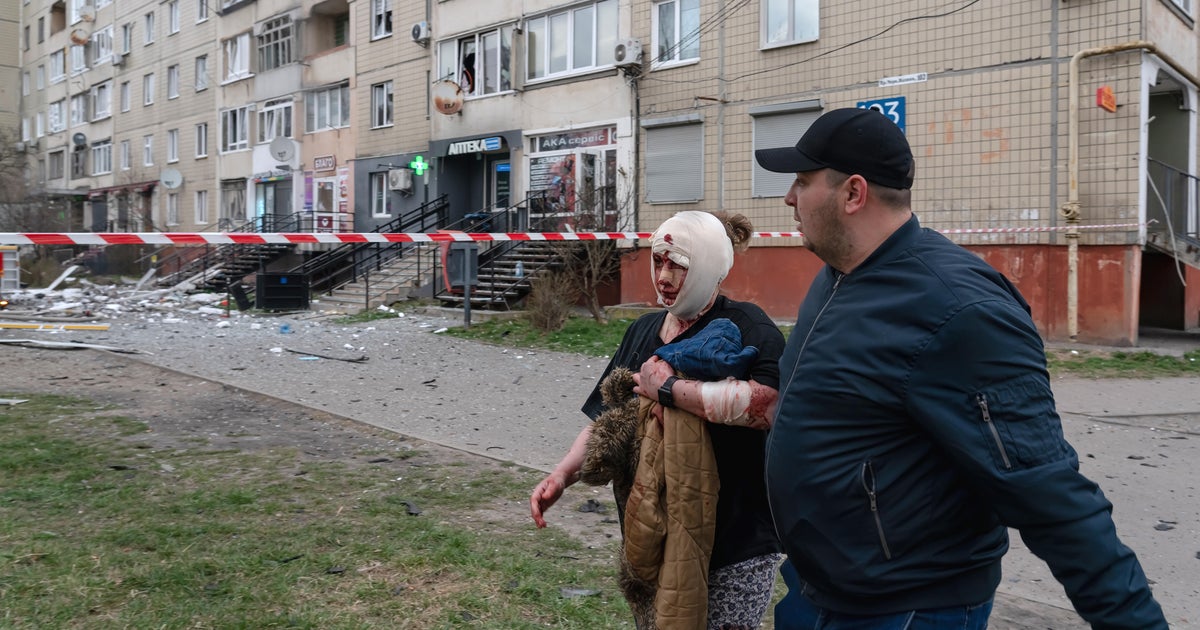
The human cost of this massive drone campaign was immediately apparent in cities far from the traditional battlefields. In the historic city of Lviv, located only about 40 miles from the Polish border and considered one of Ukraine’s cultural treasures, Ukrainian public broadcaster footage captured the horrifying moment when an Iranian-made Shahed drone—a weapon Russia has deployed extensively throughout the war—slammed directly into a building adjacent to a church in the city’s historic center. City officials reported that a second drone struck a residential apartment building in Lviv, wounding 22 civilians who were simply going about their daily lives when terror descended from the sky. The attacks on Lviv were particularly shocking because the city has served as a refuge for millions of Ukrainians fleeing violence in the eastern regions, and has been perceived as relatively safe from Russian strikes. In nearby Ivano-Frankivsk, another western Ukrainian city, a maternity hospital sustained damage in the attacks—a particularly egregious strike on medical infrastructure that potentially endangered mothers and newborn babies.
International Comparisons and Terrorist Tactics
Ukrainian Foreign Minister Andrii Sybiha didn’t mince words when characterizing the Russian assault, drawing a deliberate parallel between Moscow’s actions and the behavior of another international pariah state. In a strongly worded social media statement, Sybiha compared Russia’s attacks on civilian infrastructure to similar tactics employed by Iran against civilian targets across the Persian Gulf region. “Russia is doing exactly what the Iranian regime is doing in the Middle East, but in the middle of Europe,” Sybiha declared, emphasizing the geographical proximity of these attacks to the heart of the European continent and NATO territory. “Russia proves its status of a terrorist state,” he continued, using the controversial but increasingly common designation that many Ukrainian officials and some Western politicians have adopted to describe the Russian Federation under Putin’s leadership. Sybiha’s statement concluded with a clear prescription for how the international community should respond to this aggression: “And this is how it must be dealt with—through strength, not weakness, and increased pressure on all fronts.”
The comparison to Iranian tactics is particularly apt given that Russia has increasingly relied on Iranian-designed Shahed drones throughout the conflict. These relatively inexpensive unmanned aerial vehicles have allowed Russia to conduct sustained bombardment campaigns without depleting its more sophisticated and expensive cruise missile stockpiles. The collaboration between Moscow and Tehran represents a deepening axis of authoritarian states willing to share military technology and tactics in pursuit of their respective geopolitical objectives. For Ukraine and its supporters, this partnership demonstrates how threats in different regions of the world are increasingly interconnected—instability and aggression in the Middle East can directly enable violence in Europe, and vice versa. The Iranian drones have proven particularly effective at overwhelming Ukrainian air defenses through sheer numbers, forcing defenders to expend valuable anti-aircraft missiles on relatively cheap targets while potentially allowing more dangerous weapons to slip through.
Zelenskyy Warns of Emboldened Russian Aggression
In his nightly video address on Tuesday, Ukrainian President Volodymyr Zelenskyy offered a sobering assessment of Russia’s increasing boldness and the factors enabling it. Zelenskyy specifically cited the Trump administration’s recent decision to relax sanctions on Russian oil exports as a factor that has emboldened Putin’s regime to escalate its military aggression. The Ukrainian president has consistently maintained that economic pressure on Russia is essential to changing Putin’s calculation about whether continuing the war serves Russian interests. When that pressure is reduced or removed, Zelenskyy argues, it sends a signal to the Kremlin that the costs of aggression are bearable and perhaps even declining, encouraging further escalation rather than promoting diplomatic resolution. This criticism of Western sanctions policy represents a delicate diplomatic challenge for Zelenskyy, who must maintain strong relations with Ukraine’s essential Western partners while also pushing them to adopt policies he believes are necessary for Ukraine’s survival and ultimate victory.
Zelenskyy reiterated his long-held conviction that Putin’s territorial ambitions and aggressive actions represent a threat extending far beyond Ukraine’s borders to encompass all of Europe. “Pressure is clearly lacking right now,” the Ukrainian president stated bluntly, criticizing what he perceives as insufficient international response to Russian aggression. “On the contrary, there are signals encouraging Russia to continue what they have been doing for years, only increasing their aggressiveness,” he continued, expressing frustration with policies that he believes inadvertently communicate to Moscow that the international community’s resolve is weakening. Zelenskyy concluded with a stark warning that should concern not just Ukrainians but all Europeans and supporters of the international rules-based order: “This is dangerous for everyone.” His message is clear—today Russia attacks Ukraine with drones that violate NATO airspace; tomorrow, without sufficient deterrence, those attacks could be directed at NATO member states themselves, triggering the alliance’s collective defense provisions and potentially sparking a wider European or even global conflict.
The Broader European Security Crisis
The events of this week represent more than isolated incidents—they reflect a fundamental challenge to European security architecture that has kept the peace on the continent for decades. The dramatic increase in Russian airspace violations, from six incidents in 2024 to eighteen in 2025, suggests a deliberate strategy of escalation and provocation. Putin appears to be testing NATO’s red lines, calculating how far he can push before triggering a meaningful response from the alliance. Each violation that passes without significant consequence potentially emboldens further risk-taking. Estonian and Latvian officials, whose countries share borders with Russia and have substantial Russian-speaking minorities, view these incursions with particular alarm, seeing them as potential precursors to the kind of “hybrid warfare” tactics Russia employed before its annexation of Crimea and invasion of eastern Ukraine. Their populations remember Soviet occupation all too well, and they understand that Putin’s revanchist vision of Russian greatness may not stop at Ukraine’s borders.
Ukrainian President Zelenskyy has repeatedly called upon European partners to significantly strengthen their own air defense capabilities, recognizing that Russian drones and missiles respect no borders. The fact that drones targeting western Ukraine are flying within miles of Polish, Slovak, and Romanian territory means that mechanical failures, navigation errors, or deliberate provocations could easily result in strikes on NATO soil. Poland has already begun constructing an extensive air defense network along its eastern border, dubbed the “East Shield,” precisely because of these concerns. Other NATO members are following suit, but the pace of these defensive preparations may not keep up with the escalation of Russian attacks. As drone technology becomes cheaper and more accessible, the ability to launch massive swarm attacks like the nearly 1,000-drone assault on Ukraine becomes available to more actors, fundamentally changing the nature of modern warfare. The international community faces urgent questions about how to respond to this evolving threat—whether through enhanced air defenses, stronger economic sanctions, increased military aid to Ukraine, or some combination of all these approaches. What remains clear is that the current trajectory, with Russia growing bolder rather than more cautious, suggests that existing responses have proven insufficient to deter Putin’s aggression or protect civilian populations from the horrors of modern aerial warfare.