
Mark Meadows Seeks Federal Reimbursement for Legal Fees: A Complex Web of Post-Trump Administration Litigation
A Former Chief of Staff’s Financial Burden
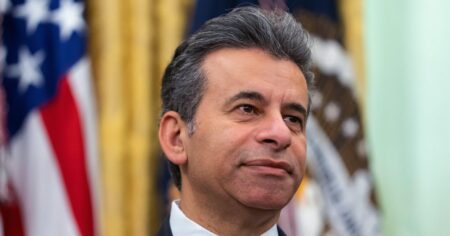
Mark Meadows, who served as White House chief of staff during the final tumultuous year of Donald Trump’s presidency, is now turning to the Justice Department with a significant request: reimbursement for the substantial legal fees he accumulated while defending himself across multiple federal and state investigations. This appeal comes at a particularly crowded moment for the Justice Department, which finds itself processing an unprecedented volume of financial claims connected to the Trump administration and its aftermath. The department is simultaneously evaluating reimbursement requests from Trump himself, who is seeking hundreds of millions of dollars in various claims, as well as demands from pardoned January 6th rioters who are seeking compensation for injuries they claim to have suffered during the Capitol breach. This convergence of claims represents a unique chapter in American political and legal history, where the financial consequences of politically charged investigations are coming home to roost, potentially at taxpayer expense.
Meadows’ legal troubles stem directly from his unwavering support of Trump’s efforts to overturn the 2020 election results following Joe Biden’s victory. While he was never charged in Special Counsel Jack Smith’s federal indictment against Trump for election interference, Meadows faced criminal charges in both Georgia and Arizona for his role in attempting to subvert the election outcome. His involvement in these efforts made him a central figure in one of the most controversial periods in American democratic history. Following Trump’s return to political favor and his subsequent actions, Meadows received a presidential pardon in November, which led Georgia prosecutors to drop their charges against him and others. However, his legal situation remains unresolved in Arizona, where he still faces charges related to the fake electors scheme—an elaborate plan to substitute legitimate electoral college voters with Trump loyalists who would disregard the actual election results. The House committee investigating the January 6th Capitol attack scrutinized Meadows extensively, and he provided lawmakers with text messages and other records in compliance with congressional subpoenas, documents that painted a detailed picture of the administration’s final days.
The Legal Framework for Reimbursement
The basis for Meadows’ reimbursement request lies within existing federal regulations that grant the Justice Department authority to provide legal counsel to current or former government officials, or alternatively, to reimburse them for private representation costs when they face legal proceedings related to actions taken during their official duties. This framework exists to protect government employees who might face legal jeopardy simply for carrying out their responsibilities, ensuring that public service doesn’t become financially ruinous when controversies arise. The department follows an internal administrative directive outlining reimbursement rates, which are typically substantially lower than standard market rates for legal services—a recognition that while the government should protect its employees, it also has a responsibility to taxpayers to manage costs reasonably. However, the Justice Department’s decision-making process involves weighing numerous factors, and approvals are far from automatic. Historical precedent shows that most requests are denied if the employee didn’t seek reimbursement from the beginning of their legal troubles, though the department maintains discretion to make exceptions in compelling circumstances. Critical considerations include whether the person was genuinely acting within their official duties and whether reimbursement serves the broader interests of the United States—a deliberately vague standard that gives officials considerable latitude in their determinations.
Previous opinions from the Office of Legal Counsel have established some specific guidelines for these situations. Notably, a 2020 opinion determined that government employees who were interviewed as witnesses during Special Counsel Robert Mueller’s investigation into Russian interference in the 2016 election and who hired private attorneys were eligible for reimbursement, provided they were not subjects or targets of the investigation themselves. This precedent raises intriguing questions about how the Justice Department might evaluate Meadows’ request, given that while he wasn’t federally charged, he was charged at the state level and was clearly more than a peripheral witness to the events under investigation. The department spokesperson confirmed only that requests are considered “on a case-by-case basis” according to established regulations, providing no clarity on how Meadows’ unique circumstances might be evaluated. Neither Meadows nor his attorney, George Terwilliger, have commented publicly on the request, and CBS News could not immediately determine the specific amount being sought or whether the Justice Department intends to approve it.
The Staggering Costs of Legal Defense
Court filings related to Meadows’ separate reimbursement request in Georgia reveal the extraordinary financial burden his legal defense has imposed. According to documents submitted under Georgia state law—which allows defendants to seek reimbursement when prosecutors are disqualified for misconduct—Meadows paid the law firm Griffin Durham more than $569,000 for representation, with approximately $19,000 in additional unpaid or unbilled fees remaining. Separately, attorneys from McGuireWoods billed him nearly $1.3 million, of which he paid roughly $650,000. After Terwilliger left McGuireWoods and continued representing Meadows on the Georgia case and other matters, including the Special Counsel investigations, he charged a flat monthly fee of $20,000 throughout 2024, reduced to $12,000 monthly in 2025. Additionally, Meadows paid $200,000 to Paul Clement, a prominent former Justice Department appellate lawyer, to represent him in his unsuccessful attempt to move his state case to federal court—a legal maneuver that, if successful, might have provided more favorable procedural grounds for his defense.
These figures paint a picture of legal costs that would be financially devastating for most Americans, raising questions about how Meadows funded this defense. Previous reporting by Notus indicated that at least some of his legal bills may have been paid by Personnel Policy Operations, a nonprofit organization created by Meadows’ employer, the Conservative Partnership Institute. This arrangement attracted scrutiny from Accountable.U.S., a progressive watchdog group that in 2024 asked the District of Columbia Attorney General’s office to investigate whether this payment structure violates IRS rules governing nonprofit organizations, which generally prohibit such entities from providing substantial private benefits to individuals. The status of that investigation remains unclear, but it adds another layer of complexity to Meadows’ financial situation. The Justice Department is reportedly waiting for Georgia to make its determination on reimbursement before considering whether to pay any remaining balance, meaning Meadows’ request exists in a state of legal and financial limbo that could persist for months or even years.
The Georgia Legal Fee Battle and Constitutional Questions
Meadows is not alone in seeking reimbursement from Georgia—he is one of numerous defendants in the state case collectively seeking more than $17 million in legal fee reimbursements, according to court filings. However, these requests face significant legal obstacles that cast doubt on whether any defendant will ultimately receive payment. The Georgia law allowing such reimbursements didn’t take effect until May 2025, while the case was indicted in 2023, creating a temporal problem that lawyers for Fulton County argue makes the requests unconstitutional retroactive payments. This constitutional argument holds that allowing reimbursement for legal fees incurred before the law’s effective date would violate fundamental principles against retrospective legislation—laws that attempt to change the legal consequences of actions that occurred before the law’s enactment. The Georgia Court of Appeals is currently weighing whether to accept the case for review, a decision that will determine whether these reimbursement claims can proceed or will be dismissed on procedural grounds before their merits are even considered.
This legal uncertainty means that all defendants, including Meadows, face a waiting game with high financial stakes. If the court determines the reimbursement law can be applied retroactively, defendants could recover millions in legal fees from Georgia taxpayers. If the court rules against retroactive application, these individuals will bear the full financial burden of their defenses, which could be financially ruinous for those without substantial personal wealth or access to outside funding sources. The outcome will likely establish important precedent about state obligations to defendants when prosecutorial misconduct occurs, balancing the principle that wrongful prosecution shouldn’t financially destroy defendants against fiscal responsibility to taxpayers and constitutional limitations on retroactive legislation.
Transparency Concerns and Public Accountability
One troubling aspect of the Justice Department’s handling of legal fee reimbursement requests is the lack of transparency surrounding these decisions. While the department’s determinations will significantly impact taxpayer dollars—potentially in the millions when considering Meadows and other Trump-associated figures making similar claims—these decisions are treated as privileged information, shielded from public disclosure. This stands in stark contrast to internal Justice Department tort settlements, which can be obtained through Freedom of Information Act requests, allowing public oversight of how government funds are spent. The rationale for this secrecy isn’t publicly explained, but it effectively means that American taxpayers may never know whether they’re funding the legal defenses of former officials who participated in attempts to overturn an election, or the specific reasoning the department used to make such determinations.
This lack of transparency raises significant accountability concerns, particularly given the politically sensitive nature of these cases and the unprecedented circumstances surrounding them. When government officials face legal consequences for actions taken in office, the public has a legitimate interest in understanding whether those actions were truly within the scope of official duties deserving of legal protection, or whether they crossed lines into personal or political conduct that officials should defend at their own expense. The question becomes even more acute when the actions in question involve attempts to subvert election results—conduct that strikes at the heart of democratic governance. Without transparency in how the Justice Department evaluates these requests, the public cannot assess whether the department is appropriately applying its regulations or whether political considerations are influencing decisions. As this situation continues to unfold, with Meadows’ request still pending and similar claims likely to follow from others in Trump’s orbit, the tension between protecting government employees and ensuring public accountability over the expenditure of taxpayer funds remains unresolved, representing yet another complex legacy of the Trump administration’s final days and their ongoing legal reverberations.