



The House of Lords Under Fire: Britain’s Struggle with an Ancient Institution
A Scandal Exposes Deep Cracks in Parliament’s Upper Chamber
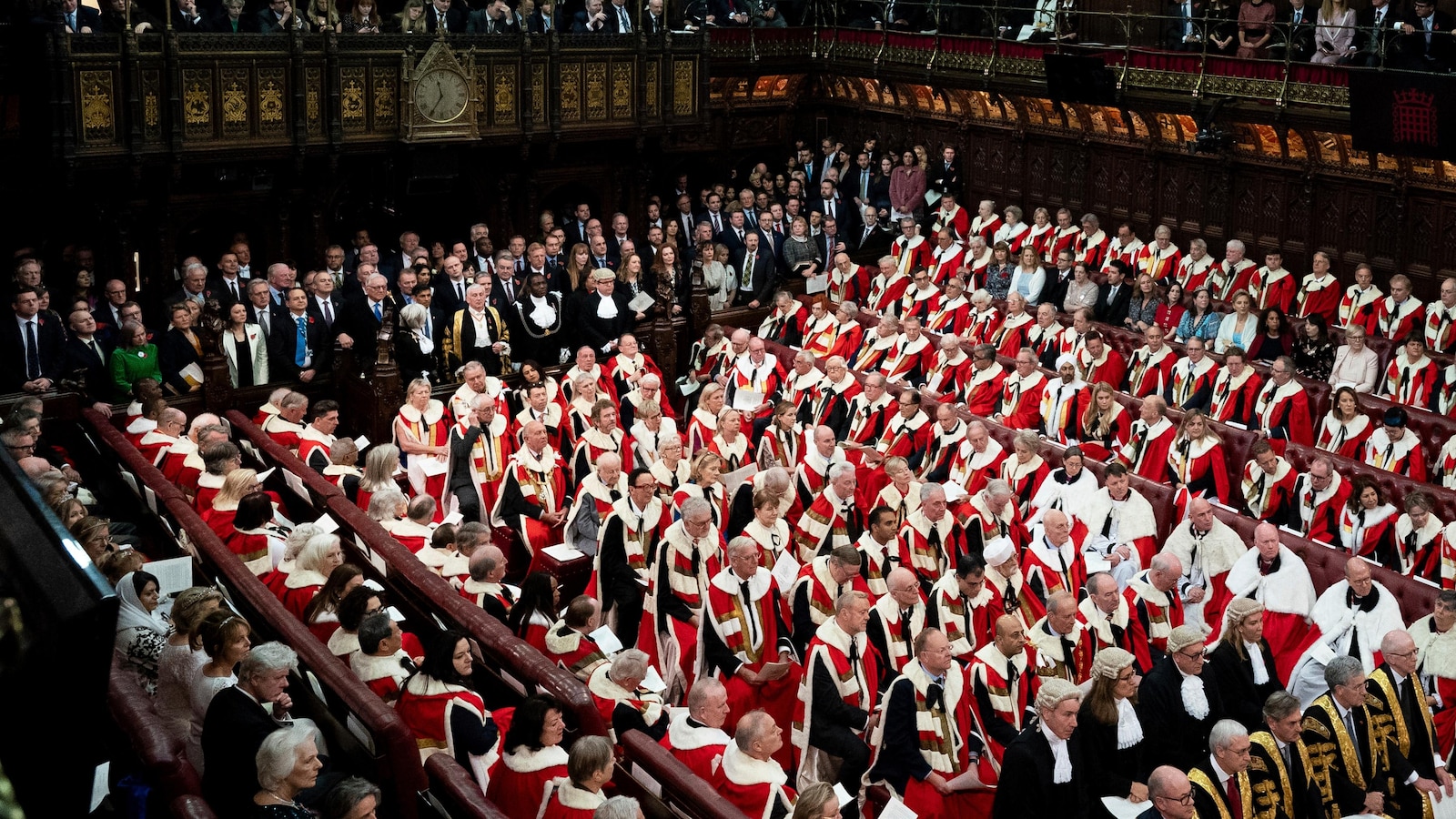
The gilded halls of Britain’s House of Lords are facing intense scrutiny following a scandal that has reignited decades-old debates about the chamber’s relevance in modern democracy. Peter Mandelson, a former British ambassador to Washington, was recently forced to resign from his position in the Lords due to his controversial friendship with convicted sex offender Jeffrey Epstein. This incident has become a lightning rod for critics who argue that the unelected upper house represents an outdated, undemocratic institution that moves far too slowly when addressing misconduct among its members. Meanwhile, defenders maintain that despite its unwieldy nature—with more than 850 lifetime members bearing aristocratic titles like “Lord” and “Lady”—the chamber remains a vital component of Britain’s parliamentary system. The controversy has exposed a fundamental tension in British governance: nearly everyone acknowledges that the House of Lords needs reform, yet successive governments have struggled to accomplish this task, leaving the institution in what Green Party member Jenny Jones bluntly describes as “a mess” and “a semifeudal system” inappropriate for a modern democracy.
Seven Centuries of Tradition Meeting Modern Reality
The House of Lords carries a 700-year legacy that has evolved considerably over time, though perhaps not quickly enough for contemporary expectations. For most of its existence, the chamber consisted exclusively of noblemen—women were barred entirely—who inherited their seats based on aristocratic lineage, with a small number of bishops added to the mix. A significant shift occurred in the 1950s with the introduction of “life peers,” a category that included retired politicians, civic leaders, and other distinguished figures appointed by the government. This change also brought the first female members into the Lords. The most dramatic transformation came in 1999 when Tony Blair’s Labour government removed most of the more than 750 hereditary peers in an effort to modernize the institution. However, to avoid a full-scale rebellion from the aristocracy, 92 hereditary members were allowed to remain on what was supposed to be a temporary basis. Now, a quarter-century later, current Prime Minister Keir Starmer’s Labour government has introduced legislation to finally remove these remaining hereditary peers, calling them an indefensible remnant of Britain’s feudal past. Even this reform has met resistance, with a compromise allowing some hereditary members to transition into life peers. Charles Hay, the 16th Earl of Kinnoull, has defended the hereditary members, arguing that “hereditary peers actually work harder than average peers” and that removing them would eliminate many effective contributors to the chamber’s work.
The Lords’ Role: Essential Check or Democratic Obstacle?
Despite the controversy surrounding its composition, most observers acknowledge that the House of Lords serves an important function in Britain’s legislative process. The upper chamber reviews legislation passed by the elected House of Commons, offering a second look at proposed laws and the opportunity to suggest amendments. The lords can modify bills and return them to lawmakers for reconsideration, theoretically providing a check on hasty or poorly conceived legislation. However, according to constitutional convention, when fundamental disagreements arise, the unelected upper house is expected to defer to the will of the democratically elected lower chamber. Critics argue that the Lords has increasingly overstepped these boundaries by actively blocking legislation rather than simply refining it. A prime example is the current bill to legalize assisted dying, which passed the House of Commons but has become mired in the Lords with hundreds of amendments that have effectively stalled its progress. This incident has fueled arguments that an unelected body should not have the power to thwart the will of elected representatives, regardless of the quality of their deliberations. The tension highlights a core dilemma: how to balance the Lords’ valuable role as a reviewing chamber with democratic principles that prioritize the authority of elected officials over appointed aristocrats and political appointees.
The Problem of Accountability and Punishment
The Mandelson scandal has drawn attention to longstanding difficulties in holding members of the House of Lords accountable for misconduct. Gone are the medieval days when disgraced lords might find themselves imprisoned in the Tower of London or executed for treason, but until recently, parliamentary authorities had surprisingly limited tools for dealing with ethical breaches or criminal behavior among peers. Notable cases illustrate this problem: thriller writer Jeffrey Archer, known in the Lords as Lord Archer of Weston-super-Mare, served time for perjury in 2001, while media baron Conrad Black, or Lord Black of Crossharbour, received a U.S. prison sentence following a 2007 fraud conviction. Under the rules that existed at the time, neither could be expelled from the Lords. Since then, laws have changed to permit expulsion for violations of the Lords’ code of conduct, imprisonment, or chronic non-attendance. Yet remarkably, no member has ever been formally expelled for bad behavior, though a few have resigned before facing removal, including one who committed sexual assault and another who was filmed allegedly using cocaine with sex workers. Those who resign get to keep their prestigious titles and the social cachet that accompanies them. Mandelson—who once messaged Epstein asking “Need a Lord on the board?”—has lost his seat and faces a police investigation for misconduct in public office, but he remains Lord Mandelson. Similarly, Starmer’s former chief of staff Matthew Doyle, now Lord Doyle, faces criticism for his appointment despite his friendship with a man later imprisoned for possessing indecent images of children. Stripping disgraced lords of their titles would require new legislation, something that hasn’t been done since 1917 when several lords lost their titles for supporting Germany during World War I.
The Glacial Pace of Reform
Labour has committed to eventually replacing the House of Lords with an alternative second chamber that would be “more representative of the U.K.,” but the pace of change remains frustratingly slow for reformers. In December, the Lords established a committee to examine introducing a retirement age of 80 and strengthening participation requirements—modest proposals that seem inadequate to critics who want fundamental transformation. As Meg Russell, a politics professor who heads the Constitution Unit at University College London, observes: “Lords reform is glacial. Things are talked about for decades before they happen.” This pattern of endless discussion with minimal action has characterized attempts to modernize the upper chamber for generations. The Mandelson and Doyle controversies have intensified concerns about both the quality of Lords members and the selection process that brings them to the chamber. While crossbenchers (non-party affiliated members) are appointed by an independent committee, most life peerages are distributed by the prime minister, often as rewards for aides, political allies, and party donors. Russell points out that “there’s really no proper quality check and there’s no limit on numbers and it just looks so anachronistic.” She argues that more rigorous vetting processes are clearly needed to screen candidates before they enter the Lords, rather than relying on the difficult process of removing them after scandals emerge. The current system’s inadequacies have become increasingly embarrassing for a nation that considers itself a modern democracy.
Competing Visions for the Future
The debate over the Lords’ future reveals a spectrum of opinion ranging from modest adjustments to complete abolition. The Green Party, represented by Jenny Jones (formally Baroness Jones of Moulsecoomb), advocates for the most radical approach: eliminating the House of Lords entirely and replacing it with an elected upper house. “We should call it the Senate or something and stop this ridiculous class-based nomenclature,” Jones suggests, adding with notable irony given her own title, “I’d be happy to be called senator and not lady.” This position reflects frustration with what reformers see as the fundamentally anti-democratic nature of an unelected chamber filled with appointed members bearing aristocratic titles. More moderate voices support maintaining an appointed upper chamber while improving selection processes, limiting numbers, and establishing clearer accountability mechanisms. The challenge facing any reform effort is navigating the complex politics of change—members of the Lords themselves must vote on modifications to their own institution, creating an inherent conflict of interest. Additionally, successive governments have found Lords reform a low priority compared to more pressing political concerns, despite widespread agreement that the status quo is unsustainable. The Mandelson scandal may prove a catalyst for more urgent action, particularly as it has evolved into a broader crisis for Starmer’s leadership. Whether this moment will finally break the pattern of “glacial” reform remains to be seen, but the controversy has certainly focused public attention on an institution that has too long operated in the shadows of Britain’s more famous elected chamber, the House of Commons.