


Inside the Kouri Richins Murder Trial: A Juror’s Perspective
The Accused: A Woman Without Emotion
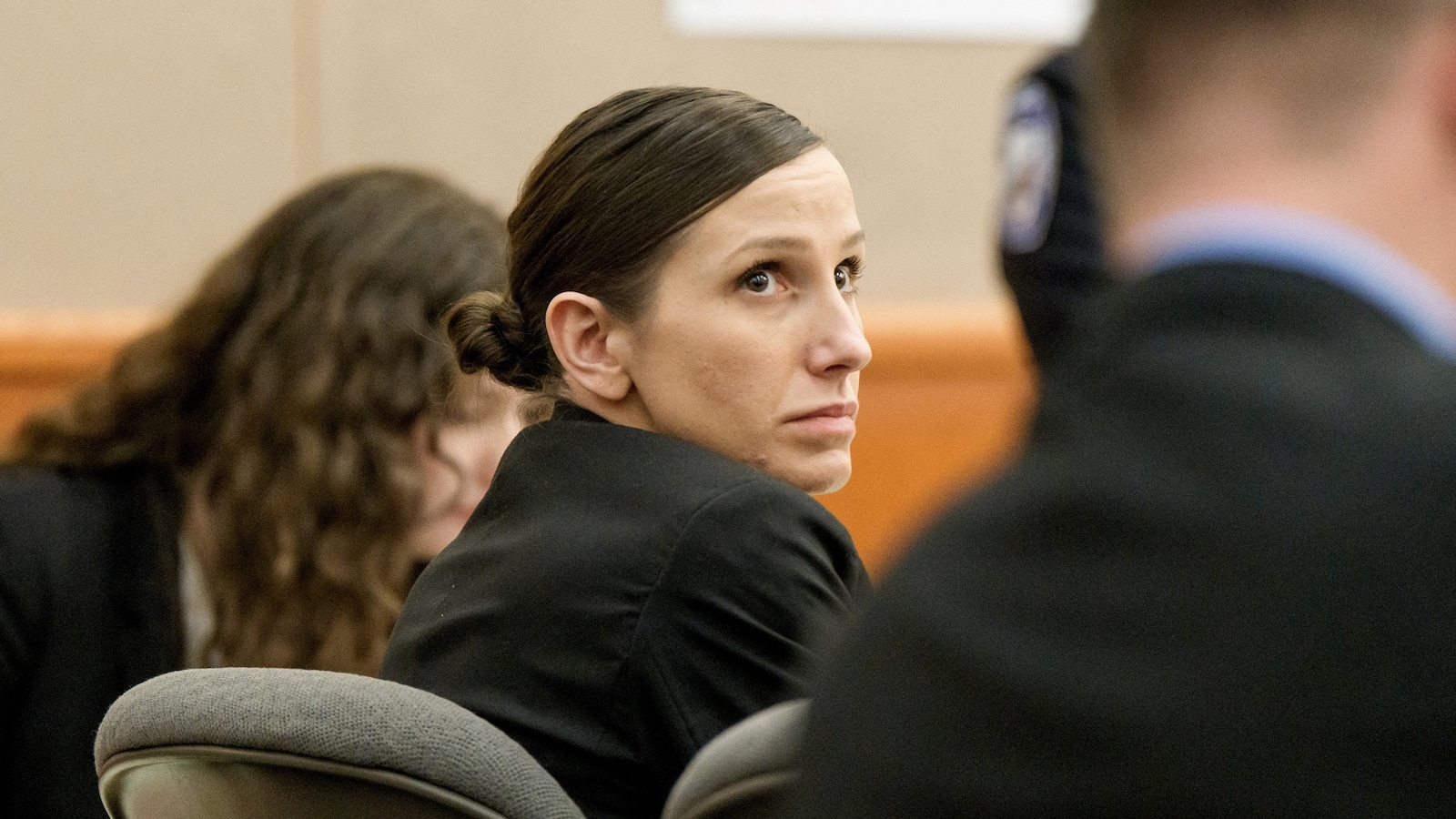
When Laura, the jury foreperson in one of Utah’s most shocking murder trials, first laid eyes on Kouri Richins in the courtroom, she was struck by something unexpected—the complete absence of any notable reaction. Speaking exclusively to ABC News’ “Good Morning America,” Laura described the 35-year-old mother as “kind of nondescript,” someone who seemed emotionally detached from the gravity of the accusations against her. As Laura and her fellow jurors tried to get a sense of who this woman was—a mother accused of the unthinkable crime of murdering her own husband—they found themselves confronted with a blank slate. There were no tears, no visible distress, no outward signs of the emotional turmoil one might expect from someone facing such serious charges. This emotional vacuum would become one of the many troubling aspects of the case that the eight jurors in Summit County, Utah, would grapple with over the course of the three-week trial. Richins stood accused of administering a fatal dose of fentanyl to her husband, Eric, in March 2022, and as the evidence mounted, the jury would come to a unanimous and swift conclusion about her guilt.
A Swift and Certain Verdict
The jury deliberations lasted just three hours on that Monday, a relatively short period considering the severity of the charges and the complexity of the case. But according to Laura, who served as juror number two, there was never any real doubt among the panel. “There was never a not guilty check with anything, with any element, nothing,” she revealed to ABC News, describing how the jurors approached each of the five counts systematically and thoroughly. Richins was ultimately found guilty on all charges: aggravated murder, attempted aggravated murder, two counts of insurance fraud related to life insurance policies, and one count of forgery for forging her husband’s signature on documents. The speed of the deliberations wasn’t due to carelessness or hasty judgment, Laura emphasized, but rather because the jurors had absorbed and processed the evidence so completely during the trial itself. “Even though it was just three hours, I felt like we came into that deliberation fully loaded,” she explained. The jury had done their homework, carefully examining every piece of evidence presented, separating the essential facts from what Laura called “the fluff and the drama” that can often cloud high-profile criminal cases.
The Children’s Book That Shocked the Courtroom
Among the most disturbing revelations during the trial was the existence of a children’s book that Richins had self-published in 2023, roughly a year after her husband’s death. The book, ostensibly created to help her three young sons cope with the loss of their father, took on a sinister quality in light of the murder charges. Just a month before her arrest in May 2023, Richins had appeared on “Good Things Utah,” a segment on Salt Lake City’s ABC affiliate KTVX, to promote the book. During that interview, she described her husband of nine years as having died “unexpectedly,” saying his death “completely took us all by shock.” The jurors didn’t learn about the book until the final days of testimony, and when they did, the impact was visceral and immediate. “Everyone just felt like they’re hit with a truck,” Laura recounted. “We’re like, what? What the hell is this? It was so odd and so strange.” The idea that someone could murder their spouse and then craft a narrative of grief for public consumption—even profiting from it through book sales—was almost incomprehensible to the jury members. It added another layer of calculated coldness to an already chilling case.
The Prosecution’s Case: Affairs, Debt, and Desperation
Throughout the three-week trial, prosecutors painted a picture of a woman driven by greed, desperation, and self-interest. They alleged that Richins was involved in an extramarital affair, had accumulated significant debt, and was desperately seeking a way out of her financial troubles. The solution, according to the prosecution’s theory, was her husband’s estate and life insurance policies. The case presented by the state included evidence about the fentanyl that killed Eric Richins, the circumstances surrounding his death, and a pattern of behavior that suggested premeditation. The attempted aggravated murder charge indicated that prosecutors believed Richins had tried to kill her husband before finally succeeding. The insurance fraud charges pointed to efforts to illegally benefit from policies on Eric’s life, while the forgery charge involved documents bearing what prosecutors claimed was a faked signature. Interestingly, the defense chose not to call any witnesses, and Richins herself never took the stand to tell her side of the story. This decision left the jury with only the prosecution’s narrative to consider, and the evidence presented was apparently compelling enough that no alternative explanation seemed plausible to the eight people tasked with determining her fate.
The Heavy Burden of Judgment
Despite the certainty of their verdict, the emotional toll on the jurors was significant. Laura emphasized that her fellow jury members didn’t come to their conclusions lightly or with any sense of satisfaction. “People were really sad, because they did not want to find her guilty,” she explained to ABC News. “They were really hoping that she was innocent. And we couldn’t come to that conclusion, and it was really heartbreaking.” The jurors understood the far-reaching consequences of their verdict, not just for Kouri Richins, who faces 25 years to life in prison when she’s sentenced on May 13, but for the three young boys at the center of this tragedy. Laura spoke poignantly about “this devastating reality that this family was torn apart and these poor kids will really basically never have a dad or mom.” The children had already lost their father to murder; now they would lose their mother to prison, convicted of being the one who killed him. For the jurors, this was perhaps the most heartbreaking aspect of the case—the collateral damage inflicted on innocent children who would grow up knowing that one parent had killed the other, and that the children’s book created supposedly to comfort them was part of an elaborate facade.
Justice Served, Lives Forever Changed
As the legal proceedings move toward sentencing, the Kouri Richins case stands as a stark reminder of how appearances can be deceiving and how the darkest crimes can hide behind the most ordinary facades. A mother and wife in suburban Utah, someone who presented herself publicly as a grieving widow trying to help her children heal, has been unmasked as a calculated killer. The jury’s swift verdict reflected their conviction that the evidence was overwhelming, that despite the lack of dramatic courtroom moments or emotional outbursts from the defendant, the facts spoke clearly enough. The case also highlights the devastating ripple effects of domestic homicide, particularly when children are involved. Three boys have been robbed of their childhood innocence, their family structure destroyed not by accident or illness, but by deliberate action. The legal system has provided a measure of justice for Eric Richins, but no verdict can undo the harm done to his sons. As Kouri Richins awaits her sentencing in May, facing the possibility of spending the rest of her life behind bars, the broader community is left to grapple with questions about how such a tragedy could unfold and what warning signs might have been missed. For Laura and her fellow jurors, their civic duty has been fulfilled, but the weight of their decision—knowing they’ve sent a mother to prison and orphaned three children—is something they’ll likely carry for years to come.