



Father Flanagan Takes Historic Step Toward Sainthood
A Beloved Priest’s Journey to Veneration
The story of Father Edward Joseph Flanagan, the compassionate priest who dedicated his life to rescuing troubled youth, has taken a significant turn this week. Pope Leo XIV officially declared him “venerable,” recognizing his “heroic virtues” and moving him one important step closer to possible sainthood in the Catholic Church. This proclamation honors the man who founded Boys Town, the revolutionary Nebraska home for at-risk children that became a beacon of hope for countless young people and captured America’s heart through an Academy Award-winning film. For those who have followed Father Flanagan’s legacy and the ongoing work of Boys Town, this announcement represents a deeply meaningful recognition of a man who truly lived his faith through action. Omaha Archbishop Michael McGovern expressed the feelings of many when he said he was “overjoyed” by the news, emphasizing his hope that Father Flanagan will eventually be beatified and ultimately declared a saint. The archbishop’s statement captured the essence of Flanagan’s mission, calling on people to continue his work by affirming the dignity of every person created in God’s image, particularly by serving the poor, the abandoned, and the vulnerable, especially at-risk youth who need guidance and support.
From Ireland to America: A Life of Service Begins
Edward Joseph Flanagan’s remarkable journey began far from the prairies of Nebraska, in the small Irish village of Ballymoe in 1886. Like millions of his countrymen seeking opportunity and a new life, the young Flanagan immigrated to the United States in 1904, carrying with him the values and faith that would shape his extraordinary mission. After years of study and spiritual preparation, he was ordained as a Catholic priest in 1912, and by 1913, he had begun his ministry in the Diocese of Omaha, Nebraska—a place that would become forever linked with his name and legacy. Father Flanagan’s path to founding Boys Town didn’t happen overnight. It emerged from his direct experience working with people on society’s margins. He initially provided shelter for homeless men in Omaha, listening to their life stories with genuine compassion and attention. Through these conversations, a pattern became heartbreakingly clear: many of the troubles these men faced as adults could be traced back to their childhoods—to broken homes, parental neglect, and the absence of stable, caring guidance during their formative years. This realization sparked a profound shift in Father Flanagan’s ministry. He came to believe that if society could intervene earlier, providing young boys with the support, structure, and love they desperately needed, many could be saved from a lifetime of hardship and despair.
Building a Home and a Movement
Armed with this conviction and an unwavering faith in the potential of every child, Father Flanagan established his first home for boys in 1917 in downtown Omaha. The facility served boys involved in the juvenile justice system—young people whom society had often written off as lost causes or incorrigible troublemakers. But Flanagan saw something different. He saw children who needed guidance, not punishment; love, not rejection; and opportunity, not condemnation. As his work expanded and the number of boys under his care grew, Father Flanagan realized he needed more space and resources. In 1921, he purchased a farm on the western outskirts of Omaha, a decision that would prove transformative. On that land, he began building what would become the famous campus of Boys Town, located in what is now a village bearing the same name. By the 1930s, the facility had grown dramatically, housing hundreds of boys in a revolutionary community that included not just dormitories and classrooms, but an innovative self-governing system where the boys themselves elected their own mayor, council, and commissioners. This approach was radical for its time, reflecting Flanagan’s deep belief that these young people deserved respect, responsibility, and the chance to develop leadership skills. Boys Town represented more than just a place to live—it was a complete reimagining of how society could support troubled youth, treating them as capable individuals with inherent dignity rather than as problems to be managed or punished.
A Philosophy That Changed Lives
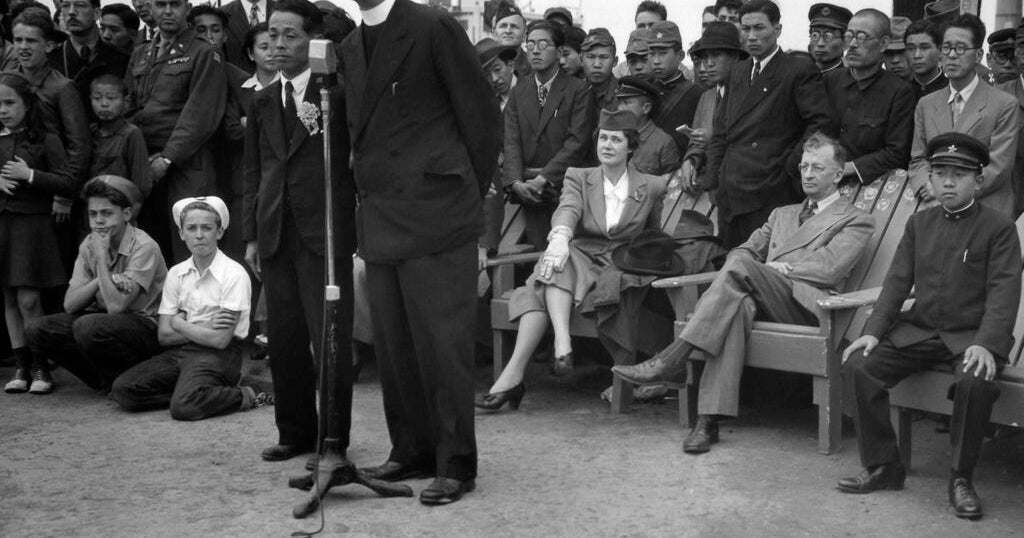
At the heart of Father Flanagan’s work was a simple yet revolutionary belief, one that would become his most famous quotation, now displayed on his tomb at Dowd Memorial Chapel in Boys Town: “There are no bad boys. There is only bad environment, bad example, bad thinking.” These words challenged the prevailing attitudes of his era, which often viewed troubled youth as inherently flawed or morally defective. Flanagan insisted that children were products of their circumstances and that with the right environment, proper role models, and positive guidance, any boy could turn his life around. This philosophy wasn’t just empty rhetoric—it was the operating principle that guided every aspect of Boys Town’s approach. Father Flanagan’s influence extended far beyond Nebraska. Following World War II, he traveled to Japan to assist in developing child welfare programs in a nation devastated by conflict and struggling to rebuild. In 1946, he visited his native Ireland, where he didn’t shy away from criticism, condemning the country’s system of industrial schools and reformatories for children, which he viewed as exploitative rather than rehabilitative. These international efforts demonstrated that his concern for at-risk youth transcended national boundaries. Tragically, Father Flanagan’s tireless work was cut short when he died of a heart attack in 1948 at the age of 61 while visiting Germany on another mission to help children. Though his life ended relatively young, his impact would continue to grow, touching millions of lives through the organization he founded.
Hollywood Recognition and Lasting Legacy
Father Flanagan’s remarkable work captured the imagination of Hollywood during America’s Golden Age of cinema. In 1938, just a decade before his death, MGM released “Boys Town,” a film that brought his story to audiences nationwide. The movie starred Spencer Tracy in a powerful performance as Father Flanagan and featured a young Mickey Rooney as one of the troubled boys under his care. The film was both a critical and commercial success, earning Academy Awards for Tracy as Best Actor and for Best Original Story. While the movie took certain dramatic liberties, as Hollywood films often do, it succeeded in bringing Father Flanagan’s message to millions of Americans and inspiring a generation to think differently about troubled youth. The film helped establish Boys Town as a nationally recognized institution and demonstrated the power of compassionate intervention in young lives. The organization that Father Flanagan founded has continued to evolve and expand in the decades since his death. In 1979, Boys Town took a significant step forward by beginning to admit girls to its residential programs, recognizing that at-risk youth of all genders needed support and guidance. Today, the Boys Town organization operates various locations around the country, serving thousands of children and families each year through residential programs, healthcare services, and educational initiatives. In a Facebook post responding to Monday’s Vatican announcement, the organization celebrated the recognition of their founder, noting that “Flanagan believed that children had the right to be valued, to have the basic necessities of life and to be protected. His lifesaving work continues across the country today.”
The Road to Possible Sainthood
The process of becoming a saint in the Catholic Church is lengthy, rigorous, and intentionally demanding. Father Flanagan’s declaration as “venerable” represents an important milestone, but significant steps remain before he could potentially be canonized. The Vatican’s Dicastery for the Causes of Saints conducted an extensive review of Father Flanagan’s life, examining his writings, works, and the testimony of those who knew him. Pope Leo XIV’s decree attesting that Flanagan lived a life of “heroic virtue” doesn’t mean the church believes he was perfect or free from sin—all humans make mistakes. Rather, it recognizes that he had a reputation for holiness and lived all Christian virtues in an exceptional, heroic manner. The next step toward sainthood is beatification, which requires documented evidence of a miracle attributed to Father Flanagan’s intercession. Specifically, the postulator—the person responsible for advancing his cause—must find someone who was miraculously healed after praying for Father Flanagan’s intervention. This claimed miracle undergoes rigorous scrutiny by theological and medical experts who examine the evidence to determine whether the healing can be explained by natural causes or represents something genuinely miraculous. If convinced, the dicastery forwards the case to the pope for final approval. A second confirmed miracle is needed for canonization—the final declaration of sainthood—though popes can bypass these requirements in certain circumstances. Father Flanagan is the second U.S. cleric with Midwestern connections to advance toward sainthood this year under Pope Leo, who was born in Chicago. In February, the Vatican approved the beatification of Archbishop Fulton Sheen in Illinois after years of delays. For Catholics in Nebraska and supporters of Boys Town everywhere, Father Flanagan’s recognition as venerable represents hope that this compassionate priest who dedicated his life to society’s most vulnerable children might one day be officially recognized as a saint—a model of Christian virtue for all generations.