


Federal Reserve Chairman Jerome Powell Faces Justice Department Investigation: A Behind-the-Scenes Battle
The Subpoenas and Secret Court Challenge
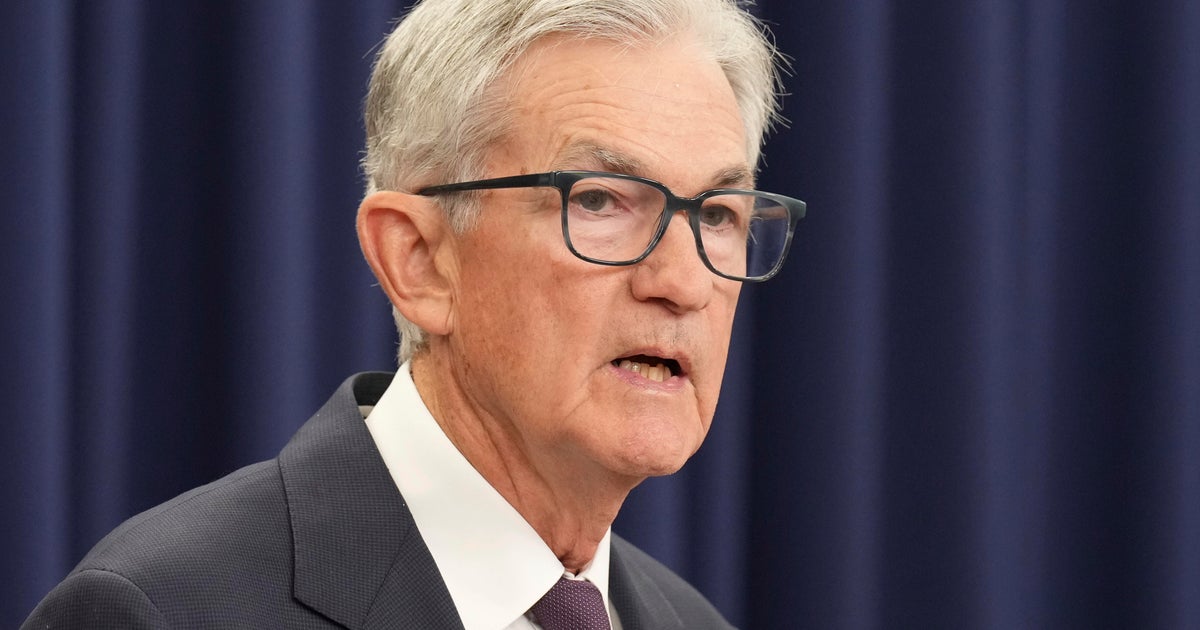
The Federal Reserve finds itself in an unprecedented legal battle, fighting behind closed doors to block Justice Department subpoenas targeting Chairman Jerome Powell. This extraordinary situation came to light in January when Powell publicly disclosed that he had received grand jury subpoenas as part of a criminal investigation into his conduct. The subpoenas relate to testimony Powell gave before the Senate Banking Committee in June 2025, specifically concerning his statements about a long-running renovation project at Federal Reserve office buildings. What makes this case particularly unusual is that the Federal Reserve is now challenging these subpoenas in sealed court proceedings, asking a federal judge to declare them legally invalid and throw them out entirely. Because of strict secrecy rules that govern grand jury investigations, the specific legal arguments the Federal Reserve is making remain unknown to the public, and the entire challenge is unfolding away from public scrutiny.
The situation has created an extraordinary constitutional tension between two powerful branches of government. Powell, who has become a frequent target of President Trump’s criticism for refusing to quickly lower interest rates, has maintained that the investigation is politically motivated rather than based on legitimate legal concerns. Despite the serious nature of grand jury subpoenas and the threat they represent, no criminal charges have actually been filed against Powell or anyone else connected to the renovation project. The investigation appears to be ongoing, but its ultimate direction remains unclear. The Wall Street Journal was the first news organization to report on the Federal Reserve’s legal efforts to quash the subpoenas, revealing a story that highlights the complex intersection of law, politics, and monetary policy in contemporary America.
The Renovation Project Controversy
At the heart of this legal drama lies a Federal Reserve office renovation project that has become far more controversial than anyone might have anticipated when it began years ago. The independently funded renovation has experienced significant cost overruns, which drew the attention of Trump administration officials looking for evidence of government waste and excess. Russell Vought, who chairs the Office of Management and Budget, publicly accused Powell of overseeing an “ostentatious” renovation that might be “violating the law.” These accusations painted a picture of lavish spending on unnecessary luxuries at a time when many Americans are struggling with economic pressures, creating a narrative that put Powell and the Federal Reserve on the defensive.
Powell forcefully pushed back against these characterizations when he appeared before the Senate Banking Committee. In his testimony, he methodically addressed what he called “misleading and inaccurate” descriptions of the renovation work. He explained that there was no new marble being installed except what was absolutely necessary to replace broken old marble that had deteriorated over time. He denied the existence of “special elevators,” new water features, or rooftop gardens—amenities that critics had suggested were part of an over-the-top renovation plan. Powell’s testimony was meant to set the record straight and defend the Federal Reserve’s handling of necessary maintenance and upgrades to its facilities. However, this testimony itself became the focal point of the Justice Department’s investigation, with prosecutors apparently questioning whether Powell’s statements to Congress were truthful or whether they constituted some form of misleading testimony that could form the basis for criminal charges.
The Trump-Powell Conflict Over Interest Rates
The renovation investigation cannot be understood in isolation from the broader, monthslong conflict between President Trump and Jerome Powell over monetary policy and interest rates. This dispute has been playing out publicly for an extended period, with Trump repeatedly and publicly demanding that the Federal Reserve quickly slash interest rates to stimulate economic growth and reduce borrowing costs for businesses and consumers. The president has made no secret of his belief that lower interest rates would boost the economy and benefit his political standing. However, Powell and the Federal Reserve have taken a much more cautious approach to adjusting rates, maintaining that they must carefully balance multiple economic factors and avoid triggering a new surge in inflation that could ultimately harm the economy more than it helps.
This fundamental disagreement over monetary policy has led Trump to launch increasingly personal attacks against Powell. The president has publicly called the Fed chairman a “moron,” a “stubborn mule,” a “Trump Hater,” and “Mr. Too Late,” suggesting that Powell’s refusal to lower rates quickly is motivated by political animosity rather than sound economic judgment. These attacks are remarkable in their intensity and frequency, representing an unusual level of presidential interference in what is supposed to be an independent central banking system. The Federal Reserve was specifically designed to operate independently of political pressure, making monetary policy decisions based on economic data and expert analysis rather than the political preferences of whoever occupies the White House. Powell’s resistance to Trump’s pressure represents an institutional commitment to this independence, even in the face of personal attacks and now a criminal investigation that many observers believe may be politically motivated.
Powell’s Defense: Political Pressure in Disguise
Powell has not remained silent in the face of what he views as an inappropriate use of criminal investigation powers to pressure the Federal Reserve into changing its monetary policy. Last month, he made a remarkable public statement arguing that the criminal investigation is actually a pretext—a manufactured excuse designed to intimidate the Federal Reserve and undermine its ability to set interest rates independently of political considerations. In Powell’s view, the investigation has nothing to do with legitimate concerns about renovation spending or congressional testimony, and everything to do with punishing the Fed for refusing to bend to presidential demands on interest rates.
“The threat of criminal charges is a consequence of the Federal Reserve setting interest rates based on our best assessment of what will serve the public, rather than following the preferences of the president,” Powell stated, drawing a direct connection between his monetary policy decisions and the investigation he now faces. This is an extraordinary accusation for a sitting Federal Reserve chairman to make, suggesting that the executive branch is weaponizing the criminal justice system to achieve political goals. Powell’s statement represents a defense not just of himself personally, but of the institutional independence of the Federal Reserve itself. He is essentially arguing that if prosecutors can threaten Fed officials with criminal charges when they make unpopular policy decisions, the entire structure of independent monetary policy in the United States is at risk. His term as Fed chair is scheduled to end in May, though he is eligible to remain on the Federal Reserve board until 2028, where he could continue to influence monetary policy. Powell hasn’t yet announced whether he plans to stay on the board after his chairmanship ends, leaving open questions about the Fed’s leadership during this tumultuous period.
The Justice Department’s Response
The Justice Department, led by U.S. Attorney for D.C. Jeanine Pirro, has offered a very different narrative about the investigation and the events that led to the grand jury subpoenas. According to Pirro, her office made multiple attempts to contact the Federal Reserve through normal channels to discuss concerns about cost overruns in the renovation project and to ask questions about Powell’s congressional testimony. She maintains that these repeated outreach efforts were simply ignored by the Federal Reserve, leaving prosecutors with no choice but to use formal legal processes—the grand jury subpoenas—to obtain information they needed for their investigation.
“The Federal Reserve on multiple occasions to discuss cost overruns and the chairman’s congressional testimony, but were ignored, necessitating the use of legal process—which is not a threat,” Pirro said in response to Powell’s public announcement about the subpoenas. She also pushed back against Powell’s characterization of the investigation as a threat of indictment, pointing out that “The word ‘indictment’ has come out of Mr. Powell’s mouth, no one else’s.” Her statement concluded with the assertion that “None of this would have happened if they had just responded to our outreach,” suggesting that the Federal Reserve’s lack of cooperation transformed what could have been a routine inquiry into a formal criminal investigation. This version of events paints the Justice Department as simply doing its job—investigating potential wrongdoing and seeking information through appropriate legal channels when informal requests were unsuccessful—rather than engaging in political persecution.
The Constitutional Stakes and Uncertain Future
This confrontation between the Federal Reserve and the Justice Department raises profound questions about the separation of powers, the independence of government institutions, and the appropriate use of criminal investigative tools in politically charged situations. The Federal Reserve’s independence has long been considered essential to sound monetary policy, insulating economic decisions from short-term political pressures that might lead to poor long-term outcomes. If criminal investigations can be initiated against Fed officials based on their policy decisions or their defense of those decisions before Congress, that independence could be seriously compromised, potentially changing how the central bank operates for generations to come.
The outcome of the sealed court proceedings challenging the subpoenas will likely have significant implications beyond this immediate case. If a federal judge sides with the Federal Reserve and quashes the subpoenas, it would represent a judicial recognition that there are limits to how investigative powers can be used against independent government institutions. If the judge allows the subpoenas to stand, it could embolden future investigations of Fed officials and other independent regulators when their decisions conflict with presidential preferences. For now, the American public can only watch and wait as this unprecedented legal battle unfolds behind closed doors, with the fundamental structure of monetary policy independence hanging in the balance. The resolution of this case will help define the boundaries between legitimate oversight and political intimidation in American government.