

Wyoming Enacts Restrictive “Heartbeat” Abortion Ban Despite Governor’s Reservations
Governor Signs Controversial Six-Week Abortion Restriction
Wyoming has joined a growing list of states implementing severe restrictions on abortion access after Governor Mark Gordon signed legislation on Monday that effectively bans most abortions once embryonic cardiac activity can be detected. This milestone typically occurs around six weeks into pregnancy, a timeframe when many women remain unaware they’re expecting. The new law places Wyoming alongside Florida, Georgia, Iowa, and South Carolina as the fifth state to enforce abortion restrictions at this early stage of pregnancy. Additionally, thirteen other states have enacted total abortion bans across all stages of pregnancy, with limited exceptions. The signing represents another significant shift in reproductive rights across America, continuing the dramatic changes in abortion access that have swept the nation following the Supreme Court’s 2022 decision to overturn Roe v. Wade, the landmark ruling that had protected abortion rights for nearly fifty years.
Governor Expresses Concerns About Law’s Limitations and Legal Vulnerabilities
In an unusual move that highlights the complexity and controversy surrounding abortion legislation, Governor Gordon publicly acknowledged his reservations about the very law he signed into effect. In a letter addressed to state lawmakers, the Republican governor expressed specific concerns about the legislation’s failure to include exceptions for pregnancies resulting from rape or incest—situations that many consider particularly traumatic and deserving of special consideration. “Where the act does not align to my pro-life stance is in the concern for specific vulnerable populations,” Gordon wrote, acknowledging that the law’s narrow scope might not adequately address the needs of all women facing difficult circumstances. The legislation does include one significant exception: when continuing the pregnancy would “preserve the woman from an imminent peril that substantially endangers her life or health, according to appropriate medical judgment.” However, this medical exception leaves considerable room for interpretation and has raised concerns among healthcare providers about how it will be applied in practice and whether doctors might face legal jeopardy when making urgent medical decisions.
Anticipated Legal Challenges and Concerns About Policy Durability
Governor Gordon’s second major concern centers on the likelihood that this new law will face immediate and prolonged legal challenges, continuing what he described as an unfortunate pattern of litigation surrounding abortion restrictions in Wyoming. The state’s Supreme Court had previously struck down a complete abortion ban just this past January, setting a precedent that suggests the new six-week restriction may face similar judicial scrutiny. In his letter to lawmakers, Gordon expressed frustration with what he sees as a cycle of well-intentioned but legally vulnerable legislation that ultimately fails to create stable, lasting policy. “Regrettably, this Act represents another well-intentioned but likely fragile legal effort with significant risk of ending in the courts rather than in lasting, durable policy,” he wrote. The governor voiced his fear that rather than achieving the stated goal of protecting unborn life, the legislation might simply add “another chapter to the sad saga of repeatedly trying to force a specific solution.” This candid assessment from a pro-life governor underscores the legal and practical challenges facing states attempting to navigate the post-Roe landscape while balancing constitutional concerns, public opinion, and strongly held beliefs on both sides of the abortion debate.
Immediate Legal Opposition and Clinic Response
Governor Gordon’s concerns about litigation proved prescient, as legal challenges materialized almost immediately following the law’s signing. Julie Burkhart, president of Wellspring Health Access—Wyoming’s only medical facility offering both surgical abortion procedures and medication abortion—issued a statement on Monday announcing her organization’s intention to challenge the new ban in court. “This ban is an attack on Wyomingites’ constitutional freedom to make their own health care decisions, and it puts the health and well-being of our communities at risk,” Burkhart declared, framing the restriction as an infringement on individual liberty and a public health concern. The clinic’s leadership wasted no time adapting to the new legal landscape; staff members began the process of referring patients whose pregnancies had progressed beyond the six-week threshold to abortion providers in neighboring states where the procedure remains accessible at later stages of pregnancy. This immediate response highlights the real-world impact of abortion legislation on healthcare providers and patients, who must quickly navigate changing legal requirements while dealing with time-sensitive medical situations.
Wyoming’s Turbulent Abortion Access Landscape
Abortion access in Wyoming has experienced significant instability in recent years, creating uncertainty for residents seeking reproductive healthcare services. The state’s only abortion clinic faced a devastating setback in 2022 when it was targeted in an arson attack, forcing a delay in its opening and disrupting services for women across the state. During various periods, the facility has been limited to offering only medication abortion rather than the full range of abortion procedures. According to data compiled by the state Health Department, Wyoming recorded 625 abortions in 2024, the most recent year for which complete statistics are available. Katie Knutter, executive director of the Casper-based clinic, reported that her facility alone provided 303 abortions during 2025 before the new restrictions took effect. These numbers, while relatively modest compared to more populous states, represent hundreds of individual women who sought abortion services within Wyoming’s borders. With the new six-week restriction in place, many of these women will now need to travel to other states to access care, creating additional financial, logistical, and emotional burdens for those seeking abortion services, particularly for low-income residents who may lack the resources to travel long distances for medical care.
The Broader National Context of Abortion Rights
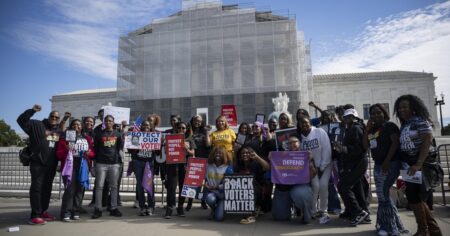
Wyoming’s new abortion restriction reflects the dramatic transformation of reproductive rights across the United States following the Supreme Court’s 2022 decision to overturn Roe v. Wade. That landmark ruling eliminated the constitutional right to abortion that had been established in 1973, instead allowing individual states to determine their own abortion policies. The result has been a patchwork of wildly varying laws across the country, with some states maintaining broad abortion access while others have implemented near-total bans. This state-by-state approach has created a situation where a woman’s reproductive rights depend largely on her zip code, leading to increased interstate travel for abortion services and raising questions about equality and access to healthcare. The ongoing legal battles, including the anticipated challenge to Wyoming’s new law, demonstrate that the abortion debate remains far from settled even after the Supreme Court’s decision. States continue to test the boundaries of permissible restrictions while abortion rights advocates challenge these laws in state courts, arguing they violate state constitutional protections. As Wyoming becomes the latest battleground in this national struggle, the experiences of its residents, healthcare providers, and policymakers will contribute to the evolving understanding of reproductive rights in post-Roe America.