
Federal Judge Blocks New Jersey U.S. Attorney Leadership for Second Time
A Pattern of Unconstitutional Appointments
In an unprecedented development that highlights growing tensions between the federal judiciary and the Trump administration, a federal judge has once again ruled that the leadership of the U.S. Attorney’s Office in New Jersey is serving unlawfully. U.S. District Judge Matthew Brann issued a scathing 130-page opinion on Monday, marking the second time in less than a year that he has found the Justice Department’s appointments to this critical law enforcement position unconstitutional. The latest ruling targeted not just one individual, but a novel three-person leadership structure that Attorney General Pam Bondi created to run the office after the previous appointee was disqualified. Judge Brann’s decision underscores a fundamental conflict about executive power and constitutional limitations that has become a defining feature of the current administration’s relationship with the courts.
From One Controversial Appointment to Three
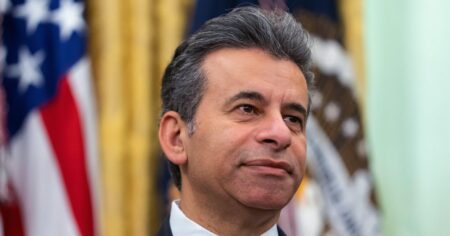
The saga began last summer when Judge Brann ruled that Alina Habba, President Trump’s former personal lawyer, had been illegally appointed as acting U.S. Attorney for the District of New Jersey. After a federal appeals court upheld that decision, Habba stepped down from the role in December. Rather than pursuing the traditional route of presidential nomination and Senate confirmation, the Justice Department attempted a creative workaround. Attorney General Pam Bondi divided the responsibilities of the U.S. Attorney position among three individuals: Philip Lamparello, Jordan Fox, and Ari Fontecchio. This unprecedented three-person leadership team was apparently designed to circumvent the constitutional requirements that had torpedoed Habba’s appointment. However, Judge Brann saw through this maneuver, determining that splitting the office’s power among three people still violated the Appointments Clause of the Constitution and exceeded Bondi’s legal authority.
A Judge’s Harsh Words for Executive Overreach
Judge Brann didn’t mince words in his Monday opinion, delivering a sharp rebuke to what he characterized as the administration’s pattern of attempting to bypass constitutional constraints. “One year into this administration, it is plain that President Trump and his top aides have chafed at the limits on their power set forth by law and the Constitution,” Brann wrote. He criticized what he saw as the administration’s belief that it had discovered “enormous grants of executive power hidden in the vagaries and silences of the code” to avoid legal roadblocks. The judge rejected the government’s argument that the Attorney General possesses broad authority to appoint anyone to subordinate positions and delegate them authority to act in other significant roles. Instead, Brann emphasized that viable, constitutional methods exist for filling such vacancies—specifically, having the President nominate a successor who then goes through the Senate confirmation process. He characterized the administration’s position bluntly: “the Government tells us: the President doesn’t like that he cannot simply appoint whomever he wants.” The judge made it clear that caring more about who runs the office than whether it runs properly and legally is not acceptable.
Serious Consequences for Criminal Justice
Beyond the constitutional principles at stake, Judge Brann highlighted the very real and dangerous practical consequences of these improper appointments. He cautioned that “scores of dangerous criminals could have their cases dismissed or convictions eventually reversed” if there isn’t a legally proper appointment of a U.S. attorney in the New Jersey office. This isn’t merely a theoretical concern—when prosecutors lack proper legal authority, the cases they bring can be invalidated, potentially allowing serious offenders to escape justice. The judge issued a stern warning that “any further attempts to unlawfully fill the office will result in dismissals of pending cases,” raising the stakes considerably for the Justice Department. While Brann stayed the implementation of his order pending appeal and didn’t immediately dismiss the criminal indictments brought by the defendants who challenged the appointments, the threat remains clear. The issue extends far beyond New Jersey, as similar vacancy problems exist in Justice Department offices nationwide, creating the potential for widespread invalidation of criminal charges if judges determine prosecutors were illegally appointed.
A Nationwide Problem for the Administration
The New Jersey situation is far from isolated. New Jersey represents one of at least five states where federal judges have ruled that Trump administration-appointed temporary U.S. attorneys are serving unlawfully. Similar orders have been issued in New York, Virginia, California, and Nevada, revealing a systemic problem with how the administration has handled these critical positions. Many of these rulings focus on the administration’s efforts to keep interim U.S. attorneys in their positions beyond a 120-day limit established by federal law. This pattern suggests either a fundamental misunderstanding of constitutional and statutory requirements, a deliberate strategy to avoid the Senate confirmation process, or both. The widespread nature of these judicial rebukes indicates that this isn’t merely a dispute over one appointment or one office, but rather a significant clash over the proper separation of powers and the executive branch’s authority to fill important positions without legislative oversight.
Defiant Responses and Uncertain Future
The administration and its allies have responded defiantly to Judge Brann’s ruling. Alina Habba, now serving as a senior advisor at the Justice Department despite her previous disqualification, took to social media to call the ruling “ridiculous.” She framed the decision as “unconstitutionality of this complete overreach into the Executive Branch,” turning the constitutional argument on its head by suggesting the judge was the one exceeding his authority. Habba claimed critics “would rather have no U.S. Attorney than safety for the people of NJ,” positioning the administration as defenders of public safety against judicial interference. The Justice Department itself did not immediately comment on the ruling, though an appeal seems certain given the judge’s stay of his order pending such action. What remains unclear is whether the administration will continue attempting creative workarounds to avoid the Senate confirmation process, or whether it will finally pursue the constitutional method Judge Brann has repeatedly pointed out is available. The standoff raises fundamental questions about whether essential law enforcement positions will remain properly filled, how many criminal cases might be jeopardized, and whether the judicial branch’s assertion of constitutional limits will ultimately prevail over an executive branch that, in Judge Brann’s words, has consistently “chafed at the limits on their power set forth by law and the Constitution.” As this legal battle continues, the people of New Jersey and other affected states find themselves caught in the middle, with their federal law enforcement leadership in constitutional limbo.