


Former Prince Andrew Arrested on His 66th Birthday in Epstein Files Scandal
A Royal Birthday Turned Upheaval
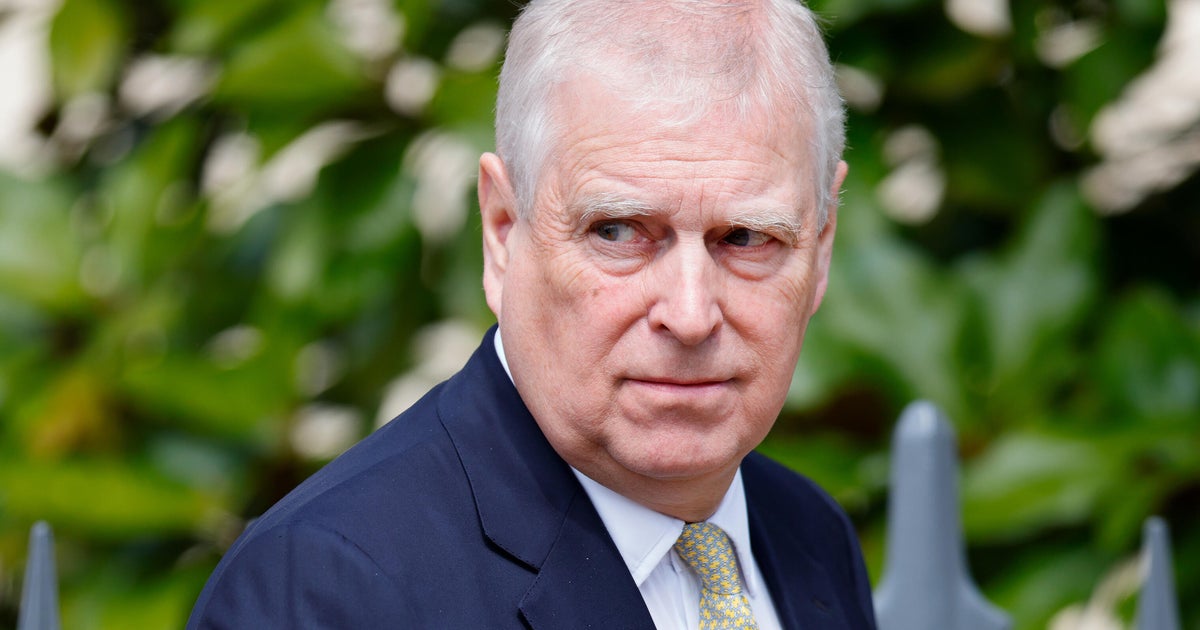
In a stunning turn of events that has sent shockwaves through the United Kingdom and beyond, Andrew Mountbatten-Windsor, formerly known as Prince Andrew, was arrested on Thursday morning on what should have been a day of celebration—his 66th birthday. Instead of birthday wishes, the King’s younger brother found himself facing serious criminal allegations after documents from the Jeffrey Epstein files raised troubling questions about his conduct while serving as a British trade envoy. The arrest came approximately two weeks after the U.S. Department of Justice released a cache of documents that prompted the anti-monarchy organization Republic to demand a police investigation into whether Andrew had inappropriately shared confidential government information with the late convicted sex offender Jeffrey Epstein.
The dramatic scene unfolded early Thursday morning at Wood Farm on the Sandringham estate in Norfolk, eastern England, where Andrew had recently relocated. Shortly after 8 a.m. local time, six unmarked police vehicles were spotted arriving at the property, signaling that the investigation that had been brewing for weeks was finally coming to a head. The Thames Valley Police, which had confirmed just over a week prior that it was reviewing the allegations, issued a statement confirming that they had arrested “a man in his sixties from Norfolk on suspicion of misconduct in public office” and were conducting searches at multiple addresses in both Berkshire and Norfolk. While police procedure prevented them from naming the suspect publicly, the circumstances left little doubt about his identity. As of Thursday evening, Andrew remained in police custody, facing what could be the most serious legal jeopardy of his already scandal-plagued recent years.
No One Above the Law: Political and Royal Responses
The arrest of a former senior member of the royal family represents an unprecedented moment in modern British history, and political leaders were quick to weigh in on the significance of the moment. British Prime Minister Keir Starmer, speaking to BBC News earlier on Thursday before the arrest was publicly confirmed, made clear that even those born into privilege and position would not be shielded from accountability. “Nobody is above the law,” Starmer stated firmly when asked about the investigation into Mountbatten-Windsor. “I think that’s a matter for the police, they will conduct their own investigations, but one of the core principles in our system is that everybody is equal under the law and nobody is above the law.” His words echoed what many in Britain and around the world have been saying for years—that justice should be blind to titles and birthright.
Perhaps even more remarkable than the Prime Minister’s comments was the statement issued by Buckingham Palace on behalf of King Charles III. Last week, before the arrest, a palace spokesperson made clear that the royal family would fully cooperate with any police investigation. “The King has made clear, in words and through unprecedented actions, his profound concern at allegations which continue to come to light in respect of Mr. Mountbatten-Windsor’s conduct,” the statement read. “While the specific claims in question are for Mr. Mountbatten-Windsor to address, if we are approached by Thames Valley Police we stand ready to support them as you would expect.” The fact that King Charles publicly distanced himself from his brother and pledged cooperation with law enforcement represents a significant departure from the traditional royal approach of protecting family members from public scrutiny. It was King Charles who stripped Andrew of his royal titles last year amid mounting pressure over his association with Epstein and allegations made against him by trafficking victim Virginia Giuffre.
The Shadow of Virginia Giuffre’s Tragic Story
The arrest brought renewed attention to Andrew’s long and troubling association with Jeffrey Epstein and the accusations made by Virginia Giuffre, whose tragic story has haunted Andrew for years. Giuffre had publicly accused Mountbatten-Windsor of engaging in sexual acts with her when she was just 17 years old, claiming she had been trafficked to the encounter by Ghislaine Maxwell, Epstein’s close associate and convicted co-conspirator. Though Andrew repeatedly denied these allegations, he ultimately reached a settlement with Giuffre in 2022, reportedly paying her around $16 million according to British media reports—a settlement that many interpreted as an admission of guilt, though no criminal charges resulted from her accusations at that time.
Tragically, Virginia Giuffre died by suicide last year, her death a heartbreaking end to a life marked by trauma and her courageous efforts to hold powerful men accountable for their actions. Following Andrew’s arrest, Giuffre’s siblings released a deeply emotional statement that spoke to years of pain, frustration, and the long wait for justice. “At last, today, our broken hearts have been lifted at the news that no one is above the law, not even royalty,” the statement read. “On behalf of our sister, Virginia Roberts Giuffre, we extend our gratitude to the U.K.’s Thames Valley Police for their investigation, and the arrest of Andrew Mountbatten-Windsor. He was never a prince. For survivors everywhere, Virginia did this for you.” Their words served as a powerful reminder that beyond the headlines and royal intrigue, real people have suffered real harm, and their pursuit of accountability has been long and difficult.
Among the evidence that has made Andrew’s denials increasingly untenable is a photograph showing him with his arm around the young Giuffre, with Ghislaine Maxwell standing nearby. Both Andrew and Maxwell had previously suggested the photo might be fake, but documents released by the U.S. government this year included a draft email that appeared to confirm its authenticity. In the message, sent by “G Maxwell” to Epstein in 2015, she wrote: “In 2001 I was in London when [name redacted] met a number of friends of mine including Prince Andrew. A photograph was taken as I imagine she wanted to show it to friends and family.” This apparent confirmation undermined one of Andrew’s key defenses and added weight to Giuffre’s account of what happened to her.
The Damning Evidence in the Epstein Files
While Andrew’s alleged sexual misconduct has been the focus of public attention for years, the current arrest stems from different but equally serious allegations revealed in the latest release of Epstein files. The anti-monarchy group Republic called for an investigation after emails among the millions of documents released by the U.S. Justice Department on January 30 appeared to show that Andrew had shared confidential government reports and information with Epstein during his time serving as an official British trade envoy. These weren’t casual conversations or harmless gossip—they involved detailed reports on official government visits and sensitive investment opportunities in strategically important regions.
One particularly damning email thread shows that on November 30, 2010, just minutes after receiving official reports from his special adviser Amit Patel about his visits to Singapore, Hong Kong, and Vietnam, Andrew forwarded those reports directly to Epstein without any accompanying message or explanation. The speed and casual nature of the transmission suggested a level of comfort and trust between the two men that raises serious questions about judgment and propriety. Even more concerning was another email exchange from the following month in which Andrew shared files he himself described as “a confidential brief” on potential investment opportunities in southern Afghanistan, where British forces were based at the time. In that message, the then-prince wrote that he was sharing the documents with Epstein to seek his “comments, views or ideas as to whom I could also usefully show this to attract some interest” in the opportunities described.
These revelations paint a picture of a senior royal treating a convicted sex offender as a trusted business adviser and sharing information that could have security implications or provide unfair advantages to Epstein’s business interests. The allegations are particularly serious because they occurred while Andrew was serving in an official capacity as a British trade envoy, a role in which he was expected to uphold the highest standards of confidentiality and integrity. Similar allegations have also emerged regarding former British Ambassador to the United States Peter Mandelson, who is now under investigation by the London Metropolitan Police for allegedly sharing confidential government information with Epstein. The decision by Prime Minister Starmer to appoint Mandelson to his key diplomatic post despite these revelations has brought enormous pressure on the Prime Minister, though he appears likely to retain his position for now, especially following the resignation of his chief of staff.
The Broader Implications for the Monarchy
Andrew’s arrest represents more than just the downfall of one disgraced royal—it marks a potential turning point in how the British monarchy navigates accountability and public trust in the modern era. For years, the royal family has operated with a certain degree of protection from the full force of law and public scrutiny, with scandals typically managed through carefully crafted statements, strategic withdrawals from public life, and the protective umbrella of palace PR machinery. King Charles’s decision to strip his brother of royal titles and publicly pledge cooperation with law enforcement suggests a recognition that the old approaches no longer work in an age of transparency and heightened expectations for accountability.
The monarchy’s handling of the Andrew situation will likely be studied for years as a case study in institutional crisis management. On one hand, Charles has moved relatively swiftly to distance the institution from his brother’s actions, making clear that Andrew’s conduct is his own to answer for. On the other hand, critics will point out that Andrew enjoyed years of privilege, protection, and official positions despite warning signs about his judgment and associations. The millions of pounds he paid to settle Virginia Giuffre’s lawsuit came from somewhere—reportedly from the sale of a Swiss chalet, but questions linger about whether any royal family resources directly or indirectly funded the settlement.
What Comes Next: Justice, Accountability, and Healing
As Andrew Mountbatten-Windsor sits in police custody, the path forward remains uncertain but consequential. If charged and convicted of misconduct in public office, he could face significant prison time, marking an extraordinary fall from grace for someone who was once eighth in line to the British throne. The investigation is ongoing, with searches being conducted at properties in both Berkshire and Norfolk, suggesting that authorities are building a thorough case based on documentary evidence and potentially witness testimony.
For survivors of Epstein’s abuse and their families, Andrew’s arrest represents a measure of accountability that has been far too long in coming. Virginia Giuffre did not live to see this day, but her courage in speaking out and pursuing justice has paved the way for this moment. Her siblings’ statement made clear that her fight was never just about her own experience but about establishing the principle that power and privilege should not shield anyone from the consequences of their actions. For all the other survivors who have watched powerful men evade accountability for years, this arrest sends a message that persistence and truth-telling can eventually prevail.
The broader questions raised by the Epstein scandal—about how predators operate within elite networks, how institutions protect their own at the expense of victims, and how we build systems that prioritize justice over reputation—remain as urgent as ever. Andrew’s arrest is one step in a long journey toward accountability, but it cannot be the last. As this case proceeds through the British justice system, the world will be watching to see whether the principle that “nobody is above the law” is truly upheld, or whether even now, privilege will find a way to soften the consequences of alleged wrongdoing.